TL;DR:
- Southampton’s older Victorian pipes, mature trees, and tidal waterways create unique drainage challenges.
- Early signs like slow drains, gurgling sounds, and bad smells indicate potential backups needing prompt inspection.
- Professional localized solutions, including CCTV surveys and root cutting, are essential for effective repair.
Drain backups catch most Southampton homeowners completely off guard. You notice the water rising in your sink or the toilet gurgling ominously, and you assume someone’s flushed something they shouldn’t have. Sometimes that’s true. But the reality is far more complicated, particularly for properties in Southampton where ageing Victorian pipework, mature tree-lined streets, and the city’s proximity to tidal waterways all create drainage conditions that most generic advice simply doesn’t account for. This guide explains the real causes of drain backups, how to spot them early, and what practical steps you can take to prevent costly damage before it escalates.
Table of Contents
- What causes drains to back up?
- Identifying the signs of drain backups
- Common sources of blockages in Southampton
- Preventing and resolving drain backups
- A Southampton perspective: What most guides miss about drain backups
- Get expert help for your drains in Southampton
- Frequently asked questions
Key Takeaways
| Point | Details |
|---|---|
| Top causes of backups | Grease, hair, debris, and tree roots are the most frequent reasons drains back up. |
| Identifying issues early | Recognising signs like slow drainage and bad smells can help prevent expensive repairs. |
| Local expertise matters | Southampton homes benefit from local professional support due to unique regional risks. |
| Actionable prevention steps | Safe disposal habits and regular inspections reduce the likelihood of backups. |
What causes drains to back up?
Most people blame themselves when a drain backs up. They assume they’ve been pouring too much cooking fat down the kitchen sink, or that a family member has flushed something inappropriate. While those habits certainly contribute, the causes of blocked drains are often far more structural and varied than you’d expect.
The primary reasons drains back up include blockages from grease, hair, debris, and non-flushable items, as well as tree root intrusion, pipe damage or collapse, venting issues, and sewer line obstructions. Each of these has its own characteristics and requires a different approach to fix.
Grease and fat accumulation is one of the most frequent culprits in kitchen drains. When you pour warm cooking fat down the sink, it travels through your pipes in liquid form. As it cools, it solidifies along pipe walls, gradually narrowing the passage until water can barely get through. Over months, this layer becomes thick, sticky, and difficult to shift without professional equipment.
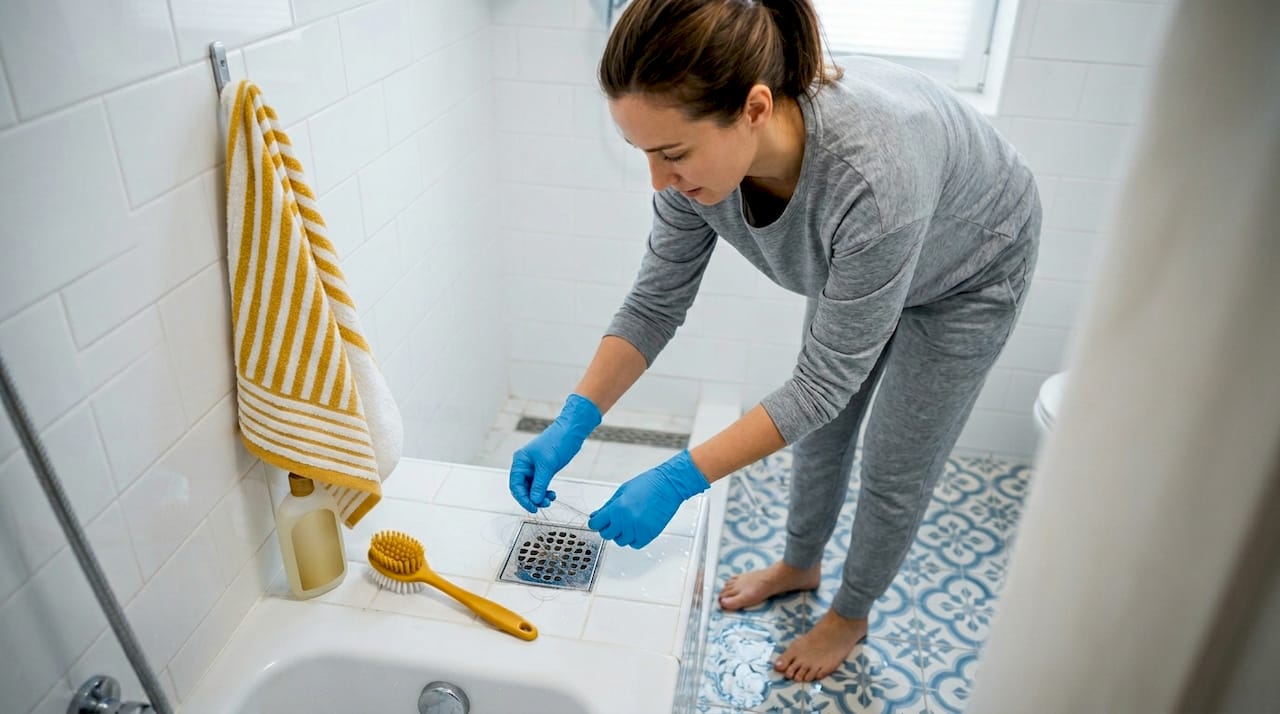
Hair and soap residue tend to cause trouble in bathroom drains. Hair strands bind together and trap soap scum, forming dense clumps that catch more debris over time. A single shower drain can accumulate a surprisingly large blockage within weeks, particularly in households with multiple occupants.
Non-flushable items are becoming an increasingly serious problem. Wet wipes, even those labelled “flushable,” do not break down like toilet paper. Sanitary products, cotton buds, and nappy liners cause major obstructions in both private drains and the public sewer network.
Tree root intrusion is particularly relevant in Southampton. The city has numerous established residential areas with mature trees planted close to properties. Roots seek out moisture and can crack or penetrate even well-laid drainage pipes, causing severe and recurrent blockages. Addressing tree root blockages properly often requires specialist equipment such as root cutters and CCTV surveys to assess the extent of damage.
Pipe damage and collapse affect many of Southampton’s older properties. Clay and cast iron pipes from the Victorian era are brittle and can crack, shift, or collapse entirely, causing total blockages and even sewage backflow into properties. Venting problems, where the air supply in your drainage system is disrupted, can also create slow drains or persistent gurgling sounds even without a blockage present.
Worth knowing: Southampton’s combination of older estates, heavy seasonal rainfall, and proximity to the River Test and Southampton Water means that sewer surcharging (where the public sewer becomes overwhelmed) is a real, recurring risk for many properties.
Identifying the signs of drain backups
Understanding the causes leads naturally to spotting the symptoms early. The sooner you notice something is wrong, the simpler and cheaper the fix tends to be. Many homeowners ignore the early signs and only call for help when water is actively flowing back into their home.
Here are the most important warning signs to watch for:
- Slow drainage in a single sink, bath, or shower is usually the first thing you notice. Water pools for longer than it should and drains sluggishly.
- Gurgling sounds coming from plughole or toilet bowls indicate air trapped in the system, often caused by a partial blockage somewhere in the pipe.
- Unpleasant smells from your drains, particularly a sewage-like odour, suggest that waste is not clearing properly and is decomposing in the pipe.
- Water backing up in unexpected locations, such as water appearing in the shower when you flush the toilet, points to a much more serious main line problem.
- Damp patches or sunken ground outside your property may indicate a broken pipe or drain that has been leaking underground for some time.
- Water pooling in your garden or on paths during or after rainfall suggests that surface water drainage is compromised.
Understanding the signs of blocked drains early can make the difference between a simple jetting job and an expensive excavation.
A key distinction worth understanding is this: when a single fixture drains slowly, it’s often a localised clog, but when multiple drains are affected simultaneously, it points to a main line or sewer issue that needs immediate professional attention.
What this means in practice: If your kitchen sink is slow but your bathroom drains are fine, you probably have a clog in the branch pipe serving the kitchen. If your toilet gurgles when you use the bath, and your sink drains slowly at the same time, the problem is deeper in the system. Do not attempt to fix a main line issue with a plunger or shop-bought chemical. You risk making things worse.
Pro Tip: Keep a simple record of when and where you notice drainage problems. Patterns, such as backups that coincide with heavy rainfall or problems that always start in the same fixture, give a drainage professional genuinely useful diagnostic information when they arrive on site.
A reliable way of sorting suspected main line problems early is to book a professional assessment for slow drains before they develop into emergencies.
Common sources of blockages in Southampton
Once you’ve spotted the signs, determining exactly what is causing the problem matters enormously, because the solution depends on the source. Southampton’s mix of housing stock, urban greenery, and weather patterns creates a specific set of blockage risks.
The following table summarises the most common blockage sources in Southampton properties, their frequency, and the level of risk they present:
| Blockage source | Frequency | Risk level | Typical solution |
|---|---|---|---|
| Grease and fat | Very high | Moderate | Hot jetting, enzyme treatment |
| Hair and soap | High | Low to moderate | Drain snake, jetting |
| Non-flushable items | High | High | Manual removal, jetting |
| Tree root intrusion | Moderate | Very high | Root cutting, CCTV, relining |
| Collapsed or cracked pipes | Low to moderate | Very high | Excavation or drain relining |
| Stormwater and debris | Moderate | Moderate | Drain clearing, soakaway review |
Grease and fat remain the most common source of kitchen drain problems across Southampton. Despite public awareness campaigns, many households still pour cooled fat directly into the sink or wipe greasy pans under the tap. Over time, primary drain blockage causes like accumulated fat lead to full pipe obstructions that only high-pressure water jetting can fully clear.
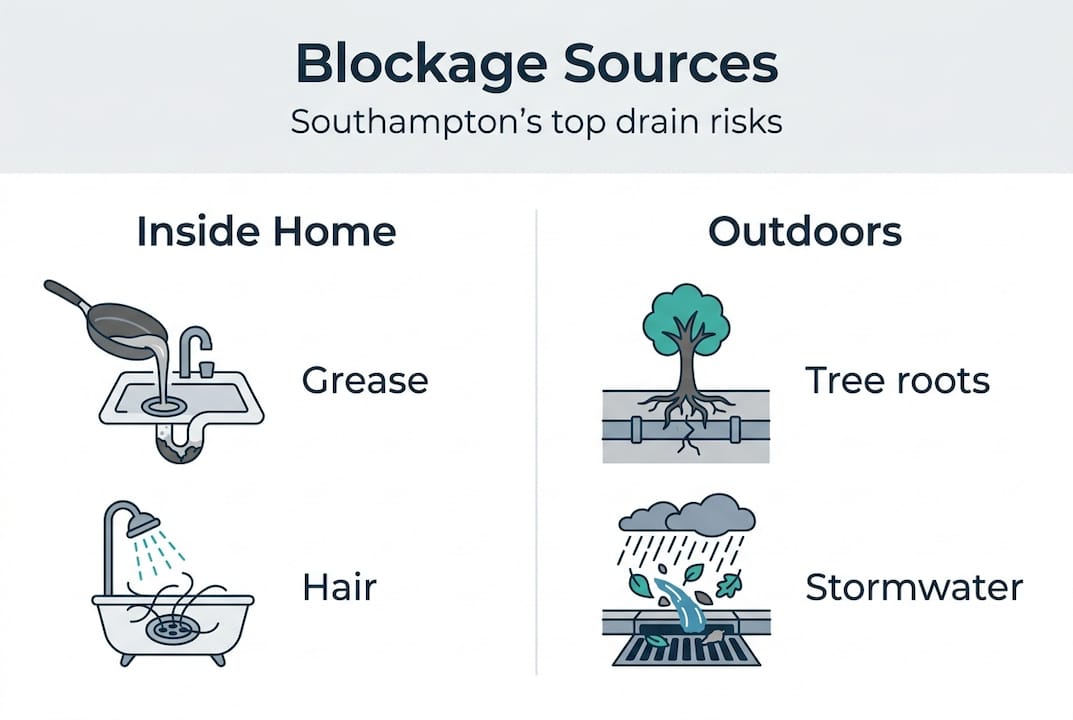
Hair and soap residue build up faster in modern showers with powerful water pressure, which pushes debris further down the pipe before it settles. Installing drain covers for prevention in your shower and bath is one of the simplest and most effective measures you can take.
Non-flushable items are particularly problematic in older Southampton sewers with narrower pipe diameters and more bends, where items get snagged rather than passing through.
Tree roots are a serious concern in areas such as Highfield, Bassett, and Bitterne, where large suburban gardens have mature trees growing close to properties. Roots can travel metres through soil to reach drainage pipes, entering through even hairline cracks and then expanding dramatically inside the pipe over years.
Stormwater impact is also worth noting. Southampton experiences significant rainfall, particularly in autumn and winter, and properties in low-lying areas or near the waterfront can experience drainage overwhelm when the public sewer system surcharges. Ensuring your surface water drainage is clear and functional is essential preparation. Reviewing practical drain prevention tips relevant to your property type gives you a useful starting point.
Preventing and resolving drain backups
After understanding the causes and identifying the signs, action is the next step. Prevention is always cheaper than cure in drainage, but when a backup has already occurred, knowing the right approach saves time and money.
Daily habits that protect your drains:
- Scrape plates and pans thoroughly before washing up, and dispose of cooking fat in the bin rather than down the sink
- Install hair catchers in every shower and bath and clean them weekly
- Never flush wet wipes, cotton wool, nappy liners, or sanitary products, regardless of what the packaging claims
- Run hot water through your kitchen drain for a minute after washing up to help move residual grease through the system
- Avoid pouring chemical drain cleaners routinely, as repeated use can corrode older pipe materials
Regular maintenance makes a genuine difference. Having your drains professionally cleaned every 12 to 18 months removes accumulated scale, grease, and debris before it reaches blockage stage. This is especially important for older Southampton properties where pipes are narrower and more prone to build-up. The value of professional drain cleaning in preventing far more expensive repairs down the line is significant and often underestimated by homeowners until they face a crisis.
The following table summarises the maintenance actions recommended based on property type and age:
| Property type | Recommended action | Frequency |
|---|---|---|
| Modern home (post-1990) | Drain cleaning, visual check | Every 18 months |
| Period property (pre-1950) | CCTV survey, drain cleaning | Annually |
| Property with large garden trees | Root inspection, jetting | Annually |
| Commercial premises | Full drainage inspection | Every 6 to 12 months |
Pro Tip: If you own or manage a Victorian or Edwardian property in Southampton, consider booking a CCTV drain survey even if you haven’t noticed any problems. Many serious issues, including cracked clay pipes and partial root intrusion, show no obvious symptoms until a full collapse occurs.
When a backup has already happened, your immediate priority is to stop using any affected fixtures. Do not attempt to force water through with a plunger if multiple fixtures are backing up, as this can push waste into places it is very difficult to remove from. For urgent situations, a same-day emergency drain clearing response is almost always the safest and most effective option.
For cases involving a structurally damaged pipe, options include high-pressure water jetting to clear the blockage, followed by drain relining to restore the pipe without excavation, or in severe cases full excavation and pipe replacement. Understanding how to approach repairing a collapsed drain helps you make informed decisions about which solution is appropriate for your situation.
A Southampton perspective: What most guides miss about drain backups
Most online guides treat drain backups as a universal problem with universal solutions. Buy a drain snake, pour in some enzymatic cleaner, call a plumber if it persists. That advice is fine for a modern semi-detached house with straightforward pipework. It simply does not reflect what Southampton homeowners regularly deal with.
Southampton has a genuinely complex drainage landscape. Many properties still rely on Victorian-era clay pipes that were never designed to handle today’s volume of water use. The city’s mature street trees, particularly in conservation areas, sit above drainage runs that have never been inspected since installation. Add to that the city’s tidal geography, which means drainage in some areas must work against natural water table pressure, and you begin to understand why a blocked drain here is rarely as simple as it appears on the surface.
The missed insight is this: vigilance and local expertise matter more here than in most other UK cities. A specialist who understands Southampton’s specific infrastructure will identify effective solutions for blocked drains that a generalist simply cannot, because they know what they’re likely to find before they even open a manhole cover.
Get expert help for your drains in Southampton
If you’re dealing with a backup, recurring slow drains, or simply want to know the true condition of your drainage system, the right support makes all the difference.
Our team at Blocked Drains Southampton provides fast, professional blocked drain services across Southampton and the surrounding areas, from emergency clearances and high-pressure jetting to CCTV surveys and full pipe repairs. We understand Southampton’s unique drainage infrastructure inside out, meaning we diagnose accurately and fix things right the first time. Whether you’re a homeowner dealing with a stubborn blockage or a property manager needing a reliable maintenance partner, we’re ready to help. Get in touch today to book a survey or arrange an emergency call-out.
Frequently asked questions
Can pouring hot water down the drain prevent backups?
Pouring hot water may help shift minor grease deposits, but it does not prevent future blockages and is entirely ineffective against hair, root intrusion, or structural pipe issues.
How can I tell if the problem is with my main drain or just one fixture?
If multiple fixtures throughout the property are affected simultaneously, it is almost certainly a main line sewer issue that requires professional attention; a single slow fixture typically indicates a localised clog in that branch pipe.
Are tree roots a frequent cause of drain backups in Southampton?
Yes, tree root intrusion is a common cause of blockages in Southampton, particularly in older neighbourhoods with established trees planted near drainage runs, and it requires specialist root cutting and CCTV inspection to resolve properly.
Does council responsibility extend to clearing drains on my property?
Generally, homeowners are responsible for private drains within their property boundary, while Southern Water and the local council manage public sewers; any drain that serves only your property is your responsibility to maintain and repair.