Blocked drains are one of the most common and costly problems facing Southampton homeowners and property managers. The UK sees around 300,000 sewer blockages every single year, costing an estimated £100 million to clear. What surprises most people is that the vast majority of these blockages are caused by everyday habits, not freak accidents or ageing infrastructure alone. Understanding what goes wrong, and why, puts you in a far stronger position to protect your property, avoid emergency call-outs, and keep your drains flowing freely all year round.
Table of Contents
- Why do drains get blocked?
- The main causes of blocked drains
- Where blockages occur: Kitchen, bathroom, and beyond
- How to prevent blocked drains in your property
- When to call in the experts
- Find trusted help for blocked drains in Southampton
- Frequently asked questions
Key Takeaways
| Point | Details |
|---|---|
| Biggest culprits | Fat, oil, and grease along with wet wipes are the main causes of blocked drains. |
| Prevention is possible | Simple changes like strainers and correct disposal habits prevent most blockages. |
| Routine checks matter | Annual drain inspections, especially in older homes, catch problems before they escalate. |
| Act on persistent issues | Recurring or stubborn blockages should always prompt a call to drainage experts. |
Why do drains get blocked?
Blocked drains are not just an inconvenience. They can cause structural damage, foul smells, and even health hazards if sewage backs up into your home. For Southampton properties in particular, the combination of older Victorian-era pipework and a dense urban population means the risk is higher than in many other parts of the country.
The scale of the problem nationally is striking. Around 300,000 blockages occur in UK sewers every year, and the bill runs into hundreds of millions of pounds when you factor in both council and private repair costs. The good news is that most of these incidents are preventable.
Here is a breakdown of the primary causes across UK drains:
| Cause | Share of blockages |
|---|---|
| Fats, oils, and grease (FOG) | 37.5% |
| Inappropriate flushed items (e.g. wet wipes) | 33.3% |
| Misaligned pipes | 12.5% |
| Tree roots | 8.3% |
| Sewer backups | 8.3% |
These primary causes of blockages paint a clear picture: human behaviour is the dominant factor. You can find more detail on blockage solutions in Southampton and keep up with latest drainage updates as local conditions evolve.
Now that we have established how widespread and significant the problem is, let us break down the main causes one by one.
The main causes of blocked drains
Knowing the percentages is useful, but understanding why each cause creates a blockage helps you take the right action. Let us look at each culprit in detail.
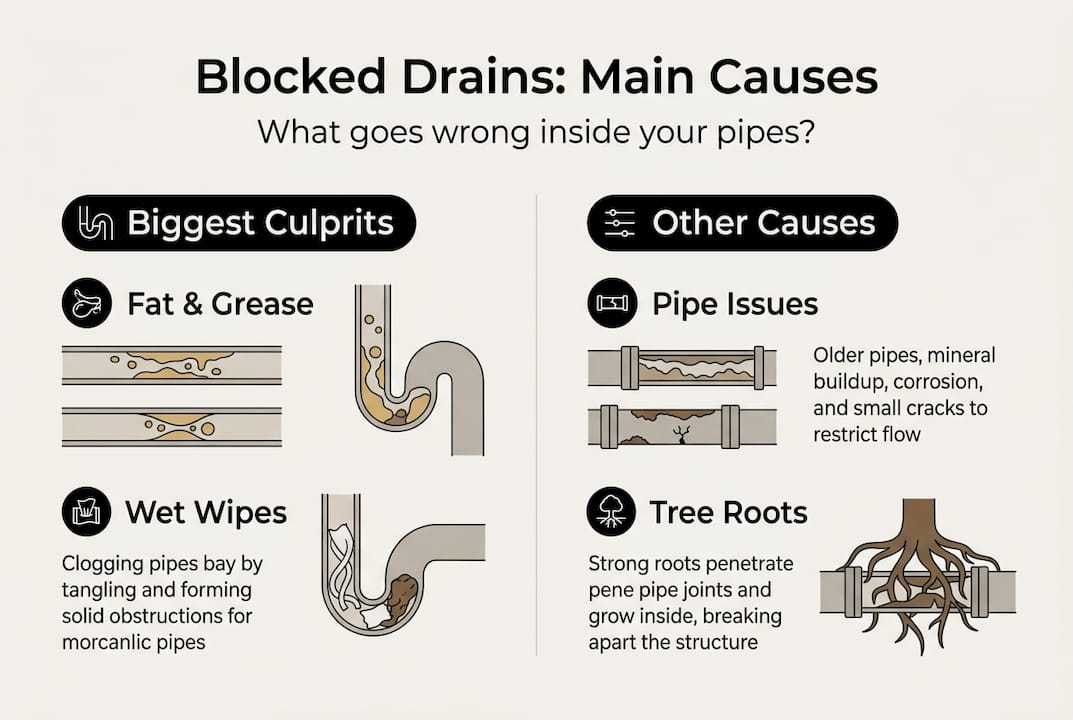
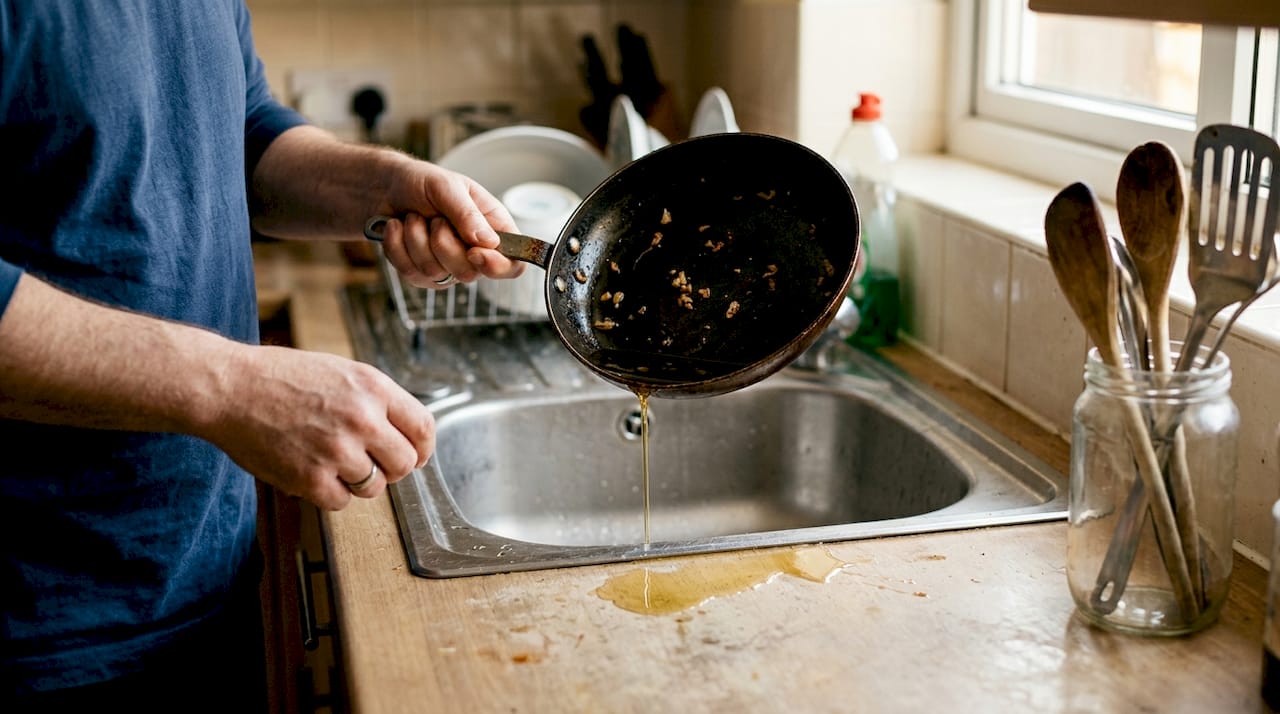
Fats, oils, and grease (FOG) account for 37.5% of blockages nationally. When hot cooking fat is poured down the sink, it flows freely at first. As it cools inside the pipe, it solidifies and sticks to the pipe walls, gradually narrowing the channel until water can barely pass through.
Inappropriate flushed items are responsible for a third of all blockages. Wet wipes are the biggest offender, even those labelled “flushable.” They do not break down like toilet paper and instead clump together, catching other debris and forming dense blockages deep in the sewer system.
Misaligned pipes account for 12.5% of cases. This is a structural issue, often caused by ground movement, poor installation, or the natural settling of older properties. Southampton has a significant stock of Victorian and Edwardian housing where pipe joints have shifted over decades.
Tree roots cause 8.3% of blockages. Roots are drawn to the moisture and nutrients inside drain pipes. They infiltrate through tiny cracks and, over time, can completely fill a pipe or cause it to collapse.
Sewer backups make up the remaining 8.3%. These often result from a combination of the above factors and can affect entire streets when a shared sewer becomes overwhelmed.
For bathrooms specifically, hair and soap scum are the leading culprits, while kitchens suffer most from FOG and starchy food waste. Booking professional drain cleaning is often the most reliable way to tackle these issues once they take hold. For properties with mature trees nearby, understanding tree root removal methods can save you from a very expensive repair.
Key fact: Over 70% of all UK drain blockages are caused by things people deliberately put down their drains. The drain is not a bin.
With the causes clarified, let us map these to the exact locations and types of blockages you will likely face around your property.
Where blockages occur: Kitchen, bathroom, and beyond
Different rooms create different risks. Knowing which areas are most vulnerable helps you focus your prevention efforts where they matter most.
- Bathroom: Hair and soap scum combine to form a sticky, fibrous mass that clings to plug holes and pipe walls. A single shower can shed dozens of hairs, and over weeks this builds into a solid plug.
- Kitchen sink: FOG and food waste are the main threats here. Starchy foods like rice and pasta swell with water and can set like concrete inside pipes. Coffee grounds are another frequent offender, as they clump together rather than washing away cleanly.
- Toilet: Non-flushable items are the primary cause. Wet wipes, cotton wool, sanitary products, and even children’s toys have all been retrieved from blocked toilets. Only the three Ps should ever go down: pee, poo, and paper.
- Outdoor and underground pipes: Leaves, silt, and garden debris accumulate in external gullies and downpipes, especially in autumn. These blockages are easy to overlook until water starts pooling on your driveway or patio.
- External sewers: When an entire neighbourhood misuses the sewer system, shared pipes become overwhelmed. This is a growing issue in densely populated areas of Southampton.
Pro Tip: Place a small bin next to your toilet for cotton wool, wipes, and sanitary items. It takes seconds to set up and can prevent a blockage that costs hundreds of pounds to clear.
You can read more about common blockages in Southampton and how local properties are affected by these specific issues.
Knowing the types and locations of blockages, next comes the crucial question: can you prevent these problems in the first place?
How to prevent blocked drains in your property
Most blockages are avoidable. A few simple habits and low-cost products can make a significant difference to the health of your drains.
- Fit drain strainers in every sink and shower. These catch hair, food particles, and debris before they enter the pipe. Empty them regularly.
- Never pour oil or grease down the drain. Let it cool, pour it into an old container, and put it in the bin. This single habit eliminates the biggest cause of kitchen blockages.
- Flush only the three Ps. Pee, poo, and toilet paper. Everything else goes in the bin, regardless of what the packaging claims.
- Run hot water weekly through your kitchen sink to help shift any grease that has begun to accumulate on pipe walls.
- Clean plug holes regularly. A quick wipe with a cloth or a drain snake (a flexible tool used to pull out debris) takes minutes and prevents major build-up.
- Book an annual drain inspection, particularly if your property is older. Southampton has a large number of pre-war homes where ageing pipes are more prone to misalignment and root intrusion.
Remember: Prevention is always cheaper than cure. A drain strainer costs less than £5. An emergency drain clearance can cost ten times that or more.
Pro Tip: Once a month, pour a kettle of boiling water slowly down your kitchen sink. Follow it with a handful of bicarbonate of soda and a cup of white vinegar. Leave for ten minutes, then flush with more hot water. It is a simple, chemical-free way to keep grease from building up.
For more tailored advice, our drain expert advice section covers Southampton-specific prevention strategies, and you can also review professional checks available for your property type.
Following these tips reduces most risks, but some factors require professional attention. Here is when you should seek expert drainage help.
When to call in the experts
Some blockages cannot be shifted with a plunger or a kettle of hot water. Knowing when to call a professional saves you time, money, and potential damage to your property.
- Persistent or recurring blockages are a red flag. If the same drain keeps blocking despite your best efforts, there is likely a deeper structural issue at play.
- Multiple slow drains at once usually point to a problem in the main sewer line rather than an individual pipe. This needs specialist equipment to diagnose and clear.
- Unusual smells or gurgling noises coming from your drains can warn of a blockage forming before it becomes a full emergency. Do not ignore these early signs.
- External issues such as tree roots or pipe collapse cannot be resolved with DIY methods. Specialist equipment including CCTV cameras and high-pressure water jetting is needed to locate and clear the problem safely.
- Older properties benefit enormously from regular CCTV surveys. Southampton has a significant number of homes with ageing pipe infrastructure where small cracks and misalignments can go undetected for years.
If you are dealing with roots in your pipes, our guide on dealing with tree roots explains the options available. For broader concerns, expert drainage protection covers how local specialists approach complex cases. You can also browse the full range of drainage services Southampton has available for both residential and commercial properties.
Find trusted help for blocked drains in Southampton
If you have spotted the warning signs or simply want peace of mind, getting a professional assessment is the smartest next step. Local expertise matters enormously when it comes to Southampton’s unique mix of Victorian pipework, coastal ground conditions, and dense urban drainage networks.
Our local drain services cover everything from emergency blockage clearance to full CCTV drain surveys and preventative maintenance agreements. Whether you are a homeowner dealing with a stubborn kitchen blockage or a property manager looking after multiple units, we have the tools and experience to help. We also serve specific areas such as Swaythling and offer specialist root removal for properties with mature trees nearby. Protecting your drains now protects your property value for years to come.
Frequently asked questions
What is the main reason for blocked drains?
Fats, oils, and grease are the leading cause, responsible for 37.5% of all UK drain blockages. Pouring cooking fat down the sink is the single most damaging habit for your drainage system.
How do I know if my drain is blocked or just slow?
If you notice foul odours, gurgling sounds, or water backing up in more than one fixture at the same time, you almost certainly have a blockage rather than a simple slow drain.
What can I pour down the drain to clear a blockage?
For minor clogs, try hot water followed by bicarbonate of soda and white vinegar. Avoid chemical drain cleaners as they can damage older pipes. For persistent blockages, call a professional rather than risk making the problem worse.
Are tree roots a common problem for drains in Southampton?
Tree roots account for 8.3% of UK blockages and are a particular concern for Southampton’s older properties, where ageing pipes offer more entry points for root intrusion.
What is the most effective way to prevent blocked drains?
Use drain strainers in every sink and shower, never pour oil or grease down the drain, and arrange annual professional inspections to catch any developing issues before they become costly emergencies.