TL;DR:
- Most slow drains are caused by surface debris like hair, soap scum, and grease.
- DIY methods, including cleaning stoppers and using baking soda with vinegar, resolve over 80% of issues.
- Professional help is needed when multiple fixtures drain slowly or recurring problems occur.
A slow-draining sink or shower is one of those household problems that starts as a minor irritation and quickly becomes a daily frustration. Standing in ankle-deep water during a shower or watching a basin take minutes to empty is not just inconvenient — it is a warning sign your drain needs attention. The good news is that most slow drains in Southampton homes are caused by surface-level debris, and with the right approach you can often sort the problem yourself in under an hour. This guide walks you through the causes, the tools, and the practical steps to get your drains flowing freely again.
Table of Contents
- What causes slow drains and when to act
- Essential tools and materials for clearing slow drains
- Step-by-step methods to clear a slow drain
- How to check results and prevent future slow drains
- Expert perspective: why most slow drains don’t need an emergency plumber
- When to get expert drain help in Southampton
- Frequently asked questions
Key Takeaways
| Point | Details |
|---|---|
| Most slow drains are DIY fixable | Simple techniques solve the majority of bathroom and kitchen slow drain issues. |
| Surface cleaning first | Clearing the stopper or strainer removes the majority of common blockages. |
| Use safe home remedies | Baking soda and vinegar are effective, pipe-safe, and easy for ongoing prevention. |
| Know when to call experts | Multiple slow drains or recurring blockages need a professional’s attention. |
What causes slow drains and when to act
Before reaching for any tools, it helps to understand what is actually blocking your drain. The most common culprits are surprisingly mundane. Hair and soap scum are the leading offenders in bathroom sinks and showers, often combining to form a dense, sticky mat just below the plug hole. In kitchen sinks, cooking grease and food particles build up gradually, coating the pipe walls until water can barely squeeze through. This greasy layer is sometimes called biofilm, a slimy coating of organic matter and bacteria that thickens over time.
Other frequent causes include:
- Foreign objects such as bottle caps, cotton buds, or small toys that have slipped down the drain
- Mineral deposits from Southampton’s water supply, which can narrow pipe walls over months
- Soap residue from bar soap, which solidifies inside pipes more readily than liquid soap
- Toothpaste and shaving foam residue accumulating around the stopper mechanism
Knowing the common blocked drain culprits helps you target the right fix rather than guessing. The warning signs to watch for include water pooling around your feet in the shower, a gurgling sound as water finally drains, and unpleasant odours rising from the plug hole. These smells are usually caused by decomposing organic matter sitting in the trap, the curved section of pipe beneath the fixture.
The key question is: when do you act yourself, and when do you call someone in? As a general rule, expert DIY advice confirms that stepwise DIY resolves most shallow clogs at the stopper or trap level quickly, while mainline issues need professional attention. A single slow fixture is almost always a DIY job. However, if two or more fixtures are draining slowly at the same time, that points to a deeper blockage further down the main line, which is not something a plunger will fix.
Pro Tip: If your kitchen sink, bathroom basin, and shower are all running slow simultaneously, do not waste time on DIY methods. That pattern almost always means a shared drain or mainline issue that needs a professional camera inspection.
Checking your drain prevention tips early can also help you spot whether a recurring problem is structural or simply a maintenance issue. Act promptly. A slow drain left untreated will eventually become a full blockage, and that is when water damage and costly repairs become a real risk.
Essential tools and materials for clearing slow drains
Getting organised before you start saves time and prevents the frustration of stopping halfway through to hunt for something you need. Fortunately, most of what you require is either already in your home or available cheaply from any hardware shop.
Here is a quick reference table for everything you might need:
| Tool or material | Purpose | Safety note |
|---|---|---|
| Rubber gloves | Protect hands from bacteria and chemicals | Always wear before handling drain waste |
| Bucket | Catch water when removing the trap | Place under pipes before loosening joints |
| Cup plunger | Create suction to dislodge blockages | Use on flat-bottomed sinks, not toilets |
| Bicarbonate of soda | Natural cleaning agent | Do not mix with commercial drain chemicals |
| White vinegar | Reacts with bicarbonate to break down buildup | Avoid contact with eyes |
| Zip-it tool or drain snake | Physically remove hair and debris | Insert slowly to avoid scratching pipes |
| Enzyme cleaner | Digests organic biofilm over time | Follow product instructions carefully |
| Torch | Illuminate the drain opening | Standard household torch is sufficient |
A few additional points worth noting. Eye protection is genuinely useful, not just a cautious suggestion. Splashback from plunging or pouring liquids into a drain can send contaminated water upward. Wear it.
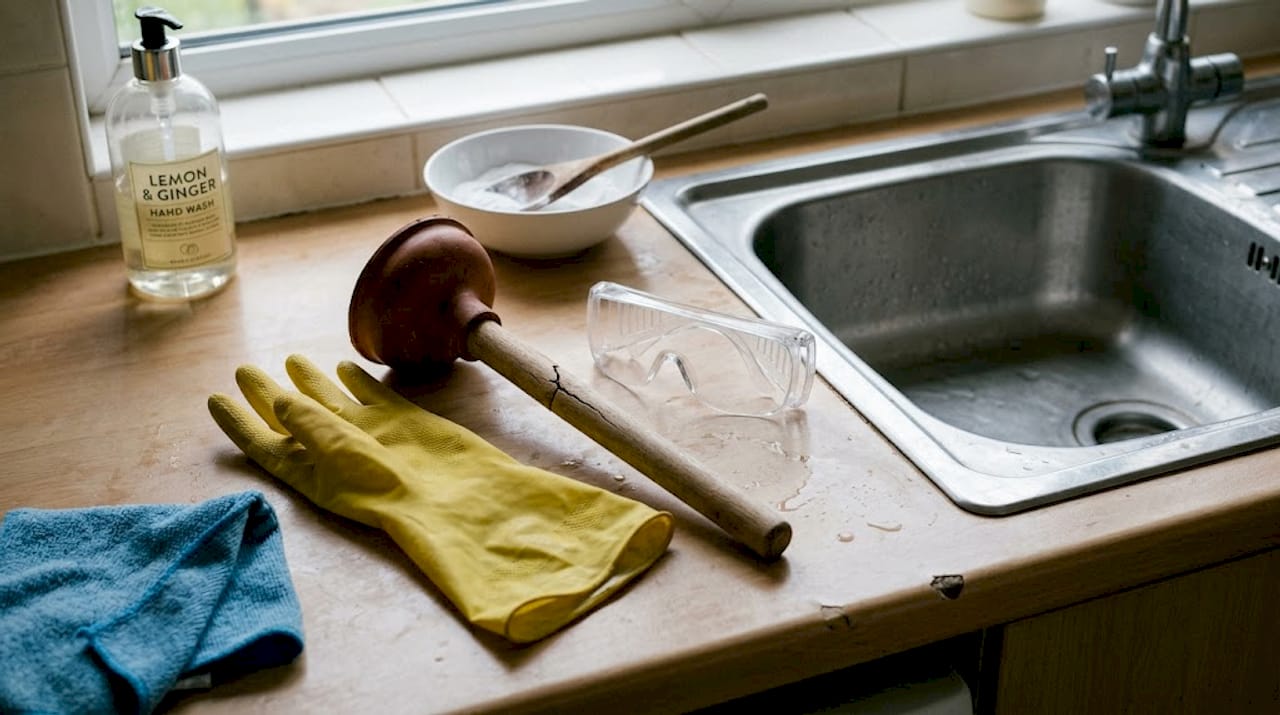
Also, check what type of pipes you have before applying heat or chemicals. Older Southampton properties often have cast iron or copper pipes, which handle hot water well. Newer homes typically use PVC, which can warp or soften if you pour boiling water directly into it. Hot tap water is always safe; boiling kettle water is not always appropriate.
As noted in preferred home solutions, removing and cleaning the stopper or strainer alone solves roughly 50% of slow bathroom drains, particularly because hair and biofilm collect right at that point. So before assembling your full toolkit, simply lift out the stopper and clean it. You may not need anything else.
You will find more guidance on selecting the right routine maintenance tools for ongoing drain care on our prevention page. Keep your tools clean after each use and store them away from food preparation areas.
Step-by-step methods to clear a slow drain
Work through these methods in order. Start simple and only move to the next step if the previous one has not resolved the issue.
-
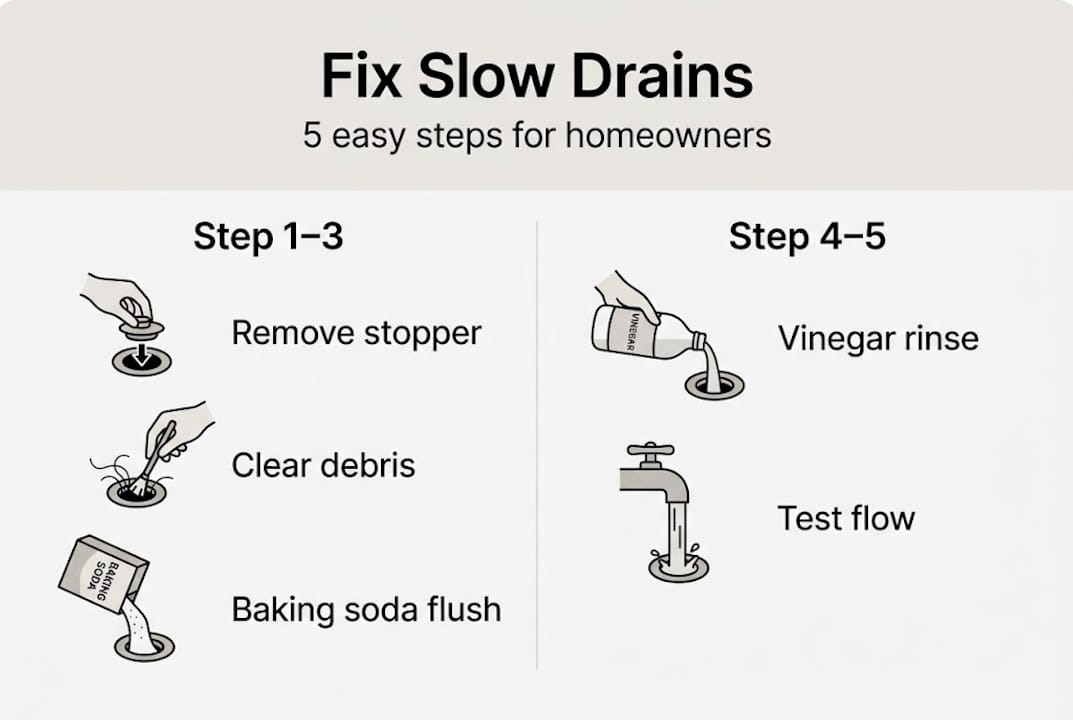
Clean the stopper and strainer. Remove the stopper by unscrewing it or lifting it out, depending on the design. Clean off any hair, soap, or debris with an old cloth or paper towel. Rinse under the tap and replace it. Test the drain.
-
Plunge the drain. Fill the basin with a few centimetres of water to create a seal. Place the cup plunger firmly over the plug hole and push down and pull up rapidly ten to fifteen times. The pressure change dislodges many shallow blockages. Test again.
-
Use bicarbonate of soda and vinegar. Pour half a cup of bicarbonate of soda directly into the drain, followed immediately by half a cup of white vinegar. The fizzing reaction breaks down organic buildup effectively. Cover the drain opening to direct the fizz downward, wait thirty minutes, then flush with hot tap water. This method is safe for all household pipes and works well as a monthly preventive measure too.
-
Use a zip-it tool or drain snake. Insert the tool slowly into the drain opening. Twist it as you push it down so it catches hair and debris. Pull out the clog carefully and dispose of it in the bin, not back down the drain. This method reaches the P-trap and slightly beyond.
-
Inspect and clean the trap. Place a bucket under the curved pipe beneath the sink. Unscrew the slip joints by hand or with pliers and remove the trap. Clean it out thoroughly, check for any lodged objects, and refit it. Make sure the joints are hand-tight to avoid leaks.
| Method | Difficulty | Effectiveness |
|---|---|---|
| Stopper cleaning | Very easy | High for bathroom drains |
| Plunging | Easy | Moderate to high |
| Bicarbonate and vinegar | Easy | Moderate, best for organic buildup |
| Zip-it or drain snake | Moderate | High for hair clogs |
| Trap removal and cleaning | Moderate | Very high |
Over 80% of fixture-level slow drains resolve with these five steps when carried out thoroughly and in order.
Pro Tip: Repeat the bicarbonate of soda and vinegar flush once a month as a preventive measure. It takes five minutes and significantly reduces the chance of a slow drain returning.
If none of these steps work, it is time to consider when to call professionals rather than escalating to harsh chemical products, which can damage pipes and are rarely more effective than mechanical methods.
How to check results and prevent future slow drains
Once you have worked through the steps above, it is important to confirm the fix has actually worked rather than assuming everything is fine. Fill the sink or basin completely with water, then pull the plug and watch. The water should drain steadily and clear within fifteen to twenty seconds for a standard basin. If it drains noticeably faster than before but still pools slightly, the blockage is partially cleared and you may need to repeat one of the mechanical steps.
Warning signs that the problem persists include:
- Water still pooling or draining in under a minute rather than seconds
- Gurgling sounds returning within a day or two
- Persistent unpleasant odours even after cleaning the stopper and trap
- More than one fixture still draining slowly
For ongoing drain care, enzymes digest biofilm gradually and are excellent for long-term maintenance. Hot water flushes help with grease in metal pipes, though you should avoid this on PVC. Build these habits into your routine and slow drains become far less frequent.
Prevention is straightforward when you know what to do:
- Install a simple mesh strainer over every plug hole in the house
- Never pour cooking oils or fats down the kitchen sink
- Run hot tap water for thirty seconds after washing greasy dishes
- Treat drains monthly with enzyme cleaner or a bicarbonate and vinegar flush
- Avoid flushing wipes, cotton wool, or sanitary products down any drain
Around 80 to 90% of fixture-level blockages are resolved through DIY methods when tackled early. The key is not waiting until the drain stops completely. For issues related to tree roots infiltrating your outdoor pipes, our guide on tree root prevention covers that specific problem in detail. And for broader strategies, the long-term prevention page is a useful resource to bookmark.
Expert perspective: why most slow drains don’t need an emergency plumber
Here is something worth saying plainly: the vast majority of slow drains in Southampton homes are not pipe failures. They are maintenance failures. Hair accumulates. Grease builds up. Soap residue hardens. These are not structural problems; they are the natural result of daily use without regular cleaning.
Yet many homeowners reach for the phone before they have even looked at the stopper. Chemical drain cleaners are often the first response, despite the fact that they are frequently unnecessary and sometimes actively harmful to older pipework. As stepwise DIY confirms, most shallow clogs at the stopper or trap level resolve quickly with patience and the right sequence of steps.
The real risk is panic. A slow drain feels urgent, especially when guests are arriving or the kitchen is mid-use. But a calm, methodical approach almost always works. Save professional help for genuinely complex situations: recurring blockages despite regular maintenance, unexplained slowdowns across multiple fixtures, or anything involving the main sewer line. Avoiding costly blockage missteps starts with not over-reacting to a single slow fixture. Pair that with solid mess-free prevention strategies and you will rarely need emergency help.
When to get expert drain help in Southampton
If you have worked through every method in this guide and your drains are still sluggish, or if foul odours persist and multiple fixtures are affected, it is time to bring in a professional.
Our team at blocked drains services covers Southampton and the surrounding areas, offering fast, reliable solutions for blockages that go beyond the reach of DIY. Whether it is a stubborn mainline clog or something more complex, we use modern equipment to diagnose and fix the problem properly the first time. You can book a drain expert quickly online, or simply get in touch with the team at blocked-drainssouthampton.co.uk for advice. Prompt action protects your plumbing and keeps disruption to a minimum.
Frequently asked questions
What is the fastest DIY fix for a slow bathroom drain?
Removing and cleaning the stopper or strainer is usually the quickest fix, as this single step resolves roughly half of all slow bathroom drains by clearing accumulated hair and biofilm right at the source.
Is baking soda and vinegar safe for all pipes?
Yes, the bicarbonate and vinegar method is safe for most household plumbing and effective against organic buildup, but never combine it with commercial chemical drain cleaners as the reaction can be hazardous.
What should I do if all my drains are slow at once?
Slow drainage across multiple fixtures almost always points to a deeper blockage in the main line, and as stepwise DIY confirms, this is a situation where you should call a professional rather than attempt further DIY.
How often should I clean my household drains?
A monthly treatment using enzyme cleaner or a bicarbonate and vinegar flush is enough to keep most drains clear and prevent the gradual buildup that leads to slow drainage.