Up to 70% of blockages preventable with routine maintenance, yet most Southampton homeowners only think about their drains when something goes wrong. That reactive approach costs far more than it saves. Drainage infrastructure is the hidden backbone of every property, quietly managing rainwater, waste, and groundwater every single day. Get it right and you protect your home from flooding, subsidence, and costly repairs. Get it wrong and the consequences can be severe. This guide explains how drainage systems work, compares your options, and gives you practical strategies to keep everything flowing smoothly.
Table of Contents
- What is drainage infrastructure and why does it matter?
- Types of domestic drainage systems explained
- How drainage systems are installed and maintained
- Common drainage problems and how to respond
- Reliable drainage support for Southampton homes
- Frequently asked questions
Key Takeaways
| Point | Details |
|---|---|
| Drainage matters | A robust drainage system protects your home from costly water damage and flooding. |
| Systems compared | French drains, soakaways, and SuDS each have strengths—choose based on your property’s needs. |
| Prevention saves money | Regular maintenance can prevent most blockages and save up to 46% over five years. |
| Know the signs | Early symptoms like slow drains and odours should prompt quick investigation to prevent emergencies. |
| Help is local | Expert drainage services in Southampton are available for emergencies and routine maintenance. |
What is drainage infrastructure and why does it matter?
Drainage infrastructure is the network of pipes, channels, drains, and structures that move water away from your property and into the wider water management system. It includes everything from the gully outside your front door to the underground pipes running beneath your garden. Without it, rainwater and wastewater would pool around foundations, seep into walls, and create serious health hazards.
Common components of a domestic drainage system include:
- Surface drains and gullies that collect rainwater from driveways and patios
- Underground foul water pipes carrying waste from toilets, sinks, and baths
- Soakaways that allow water to disperse slowly into the surrounding soil
- Inspection chambers providing access points for maintenance and clearing
- Guttering and downpipes directing roof water away from the building
Poor drainage leads to waterlogged gardens, damp walls, and in serious cases, structural damage to foundations. Good drainage, by contrast, protects your investment and keeps your home healthy. Our local drainage expertise in Southampton means we understand the specific challenges posed by the city’s older pipe networks and clay-heavy soils.
It is also worth considering greener approaches. Sustainable drainage details show how rain gardens, permeable paving, and green roofs reduce runoff and pollution by mimicking natural drainage patterns, something increasingly prioritised in urban areas. Our drainage services overview includes sustainable options suited to Southampton properties.
Pro Tip: Locate your main drain access point (usually an inspection chamber in the garden or driveway) before any problem arises. Knowing where it is saves precious time during an emergency.
Types of domestic drainage systems explained
Not every drainage solution suits every property. Southampton homes range from Victorian terraces with ageing clay pipes to modern builds with purpose-designed soakaways. Understanding your options helps you make the right choice.
Conventional piped systems are the most common. Rigid or flexible pipes carry water underground to the mains sewer or a soakaway. They are reliable but can crack, root-infiltrate, or block over time.
French drains are gravel-filled trenches with perforated pipes that redirect subsurface water away from foundations using gravity. They are ideal for waterlogged gardens and areas where surface water collects after heavy rain. If you are dealing with persistent wet patches in your lawn, a French drain is often the most cost-effective fix.
Soakaways are underground chambers or crates filled with rubble or plastic cells. Water drains into them and slowly percolates into the surrounding soil. They work best in free-draining ground and are commonly used for roof water from downpipes.
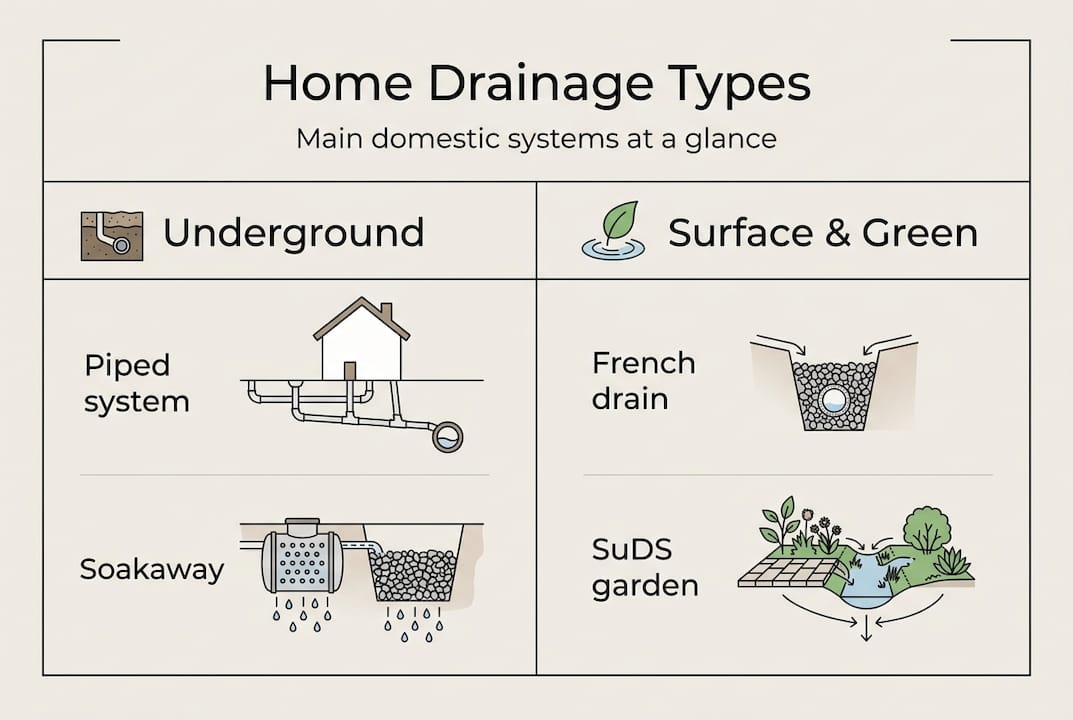
Sustainable urban drainage systems (SuDS) take a broader view. Green infrastructure reduces runoff and pollution by slowing water down and filtering it naturally. Permeable driveways, swales, and rain gardens all fall under this category. For drainage in Polygon and other densely built Southampton neighbourhoods, SuDS can make a real difference to local flooding risk.
| System | Best use | Pros | Cons | Maintenance |
|---|---|---|---|---|
| Conventional pipes | General waste and rainwater | Reliable, widely understood | Can crack or block | Annual jetting |
| French drain | Waterlogged gardens | Cost-effective, gravity-fed | Needs geotextile to prevent silting | Every 3-5 years |
| Soakaway | Roof and surface water | Low maintenance, eco-friendly | Needs permeable soil | Inspect annually |
| SuDS | Urban runoff management | Reduces flooding, improves ecology | Higher upfront cost | Seasonal checks |
Tree roots are a particular concern in older Southampton streets. If roots are already causing problems, our guide on dealing with drain roots explains the most effective removal methods.
Pro Tip: Before installing any drainage system, check your soil type. Clay soils drain slowly and may make a soakaway ineffective. A simple percolation test (digging a hole, filling it with water, and timing how fast it drains) takes under an hour and saves you from a costly mistake.
How drainage systems are installed and maintained
Installation done properly is the difference between a system that lasts decades and one that fails within a few years. Here is a practical overview of what good installation looks like.
French drain installation steps:
- Mark out the trench route, directing water toward a suitable outfall or soakaway
- Excavate a trench 12 to 18 inches wide and 18 to 24 inches deep
- Line the trench with geotextile fabric to prevent soil ingress
- Lay a 4-inch perforated pipe on a gravel bed, ensuring a consistent fall toward the outfall
- Backfill with clean gravel and fold the geotextile over the top
- Cover with topsoil or turf as required
Gradient is critical. Too shallow and water will not flow. Too steep and sediment builds up at the outfall. A fall of around 1 in 100 is generally recommended for most domestic applications.
For ongoing maintenance, a simple routine prevents the vast majority of problems. Annual plans yield 46% savings over five years compared to reactive repairs, which makes a maintenance contract genuinely good value.
| Task | Frequency | Estimated cost (Southampton) |
|---|---|---|
| Drain jetting and clearing | Annually | £80 to £150 |
| CCTV drain survey | Every 2-3 years | £150 to £300 |
| Soakaway inspection | Annually | £50 to £100 |
| French drain flush | Every 3-5 years | £100 to £200 |
| Full maintenance contract | Annually | £120 to £250 |
Our professional drainage maintenance packages are designed to keep Southampton properties protected year-round. For homes already experiencing issues, our local blocked drain solutions page covers fast, effective responses.
Common drainage problems and how to respond
Even well-maintained systems develop faults. Knowing the warning signs early means you can act before a minor issue becomes a major repair.
Signs your drainage system needs attention:
- Slow-draining sinks, baths, or toilets
- Gurgling sounds from pipes or drains
- Unpleasant smells from drains inside or outside the property
- Water pooling on the lawn or driveway after rain
- Damp patches on walls or floors near drainage routes
- Sewage backing up into the property
The three most common culprits are fat and grease build-up (particularly in kitchen waste pipes), tree root intrusion into older clay or pitch fibre pipes, and structural faults caused by ground movement or age. Southampton’s mix of Victorian infrastructure and heavy clay soils makes root intrusion especially common.
“70% of blockages are preventable with proactive maintenance, and annual plans can cut costs by nearly half over five years.”
If you spot a problem, there are immediate steps you can take before professional help arrives. Stop using the affected drain if sewage is backing up. Clear any visible debris from surface gullies. Avoid pouring chemicals down the drain as these can damage older pipes. Then call a professional.
Our emergency drain clearing process is available around the clock for Southampton homeowners. For area-specific advice, our Bassett blocked drains advice page covers common local issues. You will also find a range of blockage prevention tips on our blog to help you stay ahead of problems.
Pro Tip: Schedule a CCTV drain survey every two to three years even if nothing seems wrong. It catches root intrusion, cracks, and partial blockages before they escalate, and the cost is a fraction of an emergency repair.
Reliable drainage support for Southampton homes
Understanding your drainage system is the first step. Acting on that knowledge is what protects your home. Whether you are dealing with a blocked drain right now or simply want to put a maintenance plan in place, professional support makes all the difference.
At Blocked Drains Southampton, we provide the full range of drainage services that Southampton homeowners and property managers need, from routine jetting and CCTV surveys to complex soakaway installations and structural repairs. If you have a problem that cannot wait, our emergency drainage help team responds quickly across Southampton and the surrounding areas. For properties affected by root intrusion, our specialist drain root solutions use proven techniques to clear and protect your pipes. Get in touch today for a consultation or same-day callout.
Frequently asked questions
What is the most common cause of drain blockages in Southampton homes?
The most common causes are fat and grease build-up, tree root intrusion, and foreign objects obstructing pipes. Root intrusion and grease build-up are particularly prevalent in Southampton’s older pipe networks.
How can I tell if my garden needs a French drain?
If your lawn stays waterlogged or drains poorly after rain, a French drain is likely the right solution. French drains suit waterlogged areas with persistent subsurface water problems.
What is the main advantage of sustainable urban drainage (SuDS)?
SuDS reduce surface runoff and pollution while mimicking natural drainage for healthier urban environments. Green infrastructure reduces runoff and improves water quality compared to conventional piped systems.
Are annual drainage maintenance plans really worth it?
Yes. Annual plans prevent the majority of blockages and yield 46% savings over five years by avoiding emergency callouts and flood damage repairs.