TL;DR:
- Older Southampton homes face drainage issues due to aged materials, root ingress, and ground movement.
- Early signs include pooling water, damp patches, slow drains, gurgling sounds, and structural cracks.
- Solutions like CCTV surveys, relining, and external upgrades offer long-term fixes, prioritized by problem specifics.
Persistent drainage failures in older Southampton properties are rarely bad luck. They are almost always the result of ageing infrastructure pushed past its limits, combined with repairs that treat the surface rather than the source. Around 38% of building damage stems from failing building services such as drainage, yet most homeowners and property managers only act when a crisis forces their hand. If you have tried fix after fix and still find damp patches, blocked pipes, or pooling water in your garden, this guide is for you. We will walk through why older homes are so vulnerable, how to spot the real warning signs, and which solutions actually deliver lasting results.
Table of Contents
- Why do older properties face more drainage issues?
- Essential signs of drainage problems in older homes
- Top solutions for repairing drainage in historic properties
- How to choose the right drainage solution for your property
- Why Southampton’s older properties need a proactive drainage approach
- Drainage experts for Southampton homes: next steps
- Frequently asked questions
Key Takeaways
| Point | Details |
|---|---|
| Outdated pipes increase risk | Historic properties in Southampton are more likely to suffer drainage failures due to aging infrastructure. |
| Prevention beats crisis repair | Proactive maintenance and modern methods reduce the need for costly emergency drain repairs. |
| Identify problems early | Watch for localised flooding, damp, and slow drainage to catch issues before they escalate. |
| External fixes work best | Targeting external drainage solutions resolves both visible and hidden damp problems effectively. |
Why do older properties face more drainage issues?
Southampton has an unusually rich stock of Victorian, Edwardian, and mid-century homes, and that heritage comes with a hidden cost beneath the ground. The drains serving these properties were designed for a different era, built from clay, cast iron, or early concrete, and laid to standards that bear little resemblance to what modern surveyors would specify today. Over decades, these materials crack, corrode, and shift, often without any visible sign above ground.
One of the most overlooked problems is simply exceeded service life of pipes and drainage channels. Drainage engineers regularly find clay pipes that are over a century old, still in use but riddled with root ingress, joint separation, and partial collapse. These are not pipes on the edge of failure; they are pipes that passed the point of reliable service decades ago.
Local conditions in Southampton make matters worse. The city receives significant annual rainfall, and its mature tree canopies, particularly in areas like Bassett, Bitterne, and Portswood, mean that root systems are constantly seeking out moisture. Drain joints, especially in older clay pipes, are an irresistible target. The historic Southampton drainage issues related to the city’s geography and industrial heritage compound the pressure on residential systems that were never designed to cope alone.
Here is what tends to go wrong in older properties, and why:
- Pipe material degradation: Clay and cast iron corrode over time, creating rough internal surfaces that trap grease, sediment, and debris
- Root ingress: Tree roots exploit even hairline cracks, eventually blocking or crushing the pipe entirely
- Joint failure: Older mortar joints dry out, separate, and allow groundwater to enter or sewage to escape
- Misaligned gradients: Settlement and ground movement alter the fall of old pipes, causing standing water and repeat blockages
- Lack of maintenance history: Many properties change hands without any record of when drains were last inspected or cleared
“Exceeded service life is among the most frequent root causes of failure in older building systems, including drainage and pipework.” Neglected systems do not recover on their own.
Understanding how drainage problems affect drainage and property value is essential for any property owner thinking about long-term investment protection.
Essential signs of drainage problems in older homes
Understanding these underlying issues lets you spot problems before they escalate. Some warning signs are obvious; others are subtle enough to be mistaken for ordinary wear and tear. Knowing the difference can save thousands in repair costs.
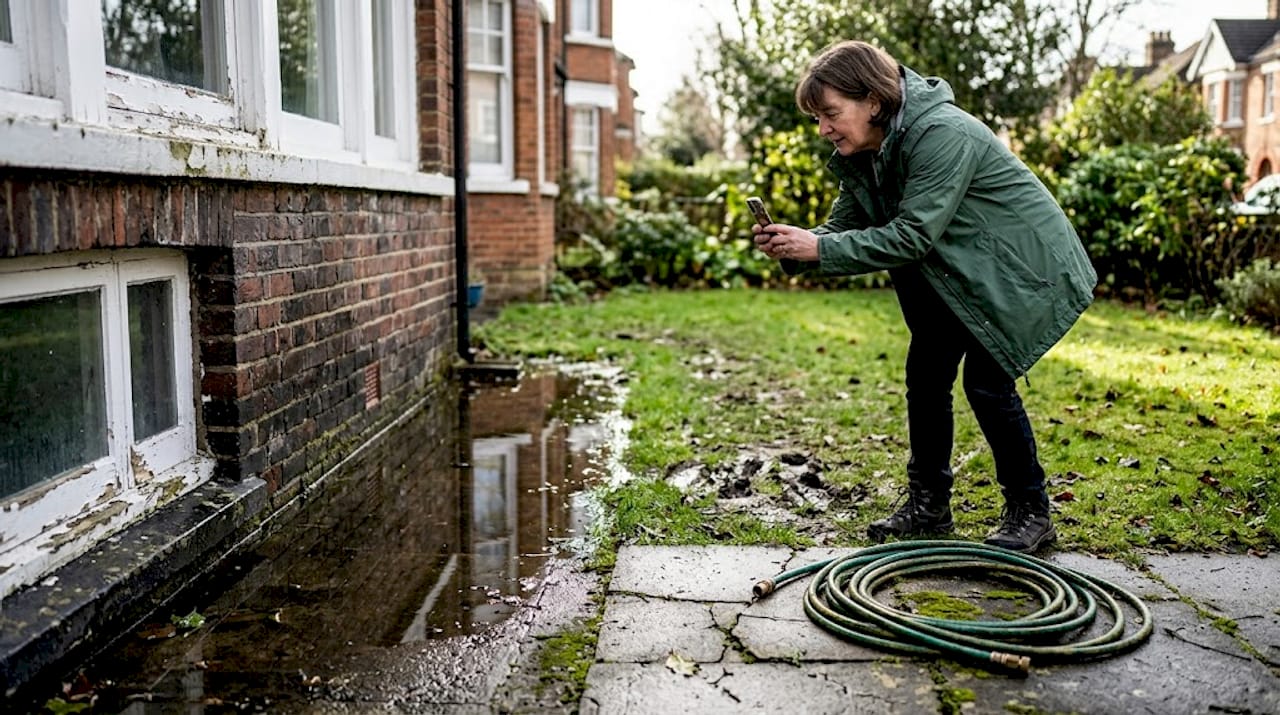
Rain and precipitation are primary triggers for drainage failures in older buildings, which means Southampton’s wet winters are a reliable stress test for your system every year. After heavy rain, walk around your property and look carefully.
Here are the signs that demand your attention:
- Exterior pooling: Water that sits on your lawn or patio for hours after rain suggests a blocked or overwhelmed soakaway or surface drain
- Damp patches on internal walls: Particularly at ground level or in corners, this often points to a drain leaking below ground rather than a rising damp issue
- Slow-draining sinks or baths: Occasional slowness is normal; recurring slowness in multiple fixtures points to a shared pipe problem further down the system
- Gurgling noises: A gurgling sound from a drain or toilet after water is used elsewhere in the house indicates a partial blockage or venting problem
- Persistent musty or sewage odours: These suggest either a dry trap, a cracked pipe, or a drain that is not flowing freely
- Cracks in external render or brickwork at low level: Ground saturation from a leaking drain can undermine foundations and cause cracking that looks purely structural
Many Southampton homeowners initially blame condensation or general ageing for damp patches, spending money on internal treatments. In most cases we investigate, the drain is the true culprit.
Pro Tip: After the next heavy rainfall, photograph any pooling water in your garden or around your property’s perimeter. Noting where water sits and for how long gives a drainage professional a clear starting point and saves time during investigation.
Following the blocked drain prevention tips relevant to older properties can reduce emergency call-outs significantly. Acting on early signs also means that timely drain repairs remain affordable, rather than escalating into major structural interventions.
Top solutions for repairing drainage in historic properties
Now that you know the warning signs, let’s examine the best repair options available. Not all solutions are equal, and the right choice depends heavily on your property’s age, pipe material, and the nature of the problem.
- CCTV drain survey: Always the first step. A camera is fed through the drain to locate blockages, cracks, root ingress, or collapsed sections. It removes guesswork entirely and pinpoints exactly where work is needed. CCTV surveys also distinguish between a drain that needs a clean and one that needs structural repair.
- High-pressure water jetting: For blockages caused by grease, sediment, or soft root growth, jetting clears the pipe quickly without any excavation. It is the standard first response for recurring blockages.
- CIPP drain relining (no-dig): Cured-in-place pipe lining inserts a resin-impregnated sleeve into the damaged pipe, which hardens to form a new pipe within the old one. It works brilliantly for cracked or root-damaged pipes in older properties where excavation would be highly disruptive or costly.
- Full pipe replacement: Reserved for pipes that have collapsed completely or are so misaligned that relining is not viable. More disruptive and expensive, but sometimes the only appropriate solution.
- External drainage improvements: Installing or upgrading surface water drains, soakaways, or channel drains around the property boundary addresses the volume of water reaching your pipes in the first place.
| Solution | Best for | Disruption level | Relative cost |
|---|---|---|---|
| CCTV survey | Diagnosis before any repair | Very low | Low |
| Jetting | Soft blockages, routine maintenance | Very low | Low |
| CIPP relining | Cracked, root-damaged, or corroded pipes | Low | Medium |
| Full replacement | Collapsed or severely misaligned pipes | High | High |
| External drainage | Surface water and garden flooding | Medium | Medium |
Pro Tip: Never skip the survey stage to save money. Properties with unknown drainage history almost always have multiple issues. A survey lets you prioritise repairs and avoid spending on the wrong problem first.
Our drainage infrastructure guide covers how these options apply to Southampton’s specific pipe layouts. For real-world repair examples, the top drainage solutions page is worth reviewing. Investing in professional drain cleaning as a preventative measure is also far cheaper than waiting for a blockage to cause damage.
How to choose the right drainage solution for your property
With all solutions on the table, how do you make the right choice for your home? The answer lies in four practical factors: the location of the problem, the condition of your existing pipes, your budget, and how much disruption you can tolerate.
Building services failures, including drainage, account for 38% of management-related building damage, which means getting the decision right matters far more than getting it done quickly.
| Factor | Questions to ask | Implication |
|---|---|---|
| Problem location | Is it inside the house or in the garden? | Internal issues often need jetting or relining; external issues may need surface water work |
| Pipe age and material | Clay, cast iron, or plastic? Any known repairs? | Clay benefits most from relining; severely corroded iron may need replacement |
| Urgency | Is sewage backing up, or is it a slow drain? | Emergencies need immediate jetting; slow drains allow time for a survey first |
| Budget | Is cost the main constraint? | No-dig methods cost more upfront but less over five years than repeated reactive fixes |
Here is a practical checklist before you book any repair:
- Get a CCTV survey first if you do not know the condition of your pipes
- Confirm whether the drain is shared with neighbouring properties, as responsibility may be split
- Ask about the pipe material before accepting a relining quote, as some older materials require preparation work
- Check whether the problem recurs after jetting, which signals a structural fault rather than a maintenance issue
- Request a written report from any survey so you have documentation for future sales or insurance claims
Regular preventive drain surveys are the single most cost-effective tool available to property managers with older stock. When you are ready to act, our blocked drain services cover every scenario from emergency clearance to full drainage system upgrades.
Why Southampton’s older properties need a proactive drainage approach
Here is a perspective that most drainage articles will not share with you: the reactive model is not just inefficient, it is actively expensive. Every time a Southampton homeowner calls out a drainage contractor in a crisis, they pay emergency rates, accept whatever solution is fastest, and often miss the underlying fault that will cause the next crisis six months later.
We have seen this pattern repeatedly in Southampton’s older housing stock. The city’s combination of high rainfall, mature trees, Victorian-era pipe layouts, and dense residential streets means that drainage systems are under constant stress. Short-term fixes repeatedly fail because the root cause is almost never the blockage itself. It is the cracked pipe that lets roots in, or the inadequate surface drainage that saturates the ground around old clay joints.
Our view, shaped by working across Southampton’s solutions for older Southampton properties, is that external drainage improvements combined with annual CCTV checks eliminate the vast majority of recurring problems. The upfront investment is real, but it replaces a cycle of reactive spending that rarely adds up to less. Those who invest early protect their property’s value and avoid the worst.
Drainage experts for Southampton homes: next steps
If your older property has been through one too many call-outs without a lasting result, it is time to change the approach. Local expertise matters enormously here, because Southampton’s drainage infrastructure has its own quirks that a national contractor may not fully appreciate.
Our team specialises in exactly these challenges: ageing pipe systems, root damage, poorly performing external drainage, and recurring blockages that general plumbers cannot resolve. Whether you need to understand the drain relining process for a damaged clay system or want to explore the full range of Southampton drain services available, we are ready to help. Start with a property drain survey and get a clear picture of exactly what your drains need.
Frequently asked questions
What causes most drainage problems in older homes?
Ageing infrastructure and exceeded service life are the primary causes, typically combined with years of minimal maintenance and outdated pipe materials such as clay or cast iron.
How can I tell if my drainage system needs urgent repair?
Signs like repeated blockages, slow drainage across multiple fixtures, interior damp patches, or exterior pooling after heavy rainfall all indicate that an urgent assessment is needed.
Is it better to repair or replace old drains?
Modern no-dig CIPP relining often saves time and money compared to full replacement, though complete collapse or severe misalignment may make replacement the only viable option.
Will fixing external drainage stop damp inside the house?
Improving external drainage addresses the root cause of most recurring indoor damp far more effectively than internal damp-proofing treatments, which only mask the symptom.