TL;DR:
- Poor drainage can decrease property value by 5 to 15 percent, amounting to tens of thousands of pounds.
- Addressing drainage issues through professional surveys and documented repairs can protect and potentially increase property worth.
- Implementing green drainage infrastructure improves long-term resilience and can boost property value by about 10 percent.
A property can look immaculate from the pavement, freshly painted, well-kept garden, double glazing throughout, and still lose tens of thousands of pounds the moment a surveyor spots a drainage problem. For Southampton homeowners and property investors, this is not a hypothetical. Poor drainage reduces property value by 5 to 15%, a figure that translates to £25,000 to £75,000 on a mid-range Southampton home. This guide walks you through exactly how drainage affects what your property is worth, what the risks look like in numbers, how improvements can actually add value, and what practical steps you can take right now to protect your investment.
Table of Contents
- Why drainage matters for Southampton property value
- How poor drainage reduces value: Evidence and examples
- The hidden upside: How good drainage and improvements boost value
- Protecting your property’s value: Practical drainage strategies
- A different perspective: Why ignoring drainage is a silent deal-breaker
- Protect your Southampton property’s value with expert drainage support
- Frequently asked questions
Key Takeaways
| Point | Details |
|---|---|
| Real impact on value | Poor drainage can reduce property value by 5-15%, affecting both sales and future returns. |
| Buyers do notice | Surveyors and buyers factor drainage risks into offers, even if issues aren’t obvious on viewings. |
| Drainage upgrades add value | Modern improvements, especially green solutions, can boost market value and make homes more attractive. |
| Action protects investment | Documenting maintenance and fixing issues is key to safeguarding your Southampton property’s worth. |
Why drainage matters for Southampton property value
Southampton sits on a tidal estuary, bordered by the Rivers Test and Itchen, with significant stretches of low-lying land and a Victorian-era pipe network running beneath much of the city. That combination means drainage is not just a maintenance issue here. It is a structural one that feeds directly into how lenders, buyers, and insurers assess risk on any given property.
When a buyer’s surveyor flags a drainage concern, it does not simply prompt a negotiation. It can trigger a full reassessment of the offer, a request for specialist reports, or in some cases, a complete withdrawal. Lenders are equally cautious. A property with documented drainage issues may attract a lower mortgage valuation, meaning buyers need a larger deposit or cannot proceed at all. Insurers factor drainage history into premiums, and some will exclude flood-related cover entirely on properties with recurring issues.
The financial penalty is measurable. Flood risk leads to an 8.1% discount on UK house prices, and critically, this applies even where a property has never actually flooded. Perceived risk is enough. A home near one of Southampton’s many waterways, or in a postcode with a history of surface water problems, carries that discount automatically unless there is clear evidence of effective drainage.
Understanding Southampton’s drainage infrastructure helps explain why this matters so much locally. Much of the city’s underground network dates back over a century, and ageing pipes are more prone to collapse, root intrusion, and blockage.
Even properties that have never experienced a flood can be penalised at sale if drainage infrastructure appears inadequate or unverified. Buyers and lenders price in the possibility, not just the history.
The drainage-linked issues most likely to affect your property’s value include:
- Recurring blockages that suggest structural pipe problems rather than one-off incidents
- Surface water pooling in gardens or driveways after rainfall
- Damp patches or mould inside the property linked to inadequate drainage around foundations
- Subsidence indicators such as cracking near external walls or uneven floors
- Absence of drainage records leaving buyers and surveyors unable to assess risk
How poor drainage reduces value: Evidence and examples
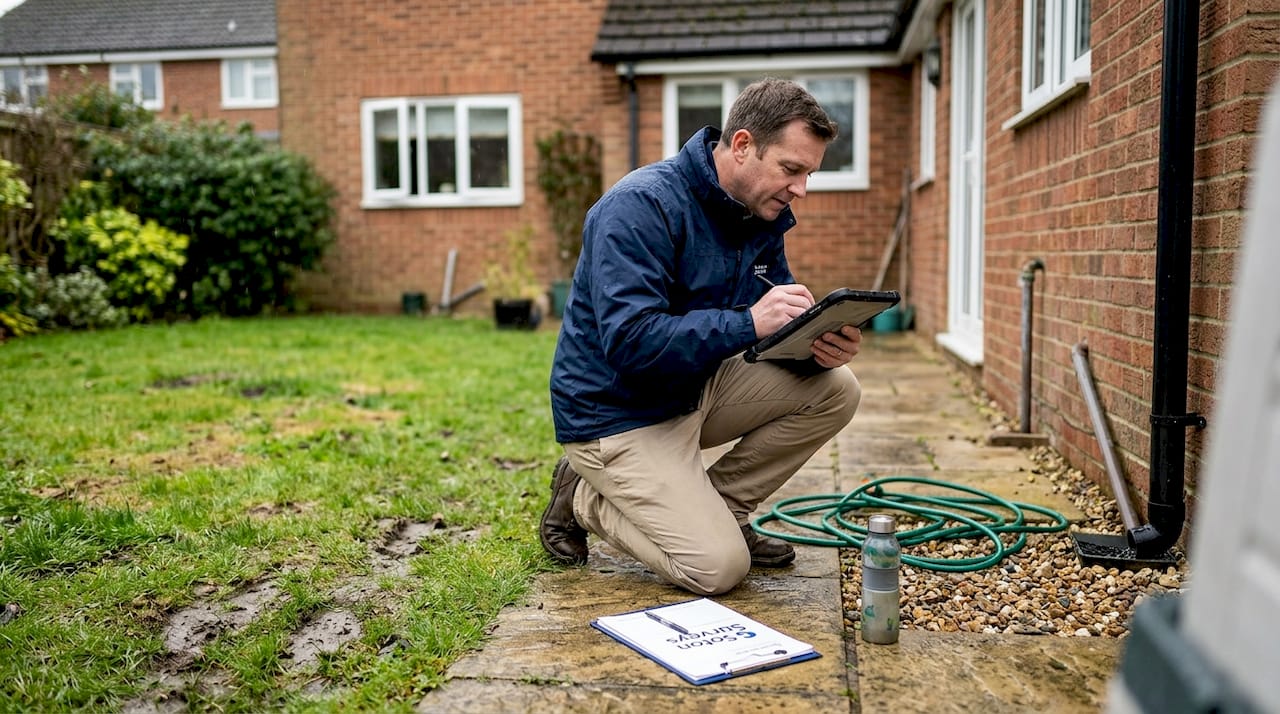
Let’s put real numbers to this. A Southampton property valued at £500,000 with a visible or documented drainage problem could realistically sell for between £425,000 and £475,000. That is a loss of £25,000 to £75,000, simply because the drainage situation introduces uncertainty. Property value reductions of 5 to 15% are consistent across UK markets where drainage issues are identified at survey stage.
The table below shows how different drainage scenarios affect a £500,000 property:
| Scenario | Estimated impact | Likely sale outcome |
|---|---|---|
| No drainage issues, records available | Nil | Full asking price achievable |
| Visible issue, no documentation | £25,000 to £50,000 reduction | Negotiation or withdrawal |
| Documented fix with professional report | Minimal, often nil | Buyer confidence restored |
| Recurring issues, no remediation | £50,000 to £75,000 reduction | Difficult sale, lender concerns |
The mechanisms behind these losses are straightforward:
- Foundation damage from waterlogged soil causes subsidence, one of the most expensive structural problems a property can have
- Mould and damp reduce habitability and trigger health concerns that buyers and surveyors treat seriously
- Insurance complications arise when drainage history is unclear, increasing ongoing costs for any buyer
- Buyer walkaway happens when the perceived cost of remediation feels uncertain or open-ended
- Mortgage refusal or downvaluation occurs when lenders assess drainage risk as a structural concern
The good news is that a documented, professionally completed drainage fix changes the picture significantly. Professional drain cleaning and preventive drain surveys create a paper trail that valuers and buyers can rely on.
Pro Tip: Keep every invoice, report, and completion certificate from drainage work in a dedicated property file. Valuers treat documented remediation very differently from unverified verbal assurances. A folder of evidence can be the difference between a smooth sale and a renegotiation.
The hidden upside: How good drainage and improvements boost value
Drainage is not only a risk to manage. Done well, it is a genuine value-add. Modern drainage improvements, particularly those that fall under green stormwater infrastructure (GSI), are attracting serious attention from buyers who understand long-term running costs and environmental resilience.
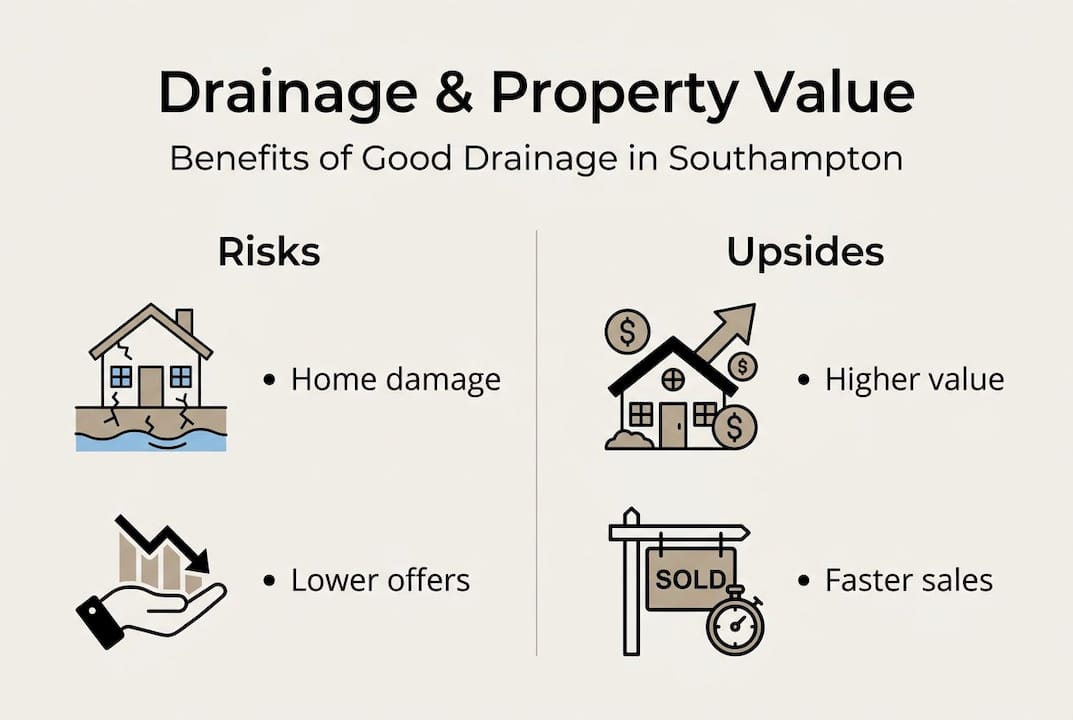
GSI refers to drainage solutions that work with natural water cycles rather than against them. Think permeable paving, rain gardens, green roofs, and soakaway systems designed to absorb and filter surface water on-site. In the United States, GSI increases property values by approximately 10% per square foot of installed infrastructure. The British market is catching up, with buyers increasingly factoring in flood resilience and sustainable features when making offers.
Here is a comparison of how traditional and modern drainage approaches affect perceived value:
| Drainage type | Buyer perception | Value impact |
|---|---|---|
| Ageing clay pipes, no recent survey | High risk, uncertain cost | Negative, often significant |
| Cleared and inspected traditional system | Managed, low immediate risk | Neutral to slightly positive |
| Permeable paving and soakaway installed | Resilient, low maintenance | Positive, 5 to 10% uplift possible |
| Rain garden or green drainage feature | Modern, desirable, sustainable | Positive, strong kerb appeal |
Upgrades that consistently attract buyer interest and support higher valuations include:
- Permeable paving on driveways, which reduces surface water runoff and satisfies planning requirements
- Rain gardens planted in low-lying areas to absorb excess water naturally
- Soakaway systems that manage groundwater away from foundations
- CCTV-surveyed and relined drain runs that come with a condition report and guarantee
Working with local drainage experts who understand Southampton’s specific soil conditions and infrastructure is important here. Generic solutions do not always translate well to a city with tidal influence and historic pipe networks. For older properties in particular, historic drainage solutions require specialist knowledge.
Pro Tip: When listing your property, ask your estate agent to include drainage improvements in the sales particulars. A line noting a recently installed soakaway or CCTV-surveyed drain run signals proactive ownership and reduces buyer anxiety before they even request a survey.
Protecting your property’s value: Practical drainage strategies
Knowing the risks and opportunities is useful. Acting on them is what actually protects your investment. Here is a practical sequence for any Southampton homeowner or property investor:
- Commission a CCTV drain survey before listing your property or if you have not had one in the past five years. This gives you an objective picture of pipe condition and identifies any issues before a buyer’s surveyor does.
- Address known issues promptly. A blocked or cracked drain that sits unresolved for months causes progressive damage. Early intervention is always cheaper than emergency repair.
- Upgrade where it makes financial sense. Permeable paving or a soakaway installation on a property you plan to sell within two to three years can return more than its cost in achieved sale price.
- Build a drainage record. Every survey, repair, and upgrade should be documented with dates, contractor details, and scope of work. Appraisers factor structural risk into their valuations, and documented fixes actively work in your favour.
- Review drainage before purchasing. If you are buying an investment property, insist on a drainage survey as a condition of the offer. The cost is modest. The protection it provides is significant.
Red flags to watch for around any Southampton property:
- Persistent damp smell in ground-floor rooms or cellars
- Slow-draining sinks, baths, or external gullies after heavy rain
- Cracks appearing near external walls or around door frames
- Patches of unusually lush or sunken grass in the garden, which can indicate a broken drain below
- Water marks or tide lines on external walls near ground level
Booking reliable drain services in Southampton is straightforward, and drain survey advice is available to help you understand what to look for and when to act.
Pro Tip: Keep a dated maintenance log, even for routine jetting or clearing. A record showing annual or biannual maintenance signals responsible ownership to any future buyer or lender.
A different perspective: Why ignoring drainage is a silent deal-breaker
Most sellers focus on kitchens, bathrooms, and kerb appeal when preparing a property for sale. Drainage sits at the bottom of the list, invisible and easy to ignore until a surveyor’s report lands and the buyer’s solicitor starts asking questions.
In our experience working across Southampton’s property market, drainage is the issue most likely to kill a deal at the eleventh hour. Not because the problem is always severe, but because it is undocumented. A single unresolved drainage note in a survey can prompt a buyer to withdraw entirely, even when the property’s overall condition is strong.
Southampton’s water-rich landscape makes this particularly acute. Properties near the Itchen, the Test, or the city’s historic dock areas carry inherent drainage complexity. Interestingly, proximity to rivers and waterways can increase property value when drainage is well managed, but that premium evaporates completely when drainage is neglected. The Southampton drainage guide outlines why local knowledge matters so much in these situations.
Seasoned investors treat drainage the same way they treat location. It is not negotiable, and it is not cosmetic.
Protect your Southampton property’s value with expert drainage support
If this guide has made one thing clear, it is that drainage is not a background concern. It is a direct line to your property’s market value, your ability to sell smoothly, and your long-term maintenance costs.
Our team at Blocked Drains Southampton provides professional drainage services across the city and surrounding areas, from CCTV surveys and drain repairs to soakaway installations and green drainage upgrades. Whether you are preparing to sell, managing an investment portfolio, or simply want to protect what you own, we can assess your drainage situation and give you a clear, honest picture. Explore our drainage infrastructure advice or get in touch to book an assessment at a time that suits you.
Frequently asked questions
How much can poor drainage really reduce my home’s value?
Research shows reductions of 5 to 15%, which on an average Southampton home can mean losing tens of thousands of pounds before you even reach the negotiating table.
Do buyers or surveyors always spot drainage problems?
Surveyors routinely assess drainage risk and factor structural concerns into their valuations, meaning even hidden issues are likely to surface during the sales process.
Does improving drainage or adding green infrastructure genuinely increase value?
Yes. GSI upgrades increase property values by approximately 10%, and even traditional drainage improvements with documented records can restore or protect full asking price.
Is flood risk still a concern if my property has never flooded?
Absolutely. An 8.1% price discount applies to properties perceived as being at flood risk, regardless of whether flooding has ever actually occurred on site.