TL;DR:
- Regular CCTV drain surveys help detect issues early and prevent costly repairs.
- Preventive inspections are significantly cheaper than emergency repairs and extend pipe life.
- Scheduled drain inspections reduce emergency calls, damage risks, and support insurance claims.
A blocked drain rarely announces itself. One day everything seems fine, the next you are facing a flooded bathroom, a collapsed pipe, or a repair bill that runs into thousands of pounds. A residential CCTV drain survey typically costs between £90 and £500, yet many Southampton homeowners skip it entirely, only to spend £3,000 to £10,000 fixing a collapsed drain that a simple inspection could have caught early. This guide explains what preventive drain surveys involve, why the numbers make a compelling case for acting before problems surface, and how to build a practical inspection routine that protects your property and your budget.
Table of Contents
- What is a preventive drain survey?
- Cost comparison: Preventive surveys vs. emergency repairs
- Key benefits of preventive drain surveys for Southampton properties
- Best practices: How to implement a preventive survey plan
- Why waiting for a blockage is riskier than you think
- Professional drainage support for Southampton homes and businesses
- Frequently asked questions
Key Takeaways
| Point | Details |
|---|---|
| Preventive surveys save money | Regular drain inspections cost far less than emergency repairs and prevent major damage. |
| Fewer emergencies, less disruption | Homes with scheduled surveys experience up to 78% fewer unexpected callouts. |
| Longer asset life | Proactive checks extend the lifespan of drainage systems and reduce property maintenance costs. |
| Easy action steps | Building a simple survey schedule markedly reduces risk for Southampton homeowners. |
What is a preventive drain survey?
A preventive drain survey is a scheduled inspection of your drainage system carried out before any visible problem appears. Rather than waiting for a blockage or collapse to force your hand, you commission a check at regular intervals to catch small faults while they are still cheap and straightforward to fix.
The most widely used method is a CCTV drain survey. A small, waterproof camera is fed through your pipework and transmits live footage to a monitor above ground. The engineer can see exactly what is happening inside the pipe without digging up your garden or lifting your flooring. Other methods include smoke testing, where harmless smoke is introduced into the system to reveal cracks or poorly connected joints, and flow monitoring, which tracks how quickly water moves through the drain to identify partial blockages or pipe sags.
So what can a survey actually find? Quite a lot, as it turns out:
- Partial blockages caused by grease, debris, or accumulated scale
- Root ingress, where tree roots have forced their way through pipe joints
- Pipe cracks and fractures from ground movement or age
- Structural deformation, including pipe sags that allow water to pool
- Misaligned joints that allow soil or groundwater to enter the system
- Collapsed sections that are on the verge of full failure
Understanding Southampton drainage basics is especially useful here, because the city’s older Victorian-era pipes are particularly prone to root ingress and joint displacement.
For a standard family home, a survey every two to three years is generally sufficient. Managed properties, HMOs, and commercial premises benefit from annual checks given the higher usage load and the legal duty of care owed to tenants and visitors. Preventive surveys reduce emergency repairs, extend the working life of your pipework, and prevent the kind of flooding or structural damage that turns a minor inconvenience into a major project.
Pro Tip: Book your survey in autumn, before winter rainfall puts maximum pressure on your drainage system. Issues that are manageable in dry weather can escalate rapidly once heavy rain arrives.
Cost comparison: Preventive surveys vs. emergency repairs
Now that you know what a preventive drain survey is, let’s see how early checks stack up financially against waiting for disaster.
The numbers are stark. A residential CCTV survey costs between £90 and £500 depending on property size and pipe length. Compare that to the cost of reactive repairs, and the case for prevention becomes impossible to ignore.
| Scenario | Typical cost (Southampton) |
|---|---|
| Residential CCTV survey | £90 to £500 |
| Drain jetting to clear a blockage | £80 to £250 |
| Pipe relining (per metre) | £60 to £150 |
| Collapsed drain repair (excavation) | £3,000 to £10,000 |
| Subsidence repair linked to drain leak | £5,000 to £15,000 |
| Emergency callout (out of hours) | £150 to £400 |
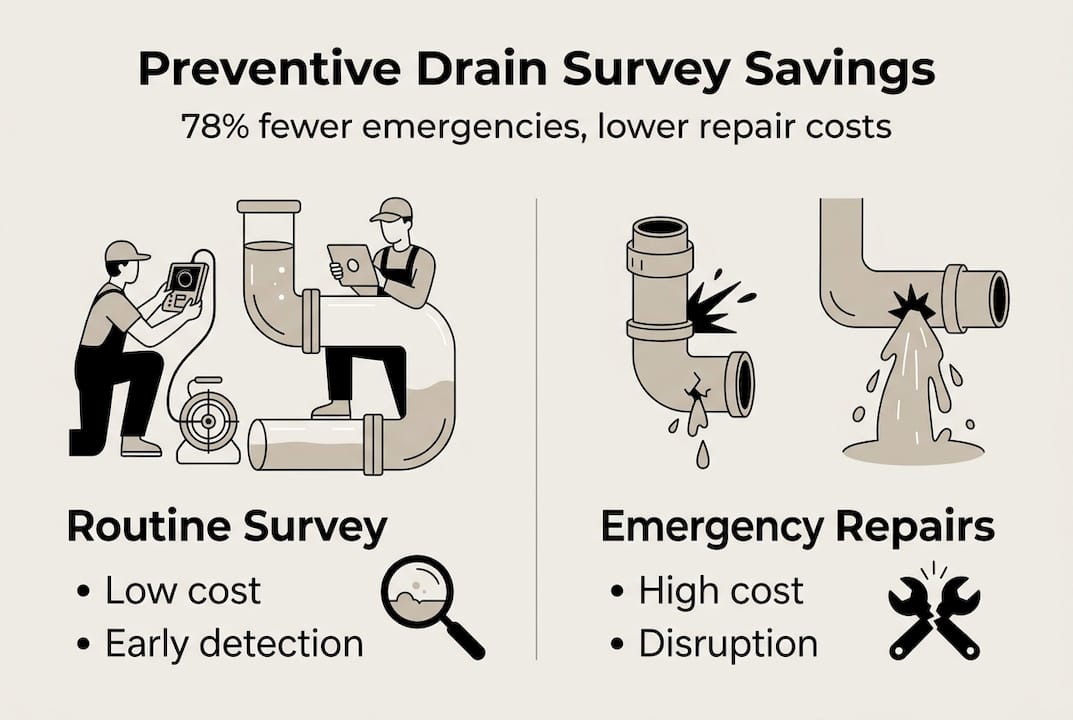
The pattern is clear. Spending a few hundred pounds on a routine survey can prevent costs that are ten to thirty times higher. Preventive maintenance is 12 to 45% cheaper than reactive repairs overall, and properties on regular inspection schedules experience 78% fewer emergency callouts.
Consider a real scenario. A Southampton homeowner ignores a slow-draining kitchen sink for eighteen months. By the time it blocks completely, root ingress has cracked a section of the lateral drain beneath the garden. The repair requires excavation, new pipe sections, and reinstatement of the garden surface. Total bill: £6,500. A survey two years earlier would have spotted the root intrusion at a stage where drain maintenance services could have resolved it with a simple jetting and root cutting visit costing under £300.
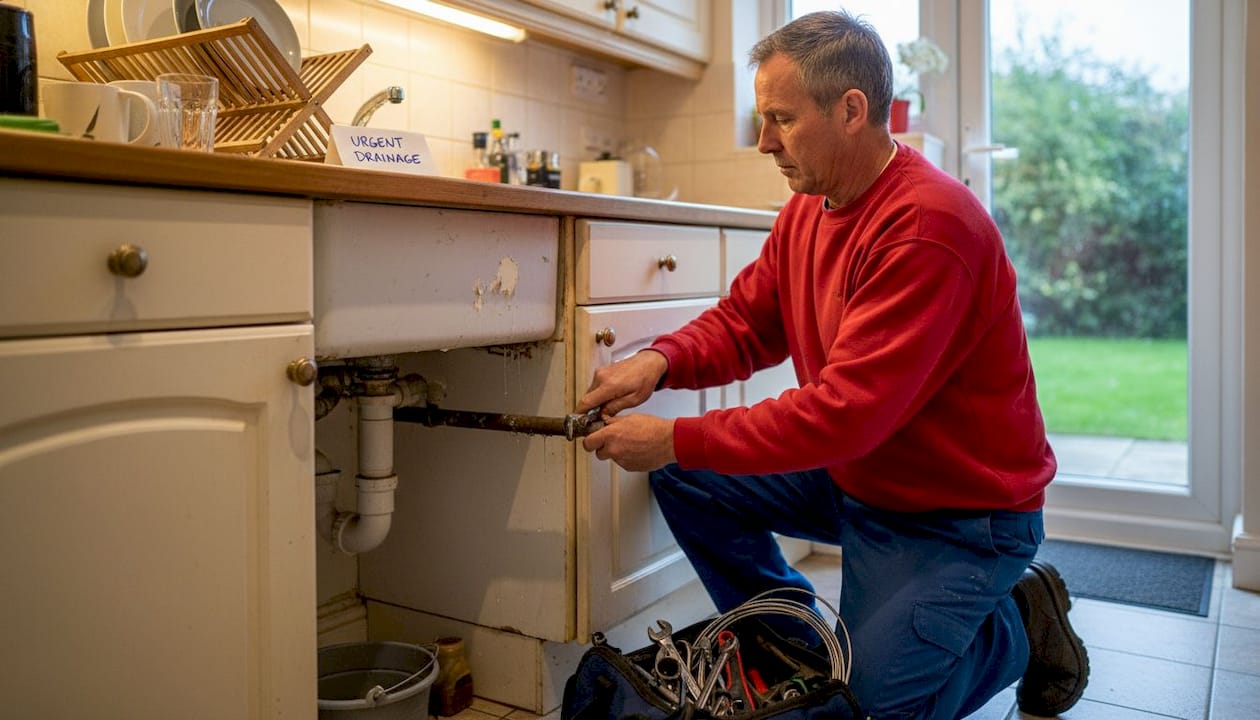
Insurance is another factor people overlook. Most home insurance policies cover sudden and unforeseen damage, but not gradual deterioration that could have been identified through routine inspection. If you cannot show evidence of regular maintenance, your insurer may decline the claim.
Here are the hidden costs that rarely appear in the initial repair quote:
- Temporary accommodation if the property becomes uninhabitable
- Loss of rental income for landlords during repair works
- Damage to flooring, walls, and foundations from water ingress
- Pest infestations attracted by broken drain runs
- Legal liability if a tenant or visitor is affected
Key benefits of preventive drain surveys for Southampton properties
Beyond just cost, there are critical long-term advantages to regular drain inspections.
The most immediate benefit is fewer emergency callouts. Emergencies are disruptive and stressful, and they rarely happen at a convenient time. A survey programme means problems are identified and resolved on your schedule, not in response to a crisis at 11pm on a Sunday.
Pipe longevity is a less obvious but equally important advantage. Drainage infrastructure that is regularly inspected and maintained lasts significantly longer than neglected systems. Preventive surveys extend pipe life and can reduce lifetime asset costs by up to 45%. For a property manager responsible for multiple buildings, that saving compounds considerably over time.
Flooding and subsidence risk also drops sharply with regular inspection. Leaking drains allow water to saturate the surrounding soil, which can undermine foundations and cause ground movement. The Environment Agency has consistently highlighted inadequate drainage maintenance as a contributing factor in localised urban flooding events across the UK.
“The most expensive drain repair is always the one you didn’t see coming. Regular surveys turn unknown risks into manageable maintenance tasks.”
Local drainage experts understand Southampton’s specific ground conditions and pipe age profiles, which means they can flag risks that a generic national provider might miss. For commercial operators, there are also compliance and health benefits to consider, since commercial drainage best practices in managed environments require demonstrable maintenance records.
Here is what regular surveys deliver in practical terms:
- Peace of mind knowing your system has been professionally checked
- Predictable maintenance budgets rather than unpredictable emergency spend
- Documented inspection records that satisfy insurers and regulators
- Faster fault resolution because problems are caught at an early, simpler stage
- Easier property management with fewer tenant complaints and reactive callouts
Best practices: How to implement a preventive survey plan
To put these benefits into practice, follow this step-by-step approach for managing your property’s drains.
- Assess your property type and age. Older properties, particularly those built before 1970, carry a higher risk of root ingress, cracked clay pipes, and joint displacement. Start with a baseline survey to understand the current condition of your system.
- Set a survey frequency. Most homes need a check every two to three years. Managed properties, older buildings, and those with large trees nearby should be surveyed annually.
- Choose a qualified drainage contractor. Look for engineers who use push-rod CCTV cameras and provide a written report with footage. A verbal summary is not enough if you ever need to make an insurance claim.
- Document everything. Keep a maintenance log that records survey dates, findings, and any work carried out. This is your evidence file if a dispute arises with an insurer or a tenant.
- Act on findings promptly. A survey report that sits in a drawer achieves nothing. If the engineer identifies a minor crack or partial blockage, schedule the remedial work within a few weeks.
- Review annually even without a full survey. Between formal CCTV inspections, check for slow drainage, gurgling sounds, or damp patches near drain runs. These are early warning signs worth investigating.
Preventive maintenance is measurably cheaper than reactive repairs, and the savings grow the longer you maintain a consistent programme. You can find practical drain care tips to supplement your routine between professional visits.
Pro Tip: If your property has mature trees within five metres of the drain run, always ask your drainage contractor to include a specific root ingress check. You can read more about removing root blockages if roots are already present in your system.
Knowing when to call a professional rather than attempting DIY is also important. Clearing a surface gully yourself is fine. Investigating a suspected pipe crack or structural fault underground is not a job for a drain rod and optimism.
Why waiting for a blockage is riskier than you think
Before you dismiss regular checks as overkill, consider this: the majority of serious drain failures happen with absolutely no visible warning signs beforehand. The pipe looks fine from the outside. The drains seem to be flowing. Then one morning, they are not.
Root intrusion is a perfect example. Tree roots grow slowly and silently through pipe joints over years. By the time you notice a slow drain, the root mass may already be substantial enough to require cutting and relining rather than a simple jetting visit. The cost difference between those two jobs is significant.
Insurance is another trap. Policies that appear to cover drain damage often exclude failures attributed to lack of maintenance. Without documented inspection records, you have no defence against that exclusion.
The reactive mindset also carries a hidden psychological cost. Waiting for something to go wrong means living with uncertainty. A proactive survey programme, by contrast, gives you a clear picture of your system’s condition and a plan for managing it. That is worth considerably more than the survey fee itself. If you ever do face an urgent situation, understanding the emergency drain clearing process helps, but the goal is never to need it.
Professional drainage support for Southampton homes and businesses
If reading this has prompted you to think about when your drains were last inspected, that instinct is worth acting on.
Our team covers Southampton and the surrounding areas, including Bitterne Park and beyond, with deep local knowledge of the drainage challenges specific to this part of the south coast. We carry out CCTV surveys, routine maintenance visits, root removal, and full drain repairs using modern equipment and clear, honest reporting. Whether you manage a single home or a portfolio of rental properties, we can help you build a preventive survey schedule that keeps costs predictable and emergencies rare. Explore our full drain services or get in touch today to book your first survey before a small issue becomes an expensive one.
Frequently asked questions
How often should I schedule a preventive drain survey for my home?
Most Southampton homes benefit from survey checks every two to three years, but older properties or those with mature trees nearby may require annual inspections to stay ahead of developing faults.
Can preventive surveys detect all types of drain problems?
Preventive drain surveys identify most common issues, including blockages, cracks, root ingress, and structural faults, at a stage when repairs are still straightforward and affordable.
Are preventive drain surveys worth the cost for landlords and property managers?
Yes. Evidence shows that preventive surveys reduce emergencies by 78% and lower overall maintenance costs by up to 45% compared to a purely reactive approach, making them a sound investment for any managed property.
Do UK insurance policies cover drain failures if I skip preventive surveys?
Most insurers may decline claims for preventable blockages or damage if you cannot provide evidence of regular drain inspections, so maintaining documented survey records is essential for protecting your cover.