TL;DR:
- Sewer problems often develop gradually from grease, wipes, and hair buildup, signaling early issues.
- Structural problems like tree root intrusion and pipe cracks require professional inspection and targeted repairs.
- Regular maintenance, CCTV surveys, and early intervention are crucial for cost-effective, long-lasting sewer solutions.
Sewer problems rarely announce themselves with flashing lights. More often, they creep in as a slow-draining sink, a faint smell, or a patch of unusually green grass in your garden. By the time the problem becomes undeniable, the repair bill can be significant. Many Southampton homeowners assume the council will sort it, or that a quick plunge will fix things. This guide cuts through those misconceptions, explaining the real causes of sewer issues, the warning signs that matter, and the evidence-backed solutions that can save you serious money and disruption.
Table of Contents
- What causes the most common sewer issues?
- Tree roots, cracks, and pipe collapses: The hidden threats
- Sewer odours and gas leaks: What’s causing that smell?
- Prevention and maintenance: Keeping sewer issues at bay
- How much do sewer repairs really cost?
- The truth about sewer issues in Southampton: What most guides don’t tell you
- Your next step for reliable drains in Southampton
- Frequently asked questions
Key Takeaways
| Point | Details |
|---|---|
| Blockages build up silently | Fats, oils, wipes and waste often build up unnoticed until the sewer backs up. |
| Roots and pipe cracks cause costly damage | Tree roots and ageing pipes can create recurring blockages and may require specialist repairs. |
| Odours signal system faults | Unpleasant smells usually mean leaks, failed traps or vent issues that need prompt attention. |
| Prevention saves thousands | Simple do’s and don’ts plus regular checks can help avoid expensive repairs and emergencies. |
| Know your responsibility | Homeowners are liable for repairs inside their boundary, so proactive care is essential. |
What causes the most common sewer issues?
Most sewer blockages don’t happen overnight. They build gradually, layer by layer, until water has nowhere to go. Understanding the primary culprits helps you stop problems before they reach crisis point.
Blockages from grease, fats, food waste, wipes, and non-flushables are the most common sewer issues affecting residential properties. These materials don’t dissolve in water as many people assume. Cooking grease, for instance, flows easily when hot but solidifies inside cool pipe walls, attracting more debris until a stubborn plug forms. Wet wipes, even those labelled “flushable,” retain their structure and snag on joints and bends in your pipework.
The most frequent causes of blocked drains in Southampton homes include:
- Fats, oils, and grease (FOG): Poured down kitchen sinks and allowed to cool inside pipes
- Food scraps: Small particles accumulate at bends and joints over months
- Wet wipes and cotton buds: Retain structural integrity and catch on rough pipe surfaces
- Sanitary products and nappies: Too bulky to pass through standard residential pipe diameters
- Hair and soap scum: Form dense mats in bathroom drain traps and further into the line
Early warning signs include slow drainage from a single fixture, a gurgling noise after flushing, or a persistent musty smell near plug holes. These are not minor annoyances. They are your pipes telling you something is already partially blocked.
Pro Tip: Never pour cooking fat or oil down the sink, even with hot water running. Let it cool in a container and dispose of it in your general waste bin. Following drain prevention tips like this single habit change can prevent a significant percentage of kitchen drain blockages.
Tree roots, cracks, and pipe collapses: The hidden threats
Surface blockages from wipes or grease are frustrating, but at least they’re fixable with jetting or rods. The problems that lurk below your garden path or under your driveway are a different matter entirely.
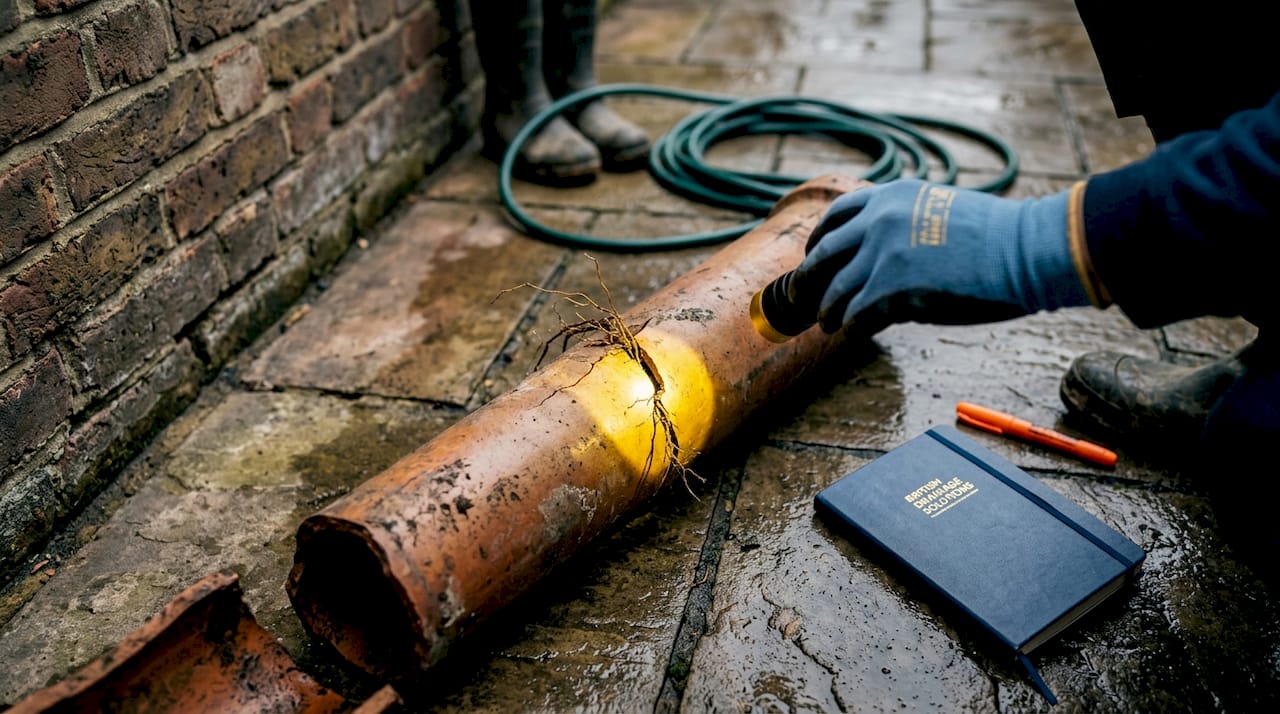
Tree root intrusion enters cracks in older clay or cast iron pipes, leading to recurring blockages and structural damage that worsens with every passing season. Roots are drawn to the warmth and moisture inside sewer pipes. They enter through the tiniest hairline crack, often just a fraction of a millimetre wide, and then expand as they grow, applying enormous pressure to the surrounding pipe material. Over time, what started as a tiny fracture becomes a significant structural failure.
Southampton has a large proportion of older housing stock, with many properties featuring Victorian-era clay pipes that are particularly vulnerable. Pipe cracks, collapses, or offsets from ground movement, age, corrosion, or poor installation cause leaks, odours, and backups that homeowners often misdiagnose as routine blockages.
| Issue type | Common signs | Typical cause | DIY fixable? |
|---|---|---|---|
| Debris blockage | Single fixture slow drain | FOG, wipes, hair | Sometimes |
| Root intrusion | Recurring clogs, foul smell | Tree root growth | No |
| Pipe crack/offset | Damp patches, sinking ground | Age, ground movement | No |
| Pipe collapse | Total backup, sewage smell | Severe corrosion or impact | No |
Warning signs of structural problems are subtler than a simple blockage but often more telling. Watch for:
- Recurring blockages that return within weeks of clearing
- Wet or unusually soft patches in your garden with no obvious cause
- Foul smells that persist even after drains appear to be running freely
- Multiple fixtures backing up at the same time
The challenge is that none of these symptoms definitively confirm root intrusion or pipe collapse without proper investigation. Methods for removing root intrusions differ significantly from clearing organic debris, and applying the wrong approach wastes time and money. Our detailed removal guide for drain roots explains what to expect from professional treatment, while understanding how tree roots block drains gives you the context to recognise the problem early.
Pro Tip: If you experience a blockage that clears but returns within a few weeks, request a CCTV drain survey before paying for another jetting session. Without seeing inside the pipe, you may be clearing the symptom while the structural cause continues to worsen underground.
Sewer odours and gas leaks: What’s causing that smell?
A sewer smell in your home is more than unpleasant. It can indicate a genuine health concern if hydrogen sulphide or other sewer gases are escaping into your living space.
Sewer odours result from dry P-traps, failed wax rings, venting issues, or gas leaks from cracks. The P-trap is the curved section of pipe beneath every sink, bath, and shower. It holds a small amount of water that acts as a seal, physically blocking sewer gases from travelling back up through the drain. When a fixture isn’t used for several weeks, that water evaporates and the seal disappears.
This is particularly common in guest bathrooms, downstairs cloakrooms, or holiday homes left unoccupied. The fix is genuinely simple. Run the tap for thirty seconds to refill the trap. However, if the smell persists in rooms with regularly used fixtures, the cause is more serious.
Other culprits behind persistent sewer odours include:
- Failed toilet wax ring: The seal between the toilet base and the soil pipe can deteriorate, particularly in older fittings, allowing gas to escape at floor level
- Blocked or damaged vent stack: Sewer systems require ventilation to balance air pressure. A blocked vent pipe, often caused by leaves or bird nests, forces gases back into the property
- Cracked drain pipes: Even a hairline crack in a pipe running beneath a concrete floor or within a wall can release gases into cavities
- Poorly sealed access points: Inspection chambers with cracked or loose covers can allow gases to enter at ground level
“If you can smell drains indoors and the problem isn’t solved by running water in unused fixtures, treat it as a potential structural or venting fault. Don’t mask it with air fresheners.”
Knowing the early signs of blocked drains and unusual smells is genuinely valuable. A smell that appears after heavy rain is often a sign of a surcharging sewer, meaning the public sewer is temporarily at capacity and pushing gases back up through your private system.
Prevention and maintenance: Keeping sewer issues at bay
The most cost-effective sewer strategy is one you never have to think about. Regular, simple maintenance dramatically reduces the chance of emergency call-outs and costly structural repairs.
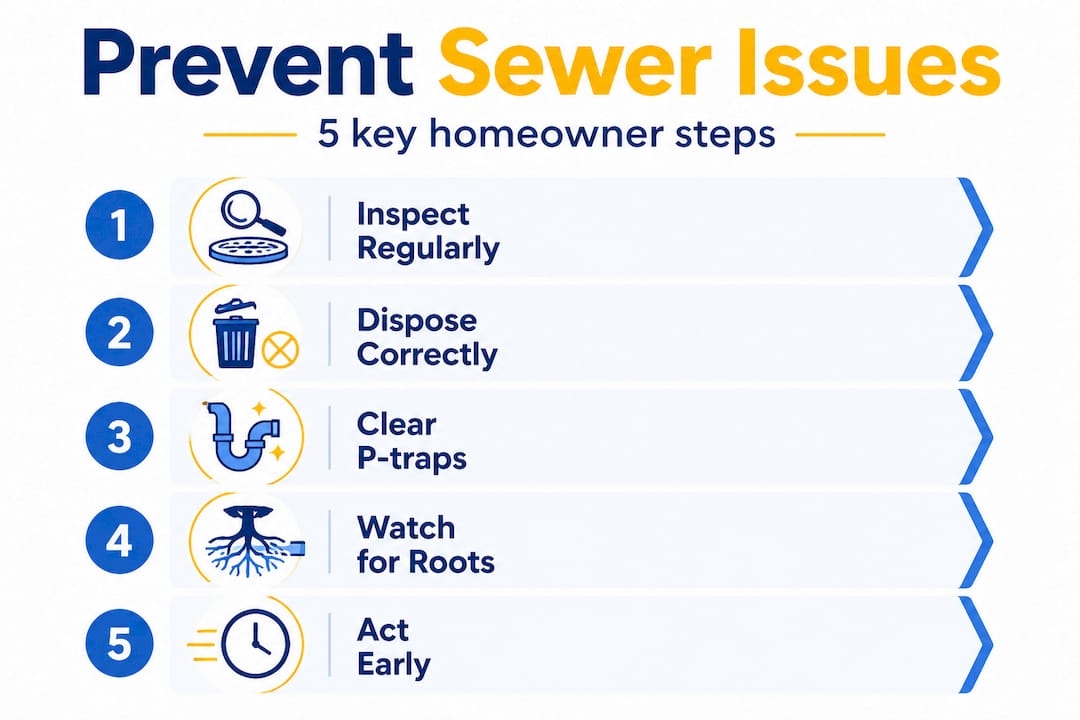
Here’s a practical maintenance sequence for Southampton homeowners:
- Never pour FOG down drains: Collect cooking oils and fats in a sealed container. Once full, dispose of it in general waste or at a local recycling point.
- Use drain guards on all plug holes: These simple mesh inserts catch hair, food debris, and soap scum before they enter the pipe. Empty them weekly.
- Run water in unused fixtures monthly: Thirty seconds of water flow refills dry P-traps and keeps the seal intact.
- Flush only the three Ps: Pee, paper, and (the other one). Nothing else, regardless of packaging claims.
- Inspect accessible inspection chambers annually: Lift the cover and check for obvious debris, root ingress, or signs of water ingress around the chamber walls.
- Book professional inspection every 1-2 years for older properties: Southampton’s Victorian-era clay pipe systems benefit enormously from periodic blocked drain prevention tips put into practice alongside professional oversight.
According to EPA guidance on septic system malfunctions, inspections every 6-12 months for multi-unit properties and regular maintenance activities such as pouring water into floor drains are essential for avoiding serious system failures. The same principle applies to any residential or commercial property with high fixture usage.
| Maintenance task | Frequency | Estimated cost | Risk if skipped |
|---|---|---|---|
| Drain guards and basic cleaning | Monthly | Minimal | Gradual blockage |
| Professional jetting | Every 1-2 years | £80-£200 | Severe blockage |
| CCTV drain survey | Every 2-3 years (older homes) | £100-£300 | Undetected root or crack damage |
| Root removal treatment | As required | £150-£500 | Pipe collapse |
For properties with persistent issues, explore solutions for common drain issues and keep up with more sewer maintenance advice from specialists who understand Southampton’s infrastructure.
Pro Tip: If the same drain blocks more than twice in a year, stop treating the symptom and investigate the cause. Recurring blockages in the same location almost always indicate a partial structural fault or persistent root intrusion that jetting alone cannot resolve permanently.
How much do sewer repairs really cost?
Cost is the number one reason homeowners delay acting on sewer problems, and ironically, that delay almost always makes the final bill much larger.
Full sewer replacement costs between $3,000 and $30,000, with an average around $3,319, depending on factors like pipe length, depth, and material. In the UK, equivalent sterling costs follow a similar wide range. A simple patch repair or reline of a 2-3 metre section might cost a few hundred pounds. Replacing a collapsed lateral from your property boundary to your home’s connection point can easily run into several thousand.
What many Southampton homeowners don’t realise is who bears financial responsibility for different sections of the system:
- Inside your property: All internal pipework, including under concrete floors, is your responsibility
- From your property to the public sewer (the private lateral): This is also your financial responsibility, even though it may run under a shared path or pavement
- The public sewer itself: Southern Water is responsible for the shared sewer once it reaches the public network
This distinction matters enormously when negotiating repairs or seeking quotes. A quote that seems excessive for what looks like a simple blockage may reflect the depth or difficulty of accessing a pipe that runs beneath your driveway or requires excavation through hard standing.
Where full excavation is avoidable, options like the drain relining process can restore pipe integrity without digging up your garden. For smaller faults, a no-dig patch repair can seal a crack or joint failure at a fraction of the cost of traditional excavation, provided the pipe hasn’t fully collapsed.
Acting at the first sign of a problem, such as a slow drain, a smell, or a minor backup, consistently delivers a lower repair bill than waiting until failure is complete.
The truth about sewer issues in Southampton: What most guides don’t tell you
After years of working across Southampton’s drainage network, one pattern stands out above all others. Homeowners who experience repeated blockages often blame the wrong thing entirely.
They blame their neighbours, their old pipes in general, or unlucky geography. What they rarely consider is that the original clearing work never addressed the actual cause. CCTV surveys differentiate clearable clogs from structural failure, and CIPP (cured-in-place pipe) lining is unsuitable for full collapse or misalignment. Without this distinction, you may pay for a jetting treatment that shifts the immediate blockage but leaves a partially cracked pipe in place, ready to collect the next build-up of debris.
Root intrusion is a particularly stubborn example. Even after professional root cutting, regrowth can occur within 12-24 months if the crack allowing entry isn’t sealed. Cutting is a temporary measure. Relining the affected section is the permanent answer, but only if the pipe has sufficient structural integrity to accept a liner. A fully collapsed section requires excavation and replacement first.
Not every drainage contractor will tell you this upfront. The honest approach, and the one that genuinely protects your property, is to insist on a CCTV inspection before approving any significant repair work. It’s a modest additional cost that can prevent you from paying for the wrong solution. Understanding drain technology for repairs shows how modern diagnostics have transformed what’s possible without excavation, but only when the right method is matched to the actual problem.
Southampton’s older housing areas, particularly around Shirley, Freemantle, and the Victorian terraces of Portswood, present drainage challenges that simply don’t apply to newer estates. Clay pipes, shallow gradients, and decades of root growth require a genuinely local understanding, not a generic national approach.
Your next step for reliable drains in Southampton
If this article has helped you identify warning signs you’ve been overlooking, or given you clarity on a problem you’ve been putting off, the logical next step is professional assessment rather than a DIY guess.

At Blocked Drains Southampton, we offer professional drain services covering everything from emergency clearance to full CCTV surveys, root removal, relining, and soakaway installations. Whether you’re dealing with a recurring slow drain or suspect something more serious beneath your garden, we can confirm the cause and recommend the right solution. Our drainage infrastructure guide also provides valuable background for homeowners wanting to understand their specific local drainage setup before booking an inspection. Proactive care is always cheaper than emergency repair.
Frequently asked questions
How do I know if my sewer is blocked or just slow?
When multiple fixtures drain slowly and you hear gurgling sounds after flushing, the problem is almost certainly in the main sewer line rather than a single local drain. A single slow fixture usually indicates a localised blockage in that outlet alone.
Can Southampton homeowners fix sewer blockages themselves?
Surface blockages caused by hair, soap, or small amounts of FOG can often be cleared with a plunger or basic drain cleaner, but root intrusion in older clay pipes and structural faults require specialist equipment and professional expertise to resolve safely and permanently.
Who pays for sewer repairs on my property?
Homeowners are financially responsible for the private lateral sewer line, which runs from inside the property to the public sewer connection, even when that section passes beneath shared or public ground.
How can I prevent tree roots from blocking my drains?
Schedule regular professional root cutting if you have large trees near your sewer runs, use physical root barriers during landscaping work, and consider replacing existing clay pipes with root-resistant modern materials. Root regrowth in clay pipes after cutting typically occurs within 12-24 months without relining.
What maintenance should flats or multi-unit homes do?
Inspections every 6-12 months combined with scheduled main line jetting and strict enforcement of what residents flush or pour away is the most effective approach for multi-unit properties, where higher usage accelerates blockage build-up significantly.
Recommended
- Solving drainage issues in historic Southampton properties
- Surface water drains: Essential guide for Southampton homeowners
- How local drainage experts protect Southampton homes
- Solve drainage problems in older properties: 5 steps
- Septic vs. Sewer in Maine: What Homeowners Need to Know Before Buying or Repairing