TL;DR:
- Surface water drains carry rainwater away from properties, preventing flooding and structural damage.
- Proper installation, maintenance, and compliance with regulations are essential to avoid flooding and legal issues.
- Sustainable Drainage Systems (SuDS) are prioritized for new installations to manage water environmentally.
Many Southampton homeowners assume all outdoor drains do the same job. They do not. Surface water drains and foul drains are entirely separate systems, each with a distinct purpose and legal standing. Mixing them up, or neglecting one in favour of the other, can lead to flooding, enforcement action, and expensive repair bills. Southampton’s mix of Victorian terraces, newer estates, and low-lying streets near the waterfront makes proper surface water management especially important. This guide explains what surface water drains are, how they work, what the law requires, and how to keep them in good shape year-round.
Table of Contents
- What is a surface water drain and why does it matter?
- How surface water drains function in Southampton homes
- Legal requirements and compliance for new installations
- Maintenance tips: Preventing blockages and drainage issues
- What most guides miss about surface water drains
- Find drainage solutions and expert advice for your Southampton home
- Frequently asked questions
Key Takeaways
| Point | Details |
|---|---|
| Surface water drains defined | They channel rainfall away from homes, using separate systems distinct from foul drains. |
| Legal compliance is vital | UK rules require specific install standards and regular maintenance to prevent flooding. |
| Simple upkeep prevents issues | Annual cleaning solves most blockages, saving money and hassle for Southampton homeowners. |
| SuDS preferred for sustainability | Sustainable Drainage Systems offer environmentally friendly options for dealing with rainwater. |
What is a surface water drain and why does it matter?
A surface water drain collects rainwater and runoff from hard surfaces such as roofs, driveways, patios, and roads. Its sole job is to move clean rainwater away from your property quickly, preventing puddles, flooding, and structural damage. It does not carry sewage or household waste. That is the job of your foul drain, which connects to the public sewer network.
The distinction matters enormously. Separate foul and surface systems are required under UK Building Regulations, meaning you cannot legally connect a rainwater downpipe to a foul drain. Doing so can overwhelm sewage treatment works and cause untreated waste to overflow into rivers, which is both an environmental hazard and a legal offence.
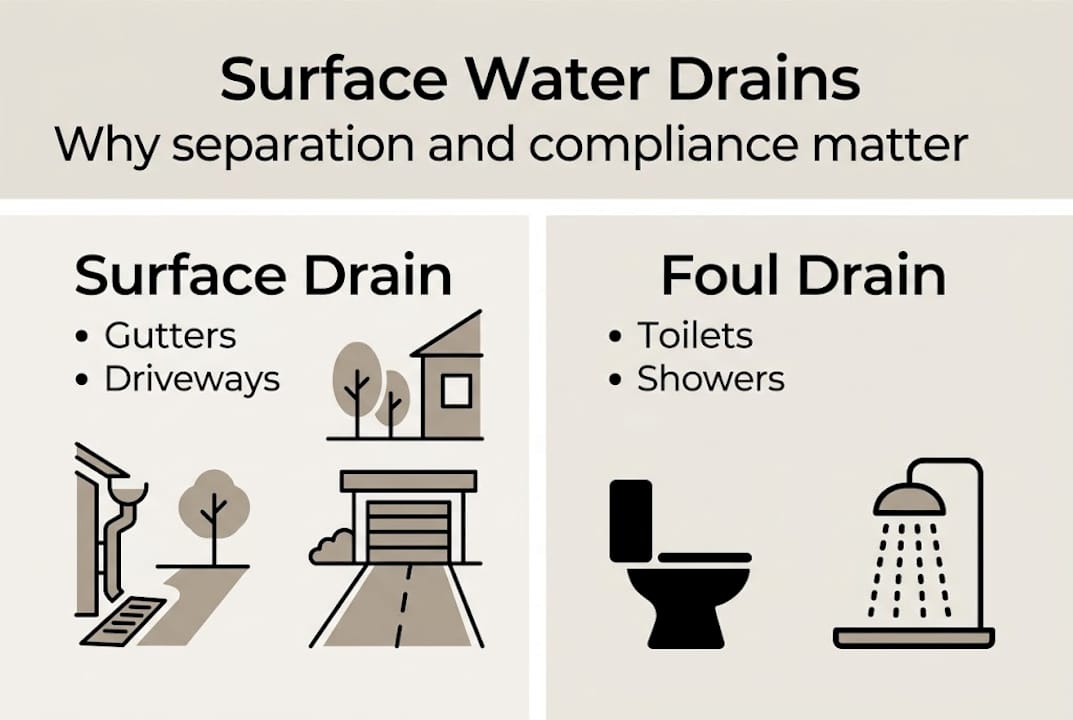
For Southampton homeowners, this separation is particularly relevant. The city’s older streets often have ageing combined systems, where surface and foul water once shared the same pipe. Modern regulations now require these to be separated on any new build or significant renovation. Understanding which type of drain you have is the first step to managing your property responsibly.
Here is a quick comparison of the two systems:
| Feature | Surface water drain | Foul drain |
|---|---|---|
| What it carries | Rainwater and runoff | Sewage and household waste |
| Where it discharges | Soakaway, watercourse, or sewer | Public foul sewer |
| Legal separation required | Yes, under Building Regulations | Yes |
| Risk if blocked | Garden flooding, damp | Sewage backup indoors |
| Maintenance responsibility | Homeowner | Homeowner and water company |
Key things surface water drains protect against:
- Garden and driveway flooding after heavy rain
- Damp penetrating foundations and walls
- Overloading the public sewer network
- Localised flash flooding on streets and paths
If you are unsure which system your property uses, exploring drainage solutions for homes in Southampton can help you identify the right approach. Older properties in particular may benefit from a review, as outlined in guidance for historic property drainage in the city.
How surface water drains function in Southampton homes
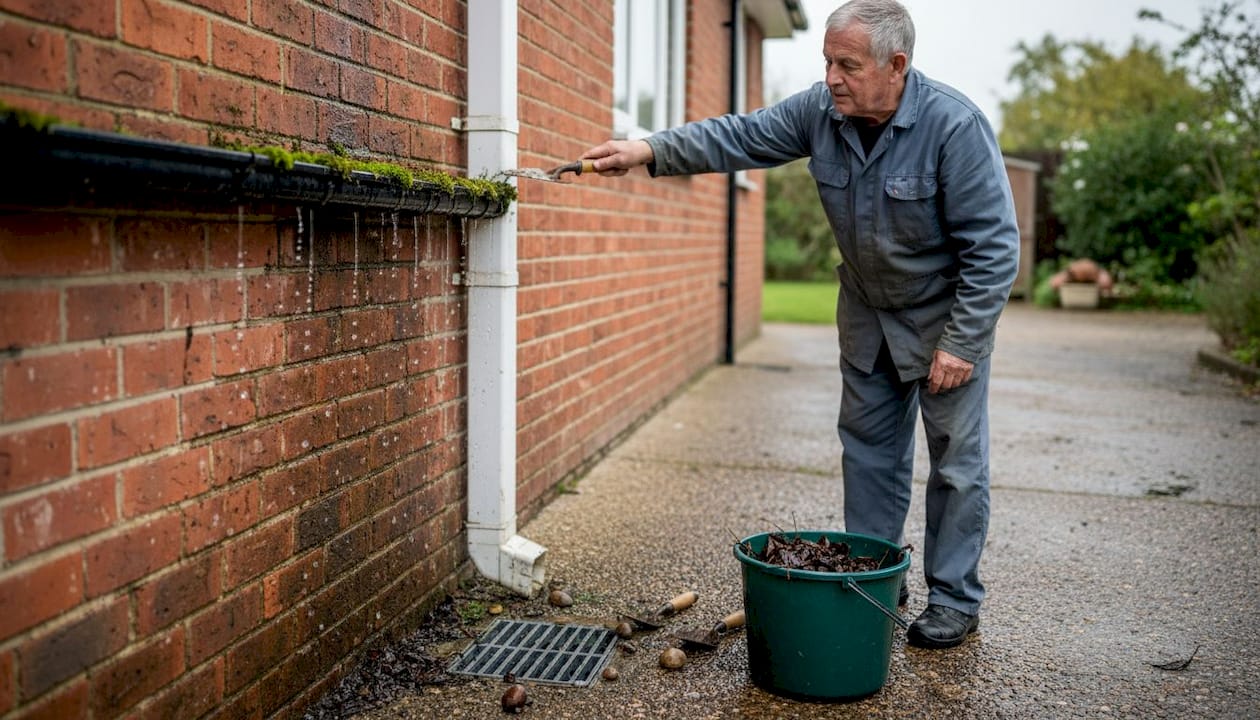
A typical surface water drainage system in a Southampton home consists of several connected components working together. Gutters collect rainwater from the roof and channel it into downpipes. Downpipes feed into underground drainage pipes, which carry the water away from the building. From there, water either enters a soakaway, discharges into a local watercourse, or connects to a dedicated surface water sewer.
The physical setup matters as much as the route the water takes. Pipe specifications and gradient requirements dictate how efficiently water moves through the system. A minimum pipe diameter of 75mm is standard for domestic surface water drainage, and pipes must be laid at the correct gradient to ensure self-cleansing flow, typically around 1:40 for smaller pipes.
Here is how the main components compare:
| Component | Function | Typical specification |
|---|---|---|
| Gutters | Collect roof runoff | 112mm half-round or square |
| Downpipes | Carry water to ground level | 68mm round or square |
| Underground pipes | Transport water away | 75mm to 110mm diameter |
| Soakaway | Infiltrate water into ground | 5m minimum from building |
| Inspection chamber | Access for maintenance | Every 22m or at junctions |
Soakaways are particularly common in Southampton’s suburban areas where gardens have sufficient permeable ground. A soakaway is essentially a rubble-filled or crate-filled pit that allows water to slowly percolate into the surrounding soil. Sustainable Drainage Systems (SuDS) build on this idea, incorporating features like permeable paving, swales (shallow channels), and rain gardens to manage water closer to where it falls.
How a surface water drain system typically operates step by step:
- Rain falls on the roof or hard surface
- Gutters and channels direct it to downpipes or gullies
- Underground pipes carry water away from the structure
- Water reaches the soakaway, watercourse, or surface water sewer
- Water disperses safely without flooding the property
Pro Tip: Before installing any new hard surface such as a driveway or patio extension, check whether your existing surface water drain can handle the additional runoff. Oversized hard surfaces feeding an undersized drain are one of the most common causes of garden flooding we see in Southampton.
For a deeper look at how local systems are set up, the drainage infrastructure guide for Southampton homes is a useful resource. You can also learn how modern drainage technology is improving outcomes for local properties.
Legal requirements and compliance for new installations
If you are planning to install or upgrade a surface water drain, you need to understand what the law requires. Getting this wrong can result in enforcement action, costly remedial work, or problems when selling your home.
UK Building Regulations Part H sets out the rules clearly. Soakaways must be positioned at least 5 metres from any building or road. Surface water must not be discharged into a foul sewer. New drainage must prioritise infiltration before any connection to a watercourse or sewer is considered.
“Sustainable drainage systems should be the first consideration for any new surface water drainage installation. Discharge to a sewer should only be used where no other option is practicable.”
This SuDS-first approach reflects a national shift in how we manage rainwater. Southampton City Council works alongside the Lead Local Flood Authority (Hampshire County Council) to assess drainage proposals for new developments. For most domestic projects, Building Regulations approval is required before work begins.
Key legal compliance checklist for Southampton homeowners:
- Obtain Building Regulations approval before installing new drainage
- Ensure soakaways are at least 5 metres from buildings and boundaries
- Never connect surface water to a foul drain
- Use SuDS methods (permeable paving, soakaways, rain gardens) wherever possible
- Keep records of any drainage work carried out on your property
- Check whether your property is in a flood risk zone before designing a new system
- Notify your water company if connecting to a public surface water sewer
Homeowner responsibilities do not end at installation. You are legally responsible for maintaining drains within your property boundary. Failure to do so can result in enforcement notices from the local authority, particularly if your drainage is contributing to flooding on neighbouring land or public roads. Reviewing drainage compliance essentials can help you stay on the right side of these rules.
Maintenance tips: Preventing blockages and drainage issues
A well-designed surface water drain can still fail if it is not maintained. The good news is that most blockages are entirely preventable with a simple routine. Annual maintenance prevents over 90% of blockages, according to drainage industry guidance. That is a compelling reason to spend an afternoon each autumn clearing your system.
Southampton’s tree-lined streets and mature gardens mean leaf fall is a major culprit. Leaves accumulate in gutters, gullies, and drain covers, forming a dense mat that restricts flow. Tree roots are another serious issue. They are drawn to the moisture around drainage pipes and can crack or infiltrate older clay or concrete pipes over time.
Routine maintenance checklist:
- Clear gutters and downpipes every autumn and after storms
- Remove leaves and debris from surface gullies and drain covers
- Check that drain covers are secure and undamaged
- Inspect visible pipe joints for signs of displacement or cracking
- Pour water into gullies to confirm free flow
- Look for damp patches near drain runs after heavy rain
- Trim back trees and shrubs growing close to drain lines
Signs that a blockage may be developing include slow drainage after rain, water pooling on hard surfaces, gurgling sounds from gullies, and visible debris accumulating around drain covers. Catching these early saves significant money.
Pro Tip: After every significant storm, do a quick walk around your property and check that all surface gullies are draining freely. This five-minute check can alert you to a developing blockage before it becomes a full-scale flooding problem.
For more targeted advice, blocked drain prevention tips covers the most common causes and fixes. Upgrading to better drain cover solutions can also reduce debris ingress significantly. If you suspect tree roots and drains are interacting on your property, it is worth getting a CCTV survey done before the problem worsens. Local drainage experts familiar with Southampton’s specific conditions can identify issues that a general inspection might miss.
What most guides miss about surface water drains
Most drainage guides focus on regulations and specifications. What they rarely mention is how much property age and garden layout affect real-world performance in Southampton.
Many homes here were built before modern drainage standards existed. That means pipes may be undersized, gradients may be wrong, or surface and foul water may share routes that nobody has updated in decades. A new homeowner following the rulebook to the letter can still experience flooding simply because the existing infrastructure was never designed to cope with today’s hard-surfaced gardens and driveways.
Garden layout is equally overlooked. A large lawn absorbs rainfall naturally. Replace it with decking, concrete, or artificial grass, and all that water has nowhere to go except your drain. We regularly see properties where well-intentioned garden renovations have inadvertently overwhelmed a surface water system that worked perfectly for thirty years.
The lesson we have learnt from working across Southampton is this: understand what you already have before you change anything. A quick CCTV survey and a review of preventing blocked drains before any garden project can save thousands. And if you are buying a property, always ask about drainage. The drainage solution examples we have handled across the city show that the most expensive problems are always the ones nobody spotted early.
Find drainage solutions and expert advice for your Southampton home
If reading this has raised questions about your own property’s drainage, you are not alone. Surface water drains are one of the most misunderstood aspects of home maintenance, and getting them right makes a real difference to your property’s resilience against flooding.
Our team at Blocked Drains Southampton offers the full range of drainage services for residential properties across the city, from CCTV surveys and soakaway installations to blockage clearance and compliance checks. Whether you need a guide for drainage infrastructure or want to explore top drainage solutions suited to your property, we are here to help with practical, local expertise.
Frequently asked questions
How do I know if my home has surface water drains?
You can check your property’s drainage plans or inspect visible outdoor drains for rainwater-only connections. Separate foul and surface systems are required under UK Building Regulations, so most post-war homes should have distinct systems.
What maintenance tasks prevent surface water drain blockages?
Annual cleaning, checking for leaves and debris, and inspecting for root intrusion are the most effective steps. Annual maintenance prevents over 90% of blockages, making it the single most valuable thing you can do each year.
Are there legal penalties for failing to maintain surface water drains?
Neglecting required maintenance may result in fines or enforcement notices from local authorities. Building Regulations Part H sets the legal standards for maintenance and compliance that all homeowners must meet.
What is SuDS and how does it relate to surface water drains?
SuDS stands for Sustainable Drainage Systems, which prioritise rainwater infiltration before discharge into sewers. SuDS are preferred under national standards for all new drainage installations, offering both environmental and flood prevention benefits.