TL;DR:
- Modern drainage in Southampton uses AI, sensors, CCTV, and trenchless repair methods.
- CCTV surveys are essential for diagnosing problems accurately before repairs occur.
- Technologies like hydro jetting and SuDS help prevent blockages and reduce environmental impact.
Drainage is not the low-tech, static industry many people assume. In Southampton, smart sensors, AI-assisted cameras, and trenchless repair methods are actively reducing blockages, cutting repair costs, and protecting properties from the kind of slow-burn damage that turns a £200 fix into a £20,000 nightmare. Southern Water’s storm overflow reduction plan shows early but measurable progress in the region. This guide walks you through the technologies making the biggest difference right now, how they apply to your property, and why acting on this knowledge sooner rather than later is the smartest move any Southampton homeowner or property manager can make.
Table of Contents
- The evolution of drainage technology in Southampton
- CCTV surveys: Diagnosing drainage problems with precision
- Hydro jetting: Powerful, eco-friendly cleaning for persistent blocks
- Smart and sustainable drainage: Sensors, AI, and SuDS
- Our take: Why technology works only when people act
- Next steps: Advanced drainage solutions for your Southampton property
- Frequently asked questions
Key Takeaways
| Point | Details |
|---|---|
| Technology reduces blockages | Modern solutions like hydro jetting and smart sensors minimise recurring drainage issues for homes and businesses. |
| Precision prevents costly repairs | CCTV surveys and AI analysis help detect problems early, targeting repairs and saving money. |
| Eco-friendly systems lead the way | Sustainable options such as SuDS and trenchless repairs lower environmental impact and disruptions. |
| Success needs expert guidance | Pairing advanced tech with professional advice ensures technology delivers real-world results. |
The evolution of drainage technology in Southampton
Not long ago, a blocked drain meant a man with a rod and a lot of patience. Today, that same problem is diagnosed with a camera, cleared with pressurised water, and monitored by sensors that send alerts before a blockage even forms. The shift is dramatic, and Southampton sits at the centre of it.
The city’s ageing Victorian pipe network, combined with rapid urban growth, has made modern drainage technology a necessity rather than a luxury. Older clay and cast-iron pipes fracture, shift, and accumulate debris faster than manual methods can keep up with. That is where technology steps in.
Key advances shaping drainage in Southampton right now:
- Hydro jetting replaces manual rodding for stubborn blockages
- CCTV drain surveys eliminate guesswork during diagnosis
- Trenchless relining repairs pipes without digging up your garden or road
- IoT sensors monitor flow rates and flag early warning signs
- AI-assisted inspection speeds up analysis of survey footage
The environmental gains are equally significant. Trenchless CIPP relining reduces CO2 emissions compared to open-cut excavation, while also cutting repair costs and minimising disruption to residents and businesses. Less digging means less traffic disruption, less waste, and faster turnaround.
| Method | Disruption level | Environmental impact | Typical cost range |
|---|---|---|---|
| Manual rodding | Low | Neutral | £ |
| Hydro jetting | Low | Low | ££ |
| Open-cut excavation | Very high | High | ££££ |
| Trenchless relining | Very low | Very low | £££ |
Southampton’s infrastructure investment programme, backed by a £1.5 billion regional plan, signals that these technologies are not optional extras. They are the new baseline. If you own a property built before 1980, understanding your drainage infrastructure is especially important. Older homes face specific risks that standard maintenance simply cannot address, and historic properties in Southampton require tailored approaches that account for original pipe materials and layouts.
CCTV surveys: Diagnosing drainage problems with precision
Imagine calling a doctor who prescribes surgery without examining you first. That is essentially what happens when a drainage contractor clears a blockage without first running a CCTV survey. It might work short term, but the underlying cause remains untreated.
A CCTV drain survey sends a waterproof camera through your pipe network, transmitting live footage to a monitor above ground. The engineer can see exactly what is happening: root intrusion, pipe collapse, grease build-up, misaligned joints, or cracked sections. No assumptions, no guesswork.
Here is how the process typically unfolds:
- The camera is inserted at an access point, usually a manhole or inspection chamber
- Live footage is recorded and reviewed in real time
- Problem locations are mapped with precise measurements
- A written report with recommendations is provided
- Repair or cleaning methods are selected based on actual findings
This matters enormously for older Southampton properties where pipes may already be weakened. Pre-jetting CCTV inspection is considered essential before any high-pressure cleaning, because forcing water through a compromised pipe can cause it to collapse entirely.
A CCTV survey is not an optional extra. For any recurring or unexplained blockage, it is the only responsible starting point.
The financial case is just as strong as the practical one. CCTV drain surveys prevent unnecessary repairs by confirming what actually needs fixing. Many property owners discover their pipes are in better condition than feared, saving hundreds in premature replacement costs. Others catch early-stage damage that, left untreated, would have required full excavation. Either way, preventive drain surveys consistently reduce emergency call-out costs over time.
Pro Tip: If you are buying a property in Southampton, always request a CCTV drain survey before exchanging contracts. Drainage defects are not always visible and can cost thousands to fix after purchase.
Hydro jetting: Powerful, eco-friendly cleaning for persistent blocks
Once a CCTV survey has confirmed what you are dealing with, cleaning comes next. For anything beyond a minor blockage, hydro jetting is the method that consistently delivers the best results.
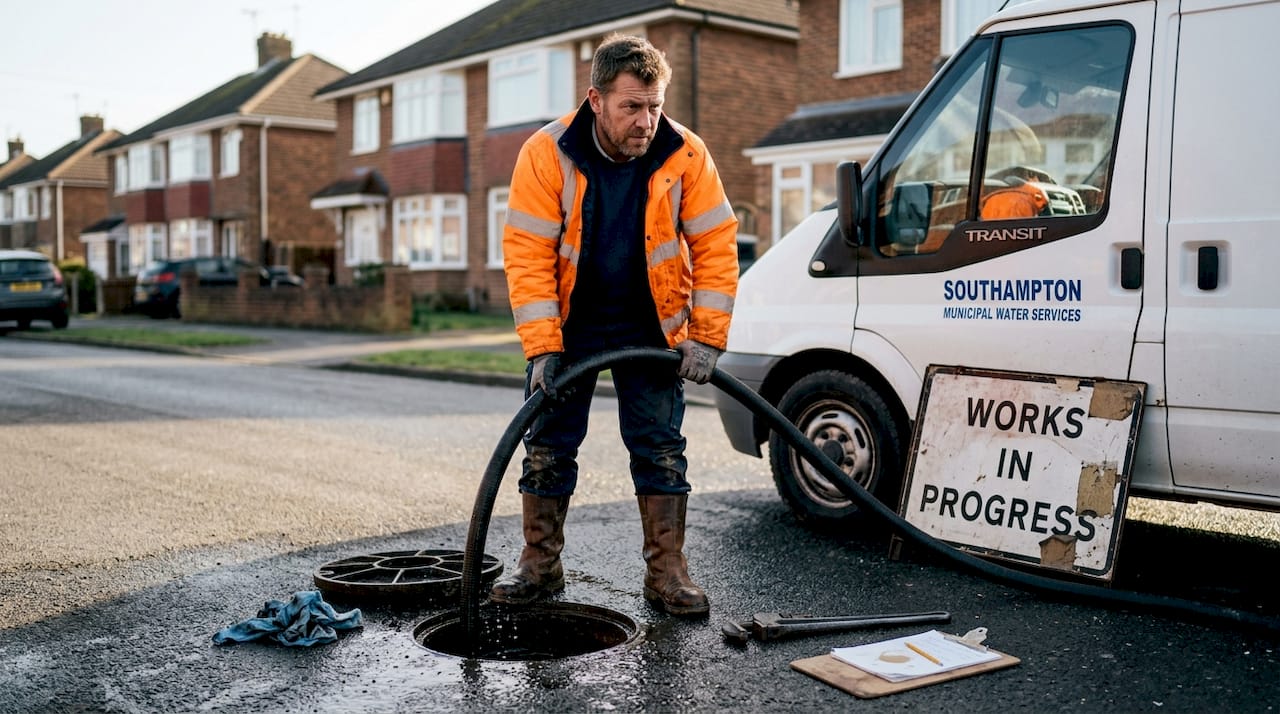
Hydro jetting works by propelling water at extremely high pressure through a flexible hose inserted into the drain. The force is strong enough to break apart compacted grease, dislodge tree roots, and flush years of accumulated debris in a single pass. Unlike a drain snake, which punches a hole through a blockage, hydro jetting removes the entire obstruction and scours the pipe walls clean.
| Feature | Hydro jetting | Traditional snaking |
|---|---|---|
| Blockage removal | Complete | Partial |
| Pipe wall cleaning | Yes | No |
| Eco-friendly | Yes (water only) | Yes |
| Suitable for roots | Yes | Limited |
| Risk to old pipes | Low (post-CCTV) | Very low |
| Lasting results | Long-term | Short-term |
Hydro jetting delivers longer-lasting results than snaking and avoids the use of chemicals, making it a genuinely eco-friendly option. For commercial properties, restaurants, and high-use drainage systems in Southampton, it is not just recommended but essential.
There are limitations worth knowing. Hydro jetting should never be used on pipes that are already collapsed or severely cracked, which is precisely why the CCTV survey comes first. Cost is also higher than snaking, though the longer interval between treatments usually makes it better value overall.
Pro Tip: For commercial kitchens and hospitality businesses, schedule hydro jetting every six to twelve months regardless of visible symptoms. Grease accumulates silently and causes blockages at the worst possible times.
For a full breakdown of the process and what to expect, the drain jetting guide covers it in detail. And if you want to understand the broader case for professional maintenance, professional drain cleaning explains why reactive fixes almost always cost more in the long run.
Smart and sustainable drainage: Sensors, AI, and SuDS
The most forward-thinking drainage solutions in Southampton now go beyond cleaning and repair. They prevent problems from forming in the first place, using technology that would have seemed futuristic a decade ago.
IoT sensors are small devices installed within drainage networks that continuously monitor flow rates, water levels, and pressure. When something changes, an alert is sent immediately. For commercial property managers overseeing multiple sites, this means no more discovering a blocked drain through a flooded car park or a complaint from a tenant.
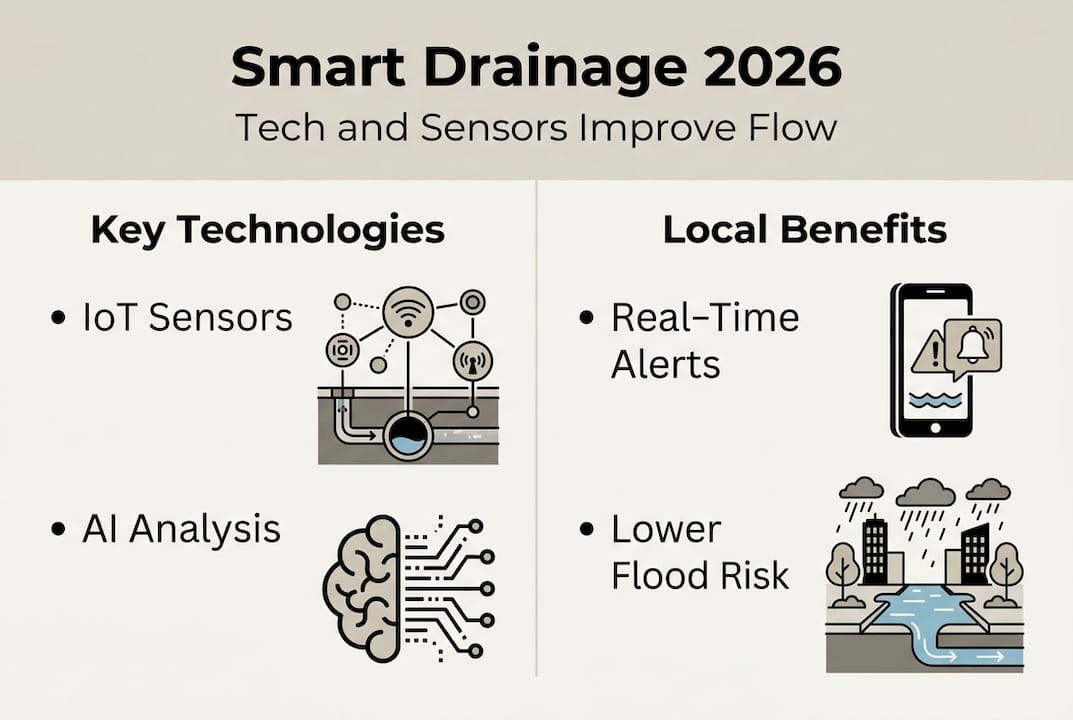
AI-assisted CCTV analysis is changing the speed and accuracy of drain inspections. Rather than relying solely on an engineer reviewing hours of footage, AI software flags defects automatically, prioritises urgent findings, and generates reports faster. AI-assisted inspection reduced failed CCTV surveys by 55% and saved $1 million in one documented programme. That is a meaningful improvement in both accuracy and cost.
SuDS, or Sustainable Drainage Systems, take a different approach entirely. Rather than channelling rainwater away as fast as possible, SuDS slow it down, filter it, and allow it to soak naturally into the ground. This reduces the burden on ageing pipe networks and cuts flood risk significantly.
| Technology | Primary benefit | Best suited for |
|---|---|---|
| IoT sensors | Real-time alerts | Commercial sites, large properties |
| AI CCTV analysis | Faster, accurate diagnosis | Any property with recurring issues |
| SuDS | Flood prevention, sustainability | New builds, landscaping projects |
The local impact is already measurable. SuDS installations in Southampton can hold up to 28,000 litres of rainwater and have prevented over 50 storm overflows in the area. That is real infrastructure relief for a city whose Victorian sewers were never designed to handle modern rainfall volumes.
For commercial property managers, commercial drainage best practices outlines how these technologies integrate into site management. You can also explore the full range of sustainable drainage services available locally.
Our take: Why technology works only when people act
Here is something the technology conversation often misses: the best drainage tools in the world make no difference if the person responsible for the property does not act on the information they provide.
We see this regularly. A CCTV survey reveals a cracked pipe. The report sits unread for six months. By the time the owner calls back, what was a straightforward reline has become a full excavation job. The technology did its job perfectly. The decision-making did not.
The “fit and forget” mentality is the real enemy of good drainage outcomes. Smart sensors alert you to a problem, but someone has to respond. AI speeds up diagnosis, but a qualified engineer still needs to carry out the repair. Technology reduces risk, it does not eliminate the need for judgement.
Those who get the best results are the ones who treat drainage as an ongoing responsibility, not a one-off fix. They book surveys before problems escalate, they follow through on recommendations, and they work with people who understand local drainage challenges specific to Southampton. That combination of smart technology and informed action is what genuinely prevents emergencies.
Next steps: Advanced drainage solutions for your Southampton property
If this article has made one thing clear, it is that modern drainage technology genuinely works, but only when paired with expert guidance and timely action.
Whether you are a homeowner dealing with a recurring blockage or a property manager looking to upgrade your site’s drainage infrastructure, the right starting point is a professional assessment. Our drainage services in Southampton cover everything from CCTV surveys and hydro jetting to SuDS installation and full infrastructure upgrades. If you want to understand what your property needs before committing, the infrastructure upgrade guide is a practical first read. You can also browse drainage solution options tailored to Southampton properties specifically. Do not wait for a blockage to become an emergency.
Frequently asked questions
What are the key drainage technologies used in Southampton in 2026?
Hydro jetting, smart IoT sensors, CCTV surveys, AI inspection tools, and SuDS are the leading technologies addressing blocks and infrastructure challenges in Southampton. Smart tech and SuDS are already delivering measurable results across the region.
Can hydro jetting damage old pipes?
Hydro jetting is safe when a CCTV survey is completed first, but it should not be used on collapsed or severely degraded pipes. Pre-jetting CCTV is the standard precaution that prevents further damage.
How does AI help drainage maintenance?
AI analyses CCTV footage automatically, reducing survey failures and speeding up diagnosis considerably. AI-assisted surveys reduced failed inspections by 55% and saved $1 million in one documented programme.
What makes SuDS different from traditional drainage?
SuDS manage rainwater sustainably by slowing, filtering, and absorbing it naturally rather than channelling it directly into the sewer network. SuDS systems can hold up to 28,000 litres of rainwater, significantly reducing flood risk and relieving pressure on ageing pipes.