A slow-draining sink might seem like a minor inconvenience, but it’s often the first sign of a serious blockage building up inside your pipes. Many homeowners in Southampton dismiss it, pour a bottle of chemical unblocker down the drain, and carry on. The problem is that this rarely solves the underlying issue. Drain jetting is the method professionals trust to clear blockages thoroughly and restore your drainage system to full working order. This article explains exactly what drain jetting is, how it works, what it removes, and when you should call in the experts.
Table of Contents
- What is drain jetting and how does it work?
- What does drain jetting remove? Common causes of blockages
- When should you choose drain jetting? Warning signs and scenarios
- Is drain jetting safe and cost-effective?
- The truth most homeowners miss about drain jetting
- Need drain jetting in Southampton? Get expert help
- Frequently asked questions
Key Takeaways
| Point | Details |
|---|---|
| Thorough pipe cleaning | Drain jetting clears the entire pipe, not just a small channel like traditional methods. |
| Removes stubborn blockages | It is highly effective against grease, silt, roots, and scale. |
| Safety requires professionals | Professional inspection and technique prevent pipe or personal injury. |
| Prevents future problems | Regular jetting can stop minor blockages becoming costly emergencies. |
What is drain jetting and how does it work?
Drain jetting, sometimes called hydro jetting, is the process of using highly pressurised water to blast through blockages and scour the inside walls of your pipes clean. Unlike chemical treatments or manual rods, it doesn’t just poke a hole through the obstruction. It removes it entirely and leaves the pipe walls clean in the process.
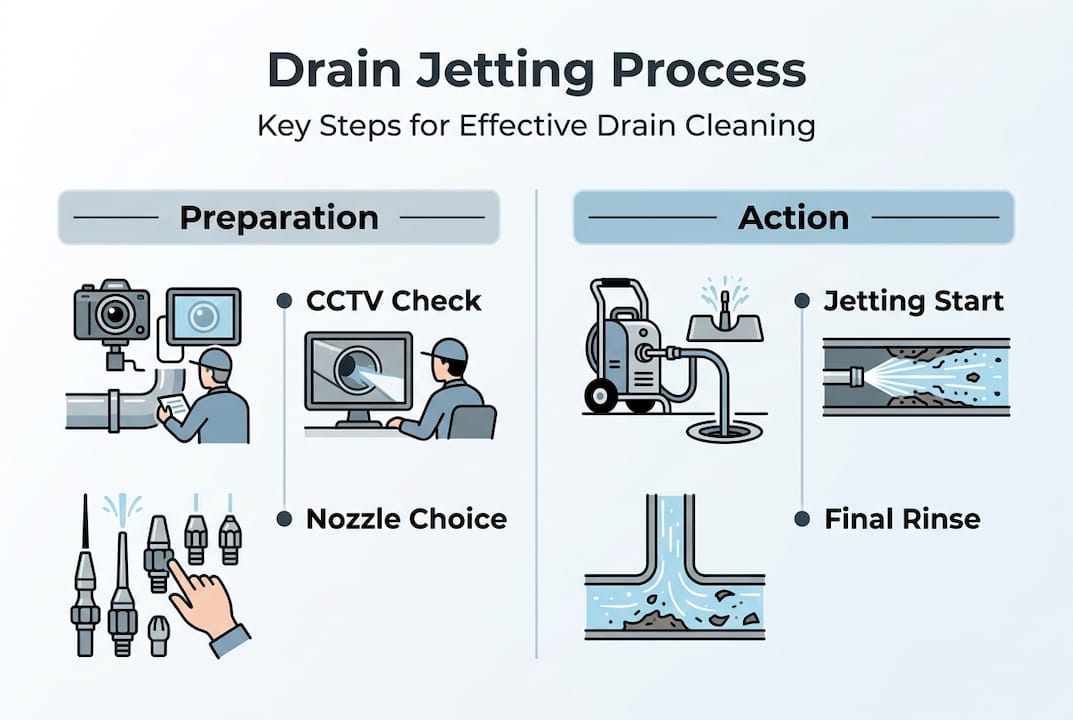
The equipment involved is specialist-grade. A powerful pump forces water through a flexible hose fitted with a purpose-built nozzle. Different nozzles serve different functions. A forward-facing nozzle penetrates and breaks up the blockage, while a rearward-facing nozzle propels the hose forward and scours the pipe walls as it moves. As described in Sewer Line Hydrojetting Explained, the process involves pre-inspection with CCTV, inserting the hose, selecting the correct nozzle, jetting multiple passes, flushing debris, and completing a post-inspection to confirm results.
Here’s a summary of the typical drain jetting process:
- CCTV pre-inspection to assess pipe condition and locate the blockage
- Hose insertion into the drain access point
- Nozzle selection based on blockage type and pipe diameter
- Multiple jetting passes to break up and flush the obstruction
- Debris flushing downstream and out of the system
- Post-inspection to confirm the pipe is clear and undamaged
| Stage | Purpose |
|---|---|
| CCTV inspection | Identify blockage location and pipe condition |
| Nozzle selection | Match tool to blockage type |
| Jetting passes | Break up and remove obstruction |
| Post-inspection | Verify results and check for damage |
This is not a DIY job. The pressures involved are significant, and without proper training and equipment, you risk serious injury or damage to your pipework. Our blocked drain services use fully trained engineers with professional-grade jetting equipment.
Pro Tip: Always insist on a CCTV inspection before jetting begins. It protects you, the engineer, and your pipes.
What does drain jetting remove? Common causes of blockages
One of the most common questions we hear is: “What’s actually causing my drain to block?” The answer varies, but drain jetting is effective against a surprisingly wide range of materials.
The most frequent culprits in Southampton homes include:
- Grease and fat from kitchen sinks, which cool and solidify inside pipes
- Silt and sediment that accumulates over time, particularly in older drainage systems
- Hair and soap scum from bathrooms, which bind together and create dense clogs
- Limescale built up on pipe walls, narrowing the internal diameter
- Soft tree roots that have begun to infiltrate pipe joints
What makes jetting so effective is that it cleans the full pipe circumference, unlike snaking which only punches a narrow hole through the blockage. That distinction matters enormously. A drain rod might restore some flow, but it leaves grease, scale, and debris clinging to the pipe walls. Within weeks, the blockage returns.
| Method | What it removes | Pipe wall cleaning | Suitable for roots |
|---|---|---|---|
| Drain jetting | Grease, silt, scale, hair, soft roots | Full circumference | Yes (soft roots) |
| Manual rodding | Solid obstructions only | None | Limited |
| Chemical unblocker | Grease and hair (partial) | None | No |
“Hydro jetting cleans the full pipe circumference, removing grease, silt, scale, and hair, whereas snaking only punches a hole through the blockage and leaves residue behind.”
Understanding the blocked drain causes specific to your property helps engineers choose the right approach. For persistent or recurring blockages, effective drain unblocking with jetting is almost always the most thorough solution available.
When should you choose drain jetting? Warning signs and scenarios
Knowing when to call in a professional for drain jetting can save you from a much bigger problem down the line. There are clear warning signs that suggest a blockage has gone beyond what a plunger or off-the-shelf product can handle.
Here are the key signs to watch for:
- Slow drainage in sinks, baths, or showers that doesn’t improve over time
- Recurring blockages that keep coming back despite repeated attempts to clear them
- Unpleasant odours rising from drains, suggesting trapped organic matter
- Gurgling sounds from pipes or toilets, indicating air trapped by a partial blockage
- Water pooling in your garden or near drain covers after rainfall
- Multiple fixtures draining slowly at the same time, pointing to a main drain issue
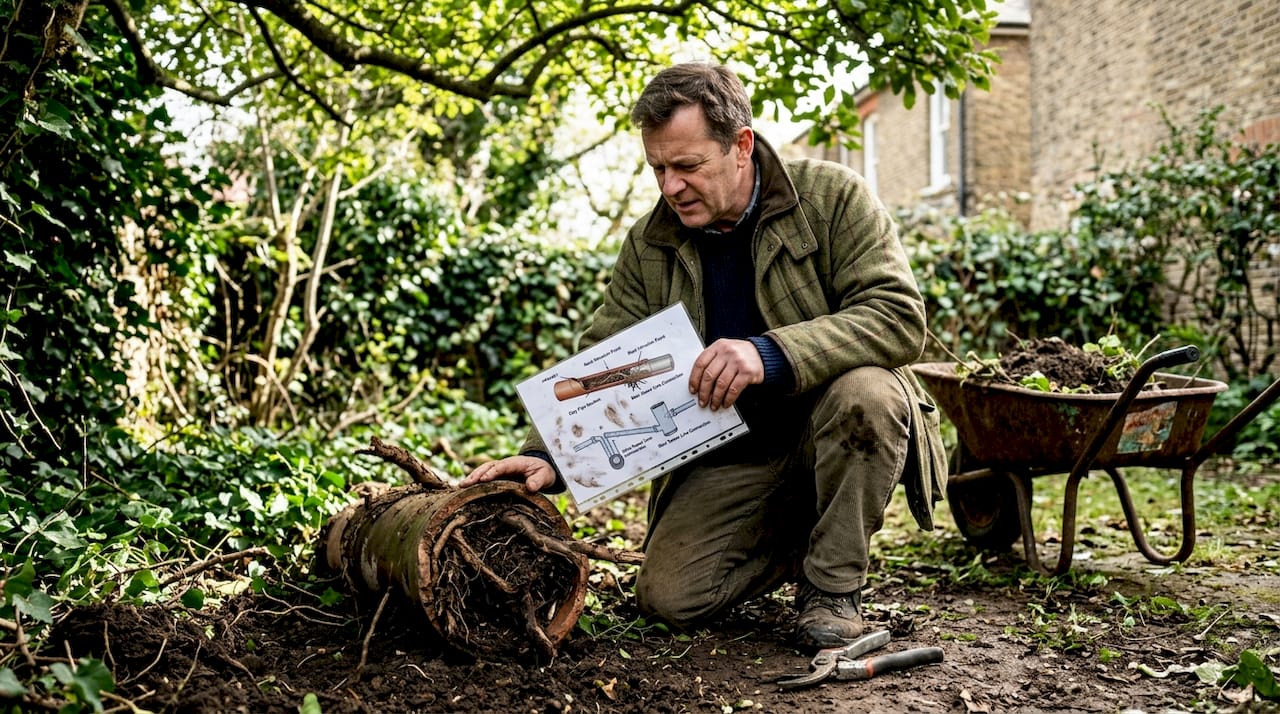
In Southampton, older properties are particularly prone to root intrusion from mature garden trees, and grease accumulation is a common issue in terraced homes where kitchen waste pipes run long horizontal distances before reaching the main sewer. These scenarios are exactly where jetting excels.
For landlords and property managers, scheduling preventative jetting once a year is a smart investment. It keeps drainage running smoothly between tenancies and reduces the risk of emergency callouts. Speaking of which, if you need emergency drain clearing, acting quickly limits the damage.
Residential jetting typically operates at 1,500 to 4,000 PSI, with flow rates of 15 to 18 gallons per minute and water usage of around 400 to 500 gallons per service. That level of force requires professional handling, not a hire-shop machine.
Pro Tip: If more than one drain in your home is slow at the same time, the blockage is almost certainly in the main drain. Call for expert drainage help rather than trying to treat each fixture separately.
Is drain jetting safe and cost-effective?
This is a fair question, and the honest answer is: yes, when done correctly by a qualified professional, drain jetting is both safe and excellent value for money.
The key safeguard is the CCTV inspection that takes place before any jetting begins. This reveals the condition of the pipe, identifies any cracks or weaknesses, and ensures the engineer selects the right pressure and nozzle combination. As outlined in professional jetting guidance, professionals use pulsation techniques and correctly sized hoses and nozzles to protect pipe integrity throughout the process.
Risks arise when people attempt DIY jetting with hire equipment:
- High-pressure injury from mishandling the hose or nozzle
- Pipe damage from using incorrect pressure on older or fragile pipework
- Incomplete clearing that leaves the root cause unresolved
- No post-inspection to confirm the drain is actually clear
From a financial perspective, jetting makes strong economic sense. A single professional jetting session costs a fraction of what you’d pay to repair a collapsed drain or deal with sewage backing up into your home. Regular maintenance jetting also extends the lifespan of your drainage system.
Key statistic: Residential jetting uses approximately 400 to 500 gallons of water per service at pressures up to 4,000 PSI, which is why professional equipment and training are non-negotiable.
For Southampton homeowners, understanding your local drainage infrastructure is also worthwhile, particularly in areas with Victorian-era pipework that requires careful pressure management.
The truth most homeowners miss about drain jetting
Here’s something we see repeatedly: homeowners wait months before calling us, convinced their slow drain is a minor issue. By the time they do call, what could have been a straightforward jetting job has become a more involved repair.
The misconception is that drain jetting is purely about brute force. It isn’t. The pressure is only one part of the equation. The CCTV assessment, the nozzle choice, the flow rate, and the engineer’s judgement all determine whether the job is done safely and thoroughly. A poorly executed jet can damage a fragile pipe just as easily as it clears a blockage.
What we’ve found working in Southampton is that the city’s mix of Victorian terraces, post-war housing, and modern developments means no two drainage systems are identical. Root intrusion from mature street trees, combined with decades of grease accumulation, creates blockages that look simple on the surface but run deep. Addressing the real causes behind blockages is always more effective than treating the symptom.
The biggest cost is almost never the jetting itself. It’s the delay in calling for help.
Need drain jetting in Southampton? Get expert help
If your drains are slow, smelly, or backing up, don’t wait for the problem to escalate. Professional drain jetting is the fastest and most thorough way to restore your drainage system, and it’s far less disruptive than you might expect.
At Blocked Drains Southampton, we carry out CCTV inspections before every jetting job, so you know exactly what you’re dealing with before any work begins. Our fully insured engineers cover Southampton and the surrounding areas, offering rapid response times for both routine maintenance and emergency callouts. Explore our full range of drain jetting services and get in touch today for a fast, no-obligation assessment. Your drains deserve more than a temporary fix.
Frequently asked questions
Can drain jetting damage old pipes?
When carried out by a professional after a CCTV inspection, jetting is safe for most pipes, including older ones, because engineers adjust pressure and nozzle type to suit the pipe’s condition and material.
How quickly does drain jetting work?
Most residential blockages are cleared within an hour or two, as professional jetting equipment works rapidly once the correct nozzle and pressure settings are in place.
What is the difference between drain jetting and rodding?
Jetting cleans the whole pipe circumference with high-pressure water, removing grease, scale, and debris from the walls, while rodding only clears a narrow path through the centre of the blockage.
Is drain jetting suitable for kitchens and bathrooms?
Yes, jetting is highly effective in both settings, removing the grease, hair, and scale that are the most common causes of blockages in kitchen and bathroom drains.