
TL;DR:
- Blocked soak aways cause waterlogging, foundation damage, and health hazards if not addressed.
- Modern modular systems are easier to maintain and resist blockages better than rubble pits.
- Regular professional inspections and no-dig jet vacuuming prevent costly failures and extend system lifespan.
Heavy rainfall hits Southampton and suddenly your lawn sits under a sheet of standing water, or a foul smell drifts up from the corner of your garden where the drainage outlet sits. These are not minor inconveniences. They are clear signals that your soak away is struggling, or has failed altogether. Left unaddressed, a blocked soak away can cause waterlogging that damages foundations, kills lawns, and creates health hazards from surface contamination. This guide walks you through everything you need to know: what soak aways are, how to spot problems early, how to clear them safely, and how to keep them working long into the future.
Table of Contents
- Understanding soak away systems and common problems
- Preparation: Assessing and diagnosing soak away issues
- The soak away clearance process: Step-by-step instructions
- Verifying clearance and preventing future issues
- A professional perspective on modern soak away clearance
- Southampton’s trusted soak away and drainage specialists
- Frequently asked questions
Key Takeaways
| Point | Details |
|---|---|
| Routine maintenance matters | Annual soak away check-ups reduce the risk of expensive repairs and flooding. |
| Modern clearance is cleaner | Jet vacuuming allows soak away clearance with minimal garden disruption. |
| Design affects outcomes | Modular and accessible soak away designs make clearance and ongoing maintenance much easier. |
| Early warning signs help | Slow drains and foul odours indicate early soak away issues requiring prompt action. |
Understanding soak away systems and common problems
A soak away is an underground drainage structure designed to collect surface water or treated wastewater and allow it to disperse slowly into the surrounding soil. In residential settings across Southampton, soak aways typically collect rainwater runoff from roofs, driveways, and patios. They sit at the end of a pipe run and do their work quietly underground, which is precisely why many homeowners forget about them until something goes seriously wrong.
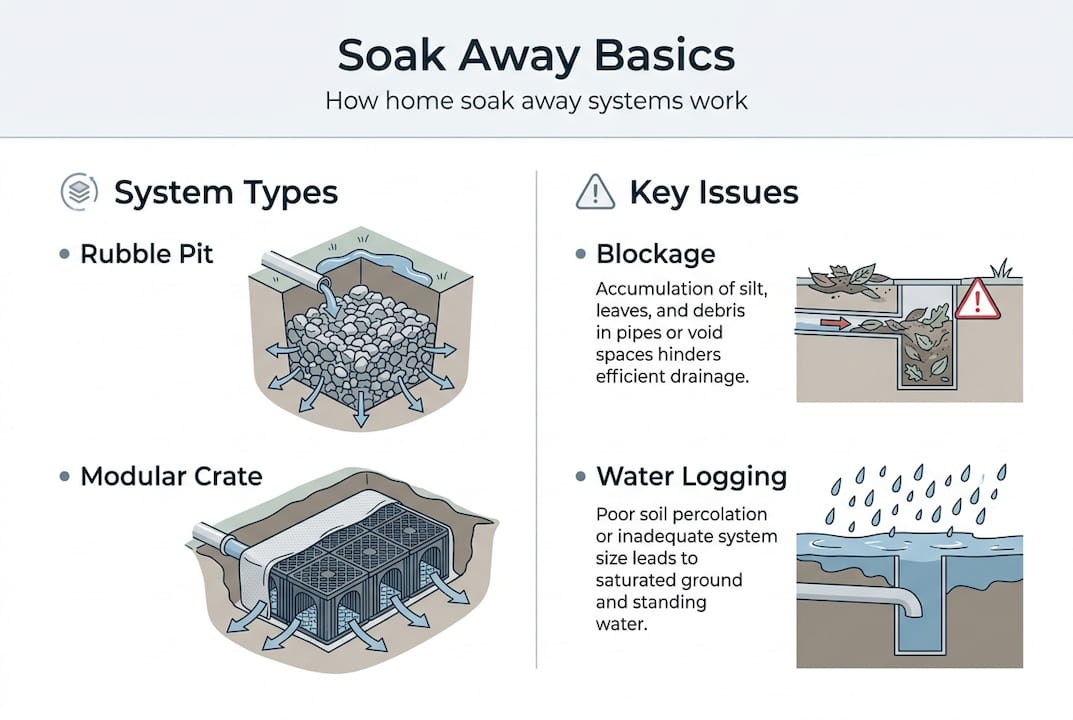
There are two main types found in Southampton homes. The older, traditional rubble pit soak away consists of a hole filled with broken bricks, rubble, and hardcore. Water percolates between the rubble and into the ground. These work adequately when new but are notoriously prone to silting up over time. The modern alternative is the modular crate soak away, which uses interlocking plastic crates wrapped in geotextile membrane. These offer significantly more void space and, crucially, they are far easier to access for maintenance.
| Feature | Rubble pit soak away | Modular crate soak away |
|---|---|---|
| Void space | Low, reduces over time | High, remains consistent |
| Maintenance access | Difficult, often requires digging | Easier via inspection points |
| Lifespan | 10 to 20 years typically | 30+ years with maintenance |
| Blockage resistance | Poor | Strong |
| SuDS compliance | Often non-compliant | Compliant with modern standards |
Understanding which type you have matters because it changes how you approach clearance and maintenance. You can often identify a modular system by the presence of an inspection chamber or access riser at the surface.
Common problems that affect Southampton soak aways include:
- Silt build-up: Fine particles carried by surface water gradually clog the void spaces and surrounding soil
- Root invasion: Tree and shrub roots seek out moisture and can penetrate soak away structures, collapsing rubble pits or puncturing geotextile membranes
- Household waste contamination: Incorrectly connected grey water pipes deposit fats, soap residue, and debris that accelerate clogging
- Inadequate original design: Many older Southampton properties have undersized soak aways that were never able to cope with peak flow, particularly given the city’s clay-heavy soils in areas like Lordshill and Totton
- Saturated ground: During prolonged wet winters, the surrounding soil can become so saturated it simply cannot absorb more water, causing temporary but repeated failure
As national SuDS standards confirm, modular crates resist blockages better than rubble pits, and accessible designs make maintenance far easier. Pre-treatment with silt traps and geotextile liners helps prevent clogging from the outset, which is something worth knowing if you are planning an upgrade. Southampton’s varied causes of blocked drains often overlap with soak away problems, and understanding the full picture helps you act before small issues escalate. When considering upgrades, exploring wider drainage solutions available locally gives you a clearer picture of your options.
Good soak away design is not just about capacity. It is about accessibility. A system you can inspect, clean, and monitor without excavation is a system that will serve your property reliably for decades.
Preparation: Assessing and diagnosing soak away issues
With an understanding of how soak aways work and what can go wrong, the next step is carefully preparing for safe and effective clearance. Rushing in without proper diagnosis is the single most common mistake homeowners make, and it leads to wasted effort or, worse, unnecessary damage to pipes and surrounding ground.
Warning signs to look for:
- Water pooling or ponding in the garden for more than 24 hours after rainfall
- Noticeably slow drainage from downpipes or surface gullies
- Foul odours near the soak away location, suggesting organic waste or sewage contamination
- Damp patches or mossy growth directly above the soak away area
- Gurgling sounds from connected pipework during or after rain
The risks of leaving these signs unaddressed are significant. Persistent waterlogging weakens soil structure around foundations. In Southampton, where many Victorian and Edwardian terraces have shallow foundations, this is a genuine structural risk. There is also the matter of blocked drain prevention tips that apply specifically to surface drainage, and ignoring your soak away can create knock-on blockages through the wider system. Additionally, discharging surface water that backs up and causes flooding onto neighbouring land can result in enforcement action under local authority regulations.
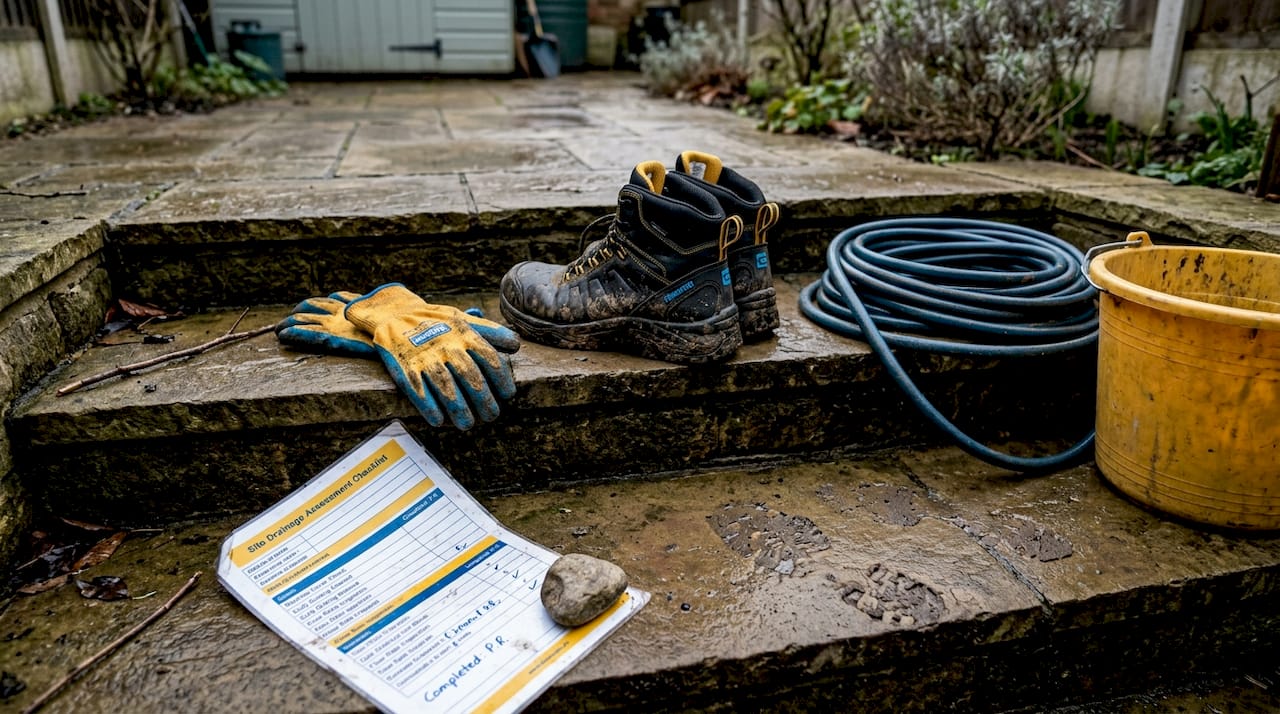
Before starting any clearance work, gather the right tools and understand what you are dealing with.
| Item | Why it is needed |
|---|---|
| High-visibility gloves and waterproof boots | Protection from contaminated water and sharp debris |
| Full PPE including eye protection | Jetting creates spray that carries harmful particles |
| Drain rods | Initial inspection and manual debris shifting |
| Torch and mirror | Visual assessment of pipes and access chambers |
| Jet vacuum unit (or hired equipment) | Effective, no-dig removal of silt and debris |
| CCTV camera (optional but recommended) | Confirms blockage location and type |
| Silt trap (for reinstallation) | Pre-treatment before water enters the soak away |
Once you have identified the soak away type through surface indicators or property records, check whether an inspection point exists. Many older rubble pit soak aways have none, which is part of why they become such a problem. If you are dealing with a surface water drainage system, connecting the dots between your gully drainage and soak away is essential before clearing anything.
According to SuDS guidance, jet vacuuming enables no-dig soak away clearance, which significantly reduces disruption to the surrounding garden and pipework.
Pro Tip: Installing a silt trap on the inlet pipe before it reaches the soak away is one of the most cost-effective preventative measures available. It catches debris before it enters the structure, dramatically reducing how often full clearance is needed.
The soak away clearance process: Step-by-step instructions
Once you have safely prepared, follow these steps to clear and revitalise your soak away efficiently. The process varies depending on whether you have a modular crate system or an older rubble pit, but the core sequence remains the same.
-
Locate and access the soak away. Use property plans, the position of downpipes, or a simple probe rod to find the structure. If an access riser or inspection chamber exists, open it carefully and assess the interior with a torch.
-
Conduct a visual inspection. Look for obvious blockages at the inlet pipe, heavy silt accumulation, root presence, or signs of structural collapse. Note the water level inside. If the chamber is completely full, expect a significant clearance job.
-
Begin jet vacuuming. This is the most effective first-line approach and the one that causes least disruption. A jet vacuum machine simultaneously blasts high-pressure water to break up compacted silt and vacuums the resulting slurry away. For modular crate systems, this can often clear the soak away completely without any digging.
-
Use drain rods for stubborn debris. If jetting alone does not fully clear the blockage, manual rodding can break up compacted material. Push rods in gradually and twist clockwise to avoid unscrewing connections.
-
Remove debris manually if necessary. For very heavy silt accumulation or root masses, some digging may be unavoidable, particularly with rubble pits. This is the stage at which professional involvement becomes most valuable because misjudging the extent of excavation can damage surrounding pipework or destabilise the soak away itself.
-
Inspect for reassembly. Once the blockage is cleared, recheck the inlet and outlet pipes for damage. Reassemble or replace any dislodged geotextile membrane in modular systems. Confirm the chamber is clean before closing.
-
Flush and test. Run a sustained volume of water through the connected downpipes and observe how quickly the soak away disperses it. Effective clearance should show noticeably faster dispersal within minutes.
As SuDS standards confirm, no-dig fixes via jet vacuuming can clear soak aways without excavation in many cases, making this the preferred modern technique. This aligns with professional drainage best practices used by specialist teams throughout Southampton. For older properties where the full drainage infrastructure is unknown, a CCTV survey before clearance gives you a complete picture and prevents unwanted surprises mid-job.
Pro Tip: Always wear full PPE throughout the clearance process and avoid using household chemical drain cleaners in or near a soak away. These chemicals kill the beneficial soil bacteria that help break down organic matter and aid natural percolation, actively making long-term performance worse.
Verifying clearance and preventing future issues
Completing clearance is not the end. Verifying the outcome and maintaining your soak away correctly ensures you avoid repeat headaches within months of finishing the work.
Testing water dispersal post-clearance is straightforward. On a dry day, pour a measured volume of water, typically around 100 litres, into the inlet pipe and time how long the chamber takes to empty. Compare this against the manufacturer’s specification for modular systems, or simply assess whether the improvement is clearly visible compared to how the system was performing before clearance.
Warning signs that clearance is incomplete or that underlying problems persist include:
- Standing water remaining in the inspection chamber more than two hours after testing
- The chamber refilling quickly after jetting without any external rainfall
- Foul smell returning within days, suggesting sewage contamination rather than surface water
- Visible root regrowth at inlet or within the chamber within a short period
Long-term maintenance is where most homeowners fall short. The temptation is to deal with problems only when they become obvious, but this reactive approach means more disruption, higher costs, and greater risk of damage each time. As SuDS guidance emphasises, accessible designs make ongoing soak away maintenance far more straightforward and significantly extend system lifespan.
Regular maintenance tips to keep your soak away performing well:
- Clear leaves and debris from inlet gullies and gutters every autumn to reduce sediment entering the system
- Arrange annual jetting of the inlet pipe, even if no blockage is apparent
- Book a professional inspection every one to two years, using CCTV if the system is older or a rubble pit type
- Trim trees and large shrubs within three metres of the soak away to reduce root intrusion risk
- Fit or replace silt traps at the inlet each spring to intercept debris before it reaches the structure
The benefits of professional drain cleaning go well beyond the immediate job. Regular servicing identifies early-stage problems before they become structural, particularly relevant in historic Southampton properties where ageing rubble pits are still in daily service.
| Maintenance task | Recommended frequency |
|---|---|
| Gully and gutter clearing | Every autumn |
| Inlet pipe jetting | Annually |
| Professional inspection | Every one to two years |
| Silt trap replacement | Every spring |
| Full CCTV survey | Every three to five years |
SuDS compliance is not just a regulatory checkbox. Systems designed for easy access and regular maintenance cost less to run over their lifetime and perform reliably through Southampton’s wettest winters.
A professional perspective on modern soak away clearance
Here is an honest assessment that most online guides will not give you: DIY soak away clearance often treats the symptom rather than the cause. A homeowner who unblocks their rubble pit soak away manually, without understanding why it blocked in the first place, will typically face the same problem again within a year or two. The root cause is usually either inadequate pre-treatment, poor system design, or encroaching tree roots that were never fully removed.
Modern jet vacuuming has genuinely changed the economics of professional soak away maintenance. Previously, any significant clearance job meant excavation, which meant cost, disruption, and garden damage. Today, no-dig solutions via jet vacuuming make cost-effective, minimal-disruption maintenance achievable for almost any domestic soak away. This means professional servicing is now accessible to average homeowners rather than being reserved for major failures only.
The smarter approach is to treat your soak away like a boiler: schedule inspection twice a year rather than waiting for a breakdown. Southampton’s wet winters and clay-heavy soils put systems under sustained pressure from October through to March. Properties with large gardens or mature trees nearby face even greater risk. Solutions for historic property drainage in Southampton show that proactive maintenance consistently outperforms emergency reactive work on cost, disruption, and long-term reliability. Investing in a modular upgrade or professional biannual inspection is simply the more sensible choice for any property where drainage performance genuinely matters.
Southampton’s trusted soak away and drainage specialists
For those seeking confidence and long-term assurance, experienced local professionals offer guaranteed solutions that go well beyond what a weekend DIY effort can reliably achieve.
If your soak away is showing signs of failure, or you simply want the peace of mind that comes from knowing your drainage is in excellent condition, our team is ready to help. We cover Southampton and the surrounding areas with fast response times, no-dig clearance technology, and genuine local knowledge of the drainage challenges that affect properties here. Explore our full range of drain clearance and soak away services or read our drainage infrastructure guide to understand what your property may need. Visit the blocked drains Southampton homepage to book an inspection or request a callback today.
Frequently asked questions
How often should a soak away be cleared?
Most experts recommend professional soak away inspection and cleaning at least every one to two years, as accessible design and regular maintenance are key to ensuring a long system lifespan and consistent performance.
Can you clear a soak away without digging up the garden?
Yes, in many cases jet vacuuming and specialist equipment clear soak aways without any excavation, as no-dig fixes via jet vacuuming are now a well-established professional technique.
What are the warning signs that my soak away is blocked?
Slow drainage from gullies, foul smells near the drainage outlet, and water pooling in the garden for more than a day after rainfall are the most reliable indicators of a blocked or failing soak away.
Is it necessary to replace a soak away if it keeps blocking?
Persistent, recurring blockages often point to a design or material problem rather than a one-off failure, and upgrading to a modular crate system can resolve this because modular crates resist blockages far more effectively than traditional rubble pits.