TL;DR:
- Many Southampton homeowners mistakenly attribute foul smells and slow drains to surface water problems, leading to ineffective repairs. Foul water drainage, carrying wastewater from fixtures to treatment, is often overlooked but critical for property health and legal compliance. Regular inspections, proper separation from surface water, and prompt professional intervention prevent costly failures and environmental harm.
Many Southampton homeowners assume that bad smells around their property or slow-draining sinks are simply a surface water problem after heavy rainfall. That assumption leads to wasted time, wrong remedies, and mounting damage. Foul water drainage, the hidden network carrying wastewater from your toilets, sinks, and baths away from your home, is far more likely to be responsible than most people realise. Understanding how this system works, what can go wrong, and how to fix it quickly is one of the most practical things you can do to protect your property’s health and value.
Table of Contents
- What foul water drainage is and why it matters
- Common foul water drainage issues in Southampton
- Foul versus surface water drainage: what’s the difference?
- How to prevent and fix foul water drainage problems
- Why most property owners misunderstand foul water drainage (and what actually works)
- Address your foul drainage needs with expert help
- Frequently asked questions
Key Takeaways
| Point | Details |
|---|---|
| Foul drainage is vital | Proper foul water drainage keeps properties healthy and compliant by removing wastewater safely. |
| Local issues require attention | Southampton’s drainage network faces challenges from old pipes, bad weather, and illegal connections. |
| Prevention beats repair | Regular checks and early action help avoid costly foul water drainage faults. |
| Separation matters | Never mix foul and surface water systems to avoid legal and property risks. |
What foul water drainage is and why it matters
Foul water drainage refers to the system of pipes, gullies, and sewers that carry used water away from your property to a sewage treatment works. This includes water from toilets, kitchen sinks, dishwashers, washing machines, and bathroom basins. It is entirely separate from surface water drainage, which handles rainwater from roofs, driveways, and gutters. If you want to understand the surface water drainage differences and how they compare, the distinction is more important than most people appreciate.
In a typical Southampton property, foul water leaves individual fixtures through small waste pipes, which connect to a larger soil stack, and eventually reach the public sewer network managed by Southern Water. Commercial properties may also have grease traps or interceptors fitted before connection to the sewer. The whole system relies on correct gradient, good sealing, and clear pipe runs to function properly.
Keeping foul and surface water drainage separate is not just good practice. It is a legal requirement. Mixing the two systems can push raw sewage into watercourses during heavy rain, creating serious environmental harm and regulatory penalties. Research confirms that foul drainage performance is partly influenced by the complexity of household waste and treatment effectiveness, which is why maintaining your system in good condition matters from the point the waste leaves your property.
The key components of a building’s foul drainage system include:
- Soil and waste pipes connecting individual fixtures to the main stack
- Soil stack (the large vertical pipe, often on an outside wall or inside a duct)
- Underground drain runs connecting the building to the sewer
- Inspection chambers and manholes that allow access for maintenance
- Interceptors or grease traps on commercial premises
A properly functioning foul drainage system is invisible when it works and catastrophic when it does not. Proactive maintenance keeps it out of sight and out of mind for good reason.
Common foul water drainage issues in Southampton
Southampton’s drainage infrastructure is a layered mix of Victorian-era brickwork sewers, twentieth-century concrete systems, and modern plastic pipework. That combination creates specific vulnerabilities that homeowners and property managers here are more likely to encounter than in areas with more uniform infrastructure.
| Issue | Typical cause | Warning signs |
|---|---|---|
| Blockages | Grease, wipes, foreign objects | Slow drains, gurgling, bad smells |
| Sewer leaks | Pipe fractures, root intrusion | Subsidence, persistent damp patches |
| Cross-connections | Incorrect installation, DIY errors | Sewage odour during rainfall |
| Overloaded sewers | High rainfall, inflow from surface water | Internal flooding, manholes overflowing |
| Root intrusion | Tree roots entering cracked pipes | Recurring slow drainage, pipe collapse |
Understanding the causes of blockages in more detail helps property owners recognise patterns early. Blockages are by far the most frequent foul drainage problem. Cooking fats that solidify, wet wipes marketed as “flushable,” cotton buds, and sanitary products are the usual culprits. Over time, these materials combine with calcium deposits and create stubborn fatbergs deep in the drainage run.

Weather plays a significant role in worsening foul drainage problems. During heavy rainfall, surface water can enter the foul sewer through illegal cross-connections or damaged drain covers, dramatically increasing the load on the system. Southern Water’s mitigation work includes reducing the amount of rainfall entering sewer systems through upgrades and detecting illegal connections in and around Southampton.
Warning signs that should never be ignored include:
- Persistent sewage smell inside or around the property
- Multiple fixtures draining slowly at the same time
- Manhole covers lifting or overflowing after rain
- Damp patches or sinkholes in garden areas near drain runs
- Gurgling sounds from pipes when fixtures are not in use
You can also use the detailed drain clearance guide to understand what steps apply to your specific situation.
Pro Tip: If only one fixture drains slowly, the blockage is likely local to that outlet. If multiple fixtures are affected simultaneously, the problem is further down the shared drain run and almost certainly requires professional attention.
Foul versus surface water drainage: what’s the difference?
Getting clarity on how these two systems differ is not just academic. Getting it wrong has real financial and legal consequences for Southampton property owners.
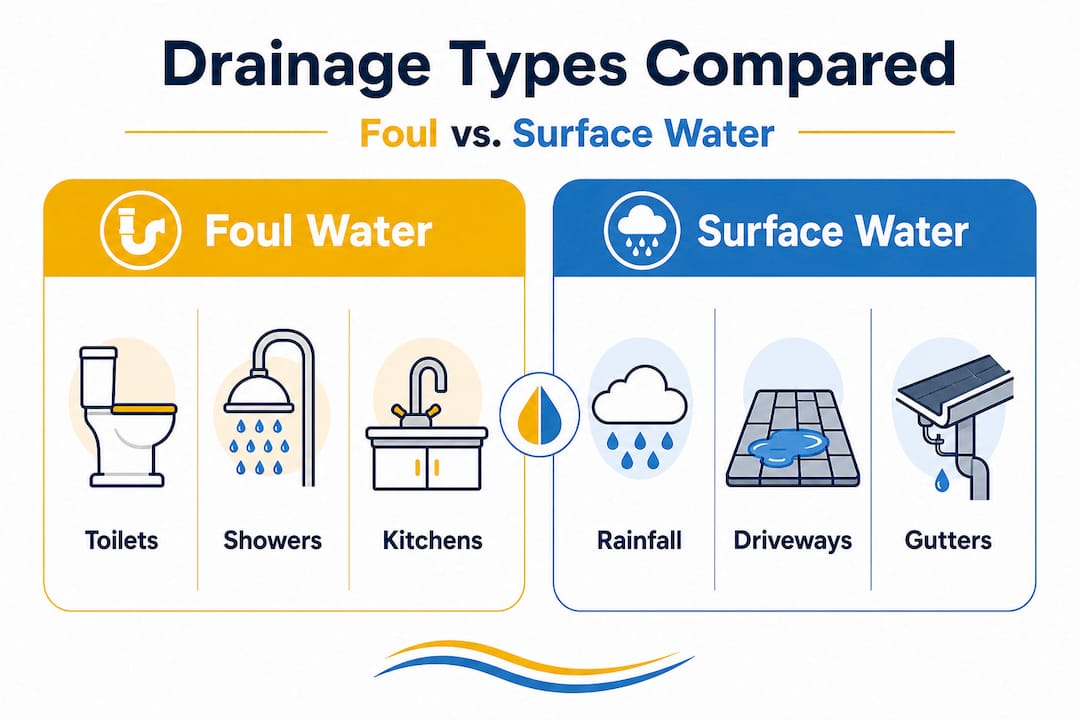
| Feature | Foul water drainage | Surface water drainage |
|---|---|---|
| What it carries | Wastewater from toilets, sinks, appliances | Rainwater from roofs, drives, gutters |
| Where it goes | Sewage treatment works | Soakaways, rivers, or surface water sewers |
| Legal status | Must remain separate from surface water | Must not receive sewage or foul water |
| Maintenance risk | Blockages, leaks, root damage | Silting, flooding, soakaway failure |
| Responsibility | Homeowner to sewer boundary; utility beyond | Often homeowner’s full responsibility |
The legal risk around cross-connections is serious. If an installer or previous owner has connected a surface water downpipe to the foul sewer, or vice versa, your property may be contributing to sewer flooding and pollution events downstream. Local authorities and Southern Water have the power to require you to disconnect illegal cross-connections at your own cost, plus potential fines if harm results.
Here is a straightforward process for checking your drainage separation:
- Locate your drainage inspection chambers and note how many distinct systems exist on your property.
- During dry weather, flush a toilet and ask someone to watch the chamber. Only the relevant chamber should show flow.
- During light rainfall, check whether your surface water gullies and downpipes drain to a separate system from your foul drainage.
- If you are uncertain, commission a professional CCTV drain survey to trace each pipe run definitively.
- If cross-connections are found, arrange remediation before they cause costly incidents.
Significant investment is being made in Southampton’s drainage future. Southern Water invested over £70 million on sustainable drainage, sewer upgrades, and AI technology across the region. That investment addresses the wider network, but the condition of your own foul drainage remains your responsibility up to the sewer boundary.
For a full breakdown of how both systems interact, the surface water drains guide is a practical reference for Southampton homeowners.
How to prevent and fix foul water drainage problems
Prevention is considerably cheaper than repair. The good news is that with modest effort and occasional professional input, most foul water drainage problems are avoidable.
Follow these steps for routine inspection and maintenance:
- Check visible pipework every six months. Look for cracks, signs of damp, or foul odours near soil stacks and external pipe runs.
- Lift inspection chamber covers once a year to check flow levels and look for signs of grease build-up or debris.
- Flush inspection chambers with clean water after checks to clear any deposits that have settled.
- Arrange a professional CCTV drain survey every three to five years, or before buying a property. This identifies hidden cracks, root intrusion, and misalignment before they become expensive.
- Keep a record of where your drain runs are located, using a site plan if possible, so you can act quickly if problems arise.
Actions that prevent blockages and contamination include:
- Never pour cooking oils, fats, or grease down any sink
- Use a sink strainer to catch food debris and hair
- Avoid flushing anything other than toilet paper
- Do not connect garden drainage to the foul sewer
- Trim tree roots near drain runs regularly, particularly large trees close to Victorian-era clay pipes
- Educate all household or staff members on what must not enter the drainage system
Research shows that conventional treatment systems may be less effective at removing some emerging contaminants under less-than-advanced treatment conditions. While that refers to end-of-pipe treatment works, it reinforces why what enters your foul system matters. Reducing contaminant load from the source helps the whole chain work better.
Pro Tip: A CCTV drain survey booked as part of a property purchase or commercial lease renewal typically costs far less than the emergency repairs it can help you avoid. A survey that finds a problem before you complete a sale gives you negotiating power. One done after completion gives you a repair bill.
For detailed guidance on protecting your home from blockages, the drain prevention tips page covers practical steps. When a problem is already present, you will find clear options for blocked drains solutions that apply to both homes and businesses. Owners of older properties in areas such as Shirley, Bitterne, or St Denys will benefit particularly from the older property drainage steps available for Southampton’s historic building stock.
Why most property owners misunderstand foul water drainage (and what actually works)
Here is the uncomfortable truth from years of working on Southampton drainage systems: most property owners do not think about their foul water drainage until raw sewage is coming up through a manhole in their garden. At that point, what might have been a straightforward jetting job has often become a full excavation or pipe relining project.
The misunderstanding runs deeper than simple neglect. Many people genuinely believe foul water drainage is the utility company’s problem from the moment it leaves the house. That is incorrect. You are responsible for the drains within your boundary, and in many older Southampton terraces and commercial premises, those drain runs can extend a significant distance before reaching the public sewer.
Research into domestic wastewater confirms that household wastewater is chemically complex and variable, meaning the material flowing through your drainage system is not neutral or benign. Grease, detergents, food residues, and personal care products combine to create deposits that build gradually and then fail suddenly. The slow build-up phase is invisible. The failure is not.
What actually works, based on local experience across Southampton’s diverse building stock, is a combination of three things. Regular professional inspection using CCTV technology. Clear physical separation between foul and surface water systems. And timely intervention at the first sign of a problem, not the second or third.
Southampton’s unique mix of Georgian terraces, post-war social housing, converted commercial buildings, and modern developments means there is no single drainage solution that fits all properties. A Victorian property in Bevois Valley has completely different drainage risks from a warehouse conversion in the waterfront area. Applying generic advice to specific local conditions is one of the biggest mistakes we see. Our guidance on commercial drainage solutions reflects that local specificity rather than offering a one-size-fits-all approach.
The property owners who avoid expensive foul drainage crises are not those who spend the most money. They are the ones who treat drainage as an active maintenance commitment rather than a passive background system. That shift in thinking is where genuine protection begins.
Address your foul drainage needs with expert help
If this article has made you realise you are not entirely sure what state your foul water drainage is in, that uncertainty is worth resolving sooner rather than later. A small investment in a professional survey now protects you from a significant repair bill later.
Our team at Blocked Drains Southampton provides the full range of foul drainage services for residential and commercial properties across the city and surrounding areas. Whether you need a thorough drain survey to establish the condition of your system, routine maintenance, or urgent help from our emergency drain clearing service, we are equipped to respond quickly with the right technology for your specific situation. Get in touch today to book an inspection or discuss what your property needs.
Frequently asked questions
What is the main purpose of foul water drainage?
Foul water drainage safely removes wastewater from toilets, kitchens, and bathrooms to prevent contamination and maintain hygiene. As research confirms, foul drainage performance is directly influenced by the mixture of wastewater and the effectiveness of treatment at each stage.
How can I tell if my property has a foul water drainage problem?
Common signs are persistent sewage smells, slow-draining sinks, or overflows near waste pipes, especially after heavy rain. Utilities such as Southern Water detect and fix issues including leaking sewers and illegal wastewater connections, but problems within your boundary are yours to identify and resolve.
Can surface and foul water drainage be connected?
They must remain separate by law, and cross-connection can cause flooding and is costly to fix. Rainfall diversion and separation are core strategies utilities use to address exactly this kind of unwanted mixing in the wider sewer network.
What should I do if I suspect a foul water drain blockage?
Arrange a professional survey and unblock service promptly to prevent health risks and property damage from escalating. Attempting to rod or clear a blockage yourself without knowing the pipe condition risks pushing debris deeper or damaging already fragile pipework.
Are modern foul drainage systems more effective at treating contaminants?
Advanced treatment is considerably better, but conventional systems may struggle with newer contaminants present in modern wastewater, which is why reducing what enters the foul system at source remains important.