TL;DR:
- Ignoring a slow drain can lead to severe water damage, foul odors, and costly repairs if left unaddressed. Acting quickly at the first signs of drainage problems can prevent escalation into flooding and structural damage, saving significant expenses. Southampton homeowners benefit from rapid response services that provide same-day solutions, ensuring property protection and peace of mind.
Ignoring a slow-draining sink feels harmless enough. You tell yourself you’ll deal with it at the weekend, or after payday, or when things settle down. But blocked drains rarely stay minor for long. What starts as a gentle gurgle can become a full-blown overflow within days, bringing water damage, foul odours, and repair bills that can run into thousands of pounds. This guide explains exactly why a fast response is your best protection, what happens when you wait, and how to make sure you’re never caught unprepared by a drainage emergency in Southampton.
Table of Contents
- The dangers of delay: what really happens to your drains
- How a fast response prevents costly emergencies
- What fast action looks like: Southampton’s rapid response model
- How to ensure fast intervention every time
- Why waiting is a false economy: our experience in Southampton
- Get fast, reliable drain solutions in Southampton
- Frequently asked questions
Key Takeaways
| Point | Details |
|---|---|
| Delays increase damage | Waiting to fix drain issues often leads to costlier emergencies and major property trouble. |
| Fast response reduces costs | Quick action typically prevents expensive repairs and household disruption. |
| Know your local options | Southampton services can resolve blockages swiftly—acting early is key to avoiding headaches. |
| Preparation matters | Keeping emergency contacts and maintaining drains makes responses faster and more effective. |
The dangers of delay: what really happens to your drains
Most homeowners assume a slow drain is just an inconvenience. It isn’t. Inside your pipework, a partial blockage creates a backlog of waste material. Every flush, every shower, every load of washing pushes more debris into an already restricted pipe. Over days or weeks, that clog grows denser and harder to shift without professional equipment.
The physical consequences build quickly:
- Increased pipe pressure that can crack or split older pipes, particularly common in Southampton’s Victorian-era housing stock
- Foul smells caused by trapped organic matter decomposing inside your drainage system
- Slow drainage across multiple fixtures, signalling that the blockage has migrated deeper into the shared pipework
- Mould and damp spreading behind walls and under floors from persistent moisture
- Structural damage to joists, plasterwork, and foundations as water finds alternative paths
Drain blockages can rapidly escalate to flooding and property damage if left unaddressed, and the repair costs compound fast. What might cost £80 to clear on day one can require hundreds of pounds in pipe repairs by week three and thousands in property restoration by month two.
“A slow drain is rarely an isolated problem. Nine times out of ten, it’s the visible tip of a much larger issue sitting further down the line.”
Pro Tip: If one fixture is draining slowly, check the others nearby. Multiple sluggish drains at the same time almost always indicate a shared blockage deeper in the system, not just a surface clog.
You can significantly reduce your risk by following sensible drain prevention tips from the outset, but when warning signs appear, the most important step is to act on them immediately.
How a fast response prevents costly emergencies
Speed matters more than most people realise. Once a blockage begins to overflow or cause water damage, the costs shift from straightforward drain clearing into building repairs, mould remediation, and potentially loss of use of part of your property. Acting at the first sign of trouble interrupts that escalation cycle before it gains momentum.
Here is what the escalation typically looks like, and when you need to act:
- Slow drainage (Act immediately): Water pools in sinks or the shower tray. This is the easiest and cheapest stage to fix.
- Gurgling sounds (Act urgently): Air is trapped in the system, meaning the blockage is growing. Smells may begin.
- Recurring bad odours (Act today): Waste is backing up in the pipe. Risk of overflow is now real.
- Overflow or flooding (Emergency): Water is entering your home. Structural and hygiene risks are active.
- Structural damage (Crisis): Subfloor, walls, or foundations are affected. Costs can run into tens of thousands.
Quick intervention can prevent the average household from facing drain repair bills exceeding £14,000. That figure sounds dramatic until you see the breakdown: plumbing clearance, pipe replacement, floor repair, damp treatment, and redecoration all stacking up after a single ignored blockage.
Comparison: fast response vs delayed action
| Scenario | Fast response | Delayed response |
|---|---|---|
| Clearance cost | £80 to £200 | £300 to £800+ |
| Pipe repair needed | Unlikely | Often required |
| Property damage | Minimal or none | High probability |
| Time out of service | Hours | Days to weeks |
| Insurance involvement | Rarely needed | Frequently required |
| Total potential cost | Under £300 | £2,000 to £14,000+ |
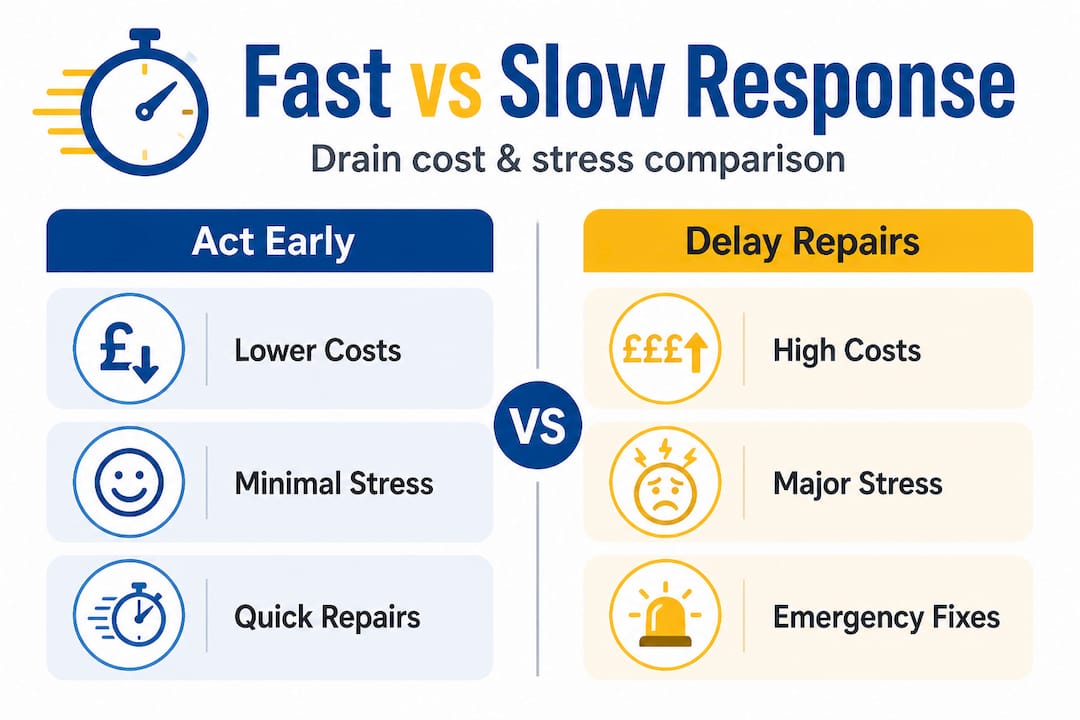
Emergency repairs can cost anywhere from four to ten times more than early intervention. That gap is not because the emergency work itself is more technically complex. It’s because by the time water has escaped containment, multiple trades and materials are needed to restore everything it has touched. Booking emergency drain unblocking at the right moment makes a significant financial difference. The key is recognising what the “right moment” actually is: stage one or two, not stage four or five.
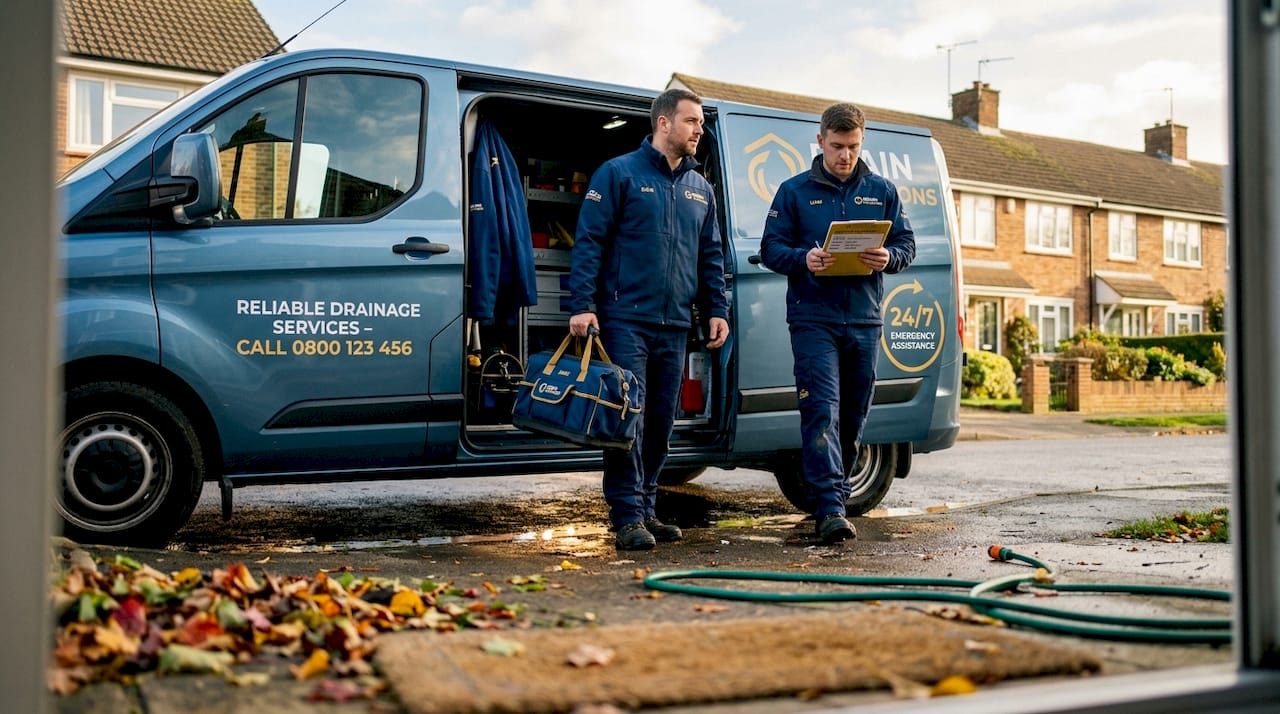
For homeowners who want to understand practical options quickly, reviewing fast drain solutions for Southampton properties gives a clear overview of what is available and how long each approach takes to resolve issues.
What fast action looks like: Southampton’s rapid response model
Knowing that you should act quickly is one thing. Knowing what fast, high-quality service actually looks like is another. Many homeowners feel uncertain about who to call, how long they will wait, and what the visit will involve. Here is what a proper rapid response service covers.
Emergency plumbing services in Southampton can attend within hours and resolve most blockages on the first visit, which means you rarely need to suffer through a second disrupted morning or a second emergency call-out.
Typical rapid response timeline for Southampton properties
| Stage | Timeframe | What happens |
|---|---|---|
| Initial call | Immediate | Details taken, urgency assessed, ETA given |
| Arrival | 1 to 4 hours | Engineer on site with full equipment |
| Diagnosis | 15 to 30 minutes | Visual check and/or CCTV inspection if needed |
| Clearance | 30 to 90 minutes | Jetting, rodding, or mechanical clearance |
| Post-work check | 10 to 20 minutes | Flow test and condition report |
| Prevention advice | Included | Guidance on avoiding repeat issues |
When you call a reputable rapid-response service, here is what you should expect:
- A clear ETA given at the time of your call, not vague promises
- Engineers who arrive with jetting equipment, not just rods
- A diagnosis before any work begins, so you understand the problem
- Transparent pricing confirmed before work starts
- A written or verbal report on the condition of your drains after clearance
- Practical advice on maintaining your drains to avoid a repeat
Pro Tip: When your blockage is cleared, always ask your engineer whether a follow-up CCTV drainage survey would be beneficial. A camera inspection after clearance can reveal cracked pipes, root intrusion, or structural defects that are invisible from the surface and that will cause another blockage within months if left unaddressed.
Understanding the full emergency clear-out process before you call means you can ask the right questions and manage your expectations confidently. For properties with heavier build-up or grease accumulation, high-pressure drain jetting solutions are often the fastest and most effective method, clearing blockages that rods alone cannot shift.
How to ensure fast intervention every time
The best time to prepare for a drainage emergency is before one happens. Having a system in place means you respond in minutes rather than spending crucial time searching for phone numbers and wondering who to trust.
Follow this emergency checklist when a blockage strikes:
- Stop using water near the affected area to avoid making the overflow worse
- Check whether multiple drains are affected so you can describe the scope clearly when you call
- Call a trusted local drainage company immediately, not tomorrow
- Move valuables, rugs, and furniture away from areas at risk of water exposure
- Note when symptoms started and what you observed (smell, sound, slow drainage)
- Provide clear access to inspection chambers and external drain covers before the engineer arrives
- Ask for a written quote before work begins so there are no surprises
Proactive preparation and knowing whom to call prevents emergencies from spiralling beyond control. For landlords and property managers, this is especially important. You may not be on site when a problem develops. Your tenants need to know exactly who to call and what steps to take, and that information should be displayed clearly inside the property.
For monthly maintenance, build these checks into your routine:
- Pour hot (not boiling) water down kitchen sinks weekly to soften grease deposits
- Use a drain strainer in all sinks, baths, and shower trays
- Inspect external drain covers every month for leaves, debris, or standing water
- Check for damp patches on walls or ceilings near bathrooms and kitchens
- Flush gully drains with water after heavy rain to clear surface debris
For more structured guidance on long-term prevention, blocked drain prevention tips outline practical steps tailored to Southampton properties and their specific drainage challenges. Property managers with multiple units should also keep emergency drainage solutions contacts filed across all properties so any resident can act immediately without delay.
Pro Tip: Build a relationship with a local drainage company before you need them in a crisis. When you have used a company before and they know your property’s layout and drainage history, they can respond faster and more accurately the next time something goes wrong.
Why waiting is a false economy: our experience in Southampton
Here is something we see repeatedly, and it is worth saying plainly: most homeowners who delay fixing a drain blockage do it to save money. And almost every single one of them ends up spending significantly more because of that decision.
This is not a sales pitch. It is a pattern we observe across Southampton every week. A kitchen drain backs up. The homeowner pours some supermarket unblocker down it, which does almost nothing for a deep clog. Two weeks pass. The smell gets worse. Then a Sunday evening overflow ruins a wooden floor that costs £2,400 to replace. Add a new section of pipework at £600, damp treatment at £800, and a plumber’s emergency rate at £250, and suddenly a problem that cost £120 to fix on day one has become a £4,170 ordeal.
The emotional cost is rarely discussed but it is very real. Emergency drainage situations mean disrupted family routines, the anxiety of living around a fault, and often conflict in households over who should have acted sooner. That stress accumulates. It lingers well after the repair bill is settled.
The contrarian truth about drain problems is this: early intervention is not just a financial decision. It is a decision about how much disruption and anxiety you are willing to absorb. Understanding timely repairs perspective from the viewpoint of those who have seen the outcomes firsthand shifts the calculation entirely. The call-out fee is not an expense. It is protection against a far worse outcome. And in Southampton, where local fast response experience shows same-day resolutions are achievable, there is very little reason to wait even another hour once you notice something is wrong.
Get fast, reliable drain solutions in Southampton
When your drains show the first signs of trouble, the next step matters enormously. You now understand why speed protects your property, your budget, and your peace of mind.
Our team at Blocked Drains Southampton provides 24/7 emergency response, transparent pricing, and same-day attendance across Southampton and surrounding areas. Whether you need an urgent clearance, a preventative check, or want to understand the full condition of your pipework, we are ready to help without delays or hidden costs. See local services to find the right solution for your situation, review our step-by-step emergency drain clearing process to know exactly what to expect when you call, or read our full Southampton drainage guide to understand the local challenges your property faces. Do not wait for a small issue to become a costly crisis.
Frequently asked questions
What are the first signs of a serious drain issue?
Slow draining water, persistent gurgling sounds, and bad odours usually signal a bigger blockage developing. These common warning signs indicate problems well beyond a minor surface clog and should prompt immediate action.
How much can I save by acting on drain problems early?
Addressing issues right away can realistically save you over £14,000 in potential repairs compared to leaving a blockage to escalate. Quick action avoids the compounding costs of property damage, mould treatment, and structural repair.
How fast can local services in Southampton attend a blocked drain?
Emergency drainage teams often arrive the same day and resolve most blockages on the first visit. Same-day emergency unblocking services are standard practice across Southampton, particularly for urgent call-outs.
What should I do while waiting for a professional to arrive?
Stop using water fixtures near the blockage, move valuables away from potential leaks, and make a note of symptoms to share with your engineer when they arrive. Clear access to external drain covers before they get there if it is safe to do so.
Is preventative maintenance really worth it?
Yes, absolutely. Regular checks and keeping trusted contacts handy dramatically reduce your risk of emergency call-outs and expensive repairs. Proactive preparation is the single most cost-effective drainage strategy available to any homeowner or property manager.
Recommended
- Why timely drain repairs protect your home: save £14k
- How to handle drain emergencies: fast, effective action
- How to fix slow drains: 5 steps for homeowners
- Smart blocked drain prevention tips every homeowner should know
- Why fast plumbing service matters: protect your home
- Why regular drainage maintenance prevents costly repairs