TL;DR:
- Recognizing signs like persistent blockages and foul odours helps identify a collapsed drain early.
- Proper PPE and professional assessment are essential before repairing or excavating a damaged pipe.
- Quick action on collapsed drains prevents extensive property damage and reduces repair costs.
A collapsed drain is one of those problems that refuses to stay quiet. Left unattended, it can cause raw sewage to back up into your property, undermine foundations, and turn a manageable repair into a five-figure nightmare. Whether you manage a home in Shirley or a commercial premises near the docks, the difference between a swift response and a delayed one can be thousands of pounds. This guide walks you through every stage of the process, from spotting the early signs to completing aftercare checks, so you can act confidently and protect your property before the damage spirals.
Table of Contents
- Recognising the warning signs of a collapsed drain
- Essential tools and preparation for drain repair
- Step-by-step: Repairing a collapsed drain
- Testing, aftercare and how to prevent future collapses
- Why quick action on collapsed drains saves more than money
- Expert help for collapsed drains in Southampton
- Frequently asked questions
Key Takeaways
| Point | Details |
|---|---|
| Early warning signs | Spotting symptoms like recurring blockages or damp patches helps prevent severe damage. |
| Preparation matters | Having the right tools, safety kit, and plan makes drain repair much safer and more effective. |
| Repair options | Methods like relining or excavation should match the scale of collapse—DIY is rarely enough for serious faults. |
| Prevention is key | Regular maintenance and inspections greatly reduce the risk of future drain collapses. |
Recognising the warning signs of a collapsed drain
Before you can fix a problem, you need to confirm you have one. A signs of blocked drains situation can sometimes mimic a minor blockage, but a collapse is fundamentally different. The damage is structural, meaning no amount of plunging or drain cleaner will resolve it. Recognising the distinction early is what separates a straightforward repair from an extensive excavation.
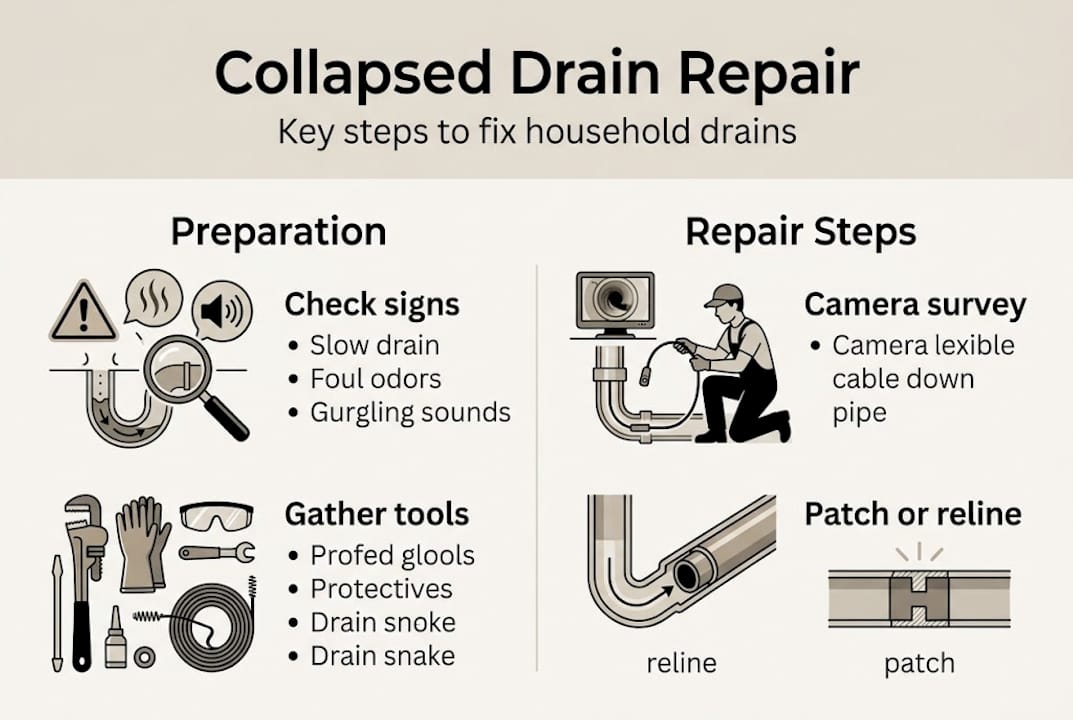
Collapsed drains often show subtle but critical warning signs, and missing them costs time and money. Here are the most telling symptoms to watch for:
- Persistent, recurring blockages that return within days of being cleared
- Foul odours rising from drains, garden soil, or internal fixtures
- Localised damp patches appearing on walls or flooring without an obvious plumbing leak
- Rat activity around drain access points, since rodents exploit structural gaps in pipework
- Ground subsidence or sinkholes forming in the garden or driveway above the drain run
- Slow drainage across multiple fixtures simultaneously, suggesting a shared underground failure
These symptoms differ from a simple blockage because they persist and worsen even after standard clearing attempts. A blocked pipe restricts flow; a collapsed pipe physically breaks the drainage channel.
Safety first: If you notice ground movement, sewage surfacing in the garden, or strong sulphurous smells indoors, do not attempt to open manholes alone. HSE drainage safety guidance warns that confined spaces and toxic gases present serious risks to untrained individuals.
The causes of drain collapse in Southampton often relate to ageing Victorian-era clay pipes, tree root intrusion from mature street trees, and ground shifting caused by the area’s variable soil composition. These factors make early identification especially important for older properties.
If you spot two or more of the symptoms above, stop using temporary measures and consider calling an expert. The window between early warning and full structural failure can be short, and drain emergency actions taken at the right moment can prevent the situation from escalating further.
Essential tools and preparation for drain repair
Once you’ve confirmed signs of a collapsed drain, it’s crucial to prepare properly. Rushing in without the right equipment creates health risks and can worsen the damage. Proper preparation significantly reduces repair time and prevents accidents, and that applies whether you’re doing preliminary investigation yourself or preparing for a professional crew.
Personal protective equipment (PPE) you will need:
- Heavy-duty rubber gloves rated for chemical and biological exposure
- Waterproof overalls or a disposable coverall suit
- Rubber boots with steel toe caps
- Safety goggles to protect against splashback
- A face mask rated FFP2 or higher for odour and particle protection
Basic tools for initial assessment:
| Tool | Purpose |
|---|---|
| Drain rod set | Probing and basic blockage testing |
| Torch or inspection camera | Visual assessment of pipe condition |
| Manhole key | Lifting inspection chamber covers safely |
| Bucket and mop | Containing any surface spillage |
| Barrier tape | Cordoning off the affected area |
Before touching anything, isolate the area around the suspected collapse. Use barrier tape or physical markers to prevent anyone from walking over ground that may be unstable. Check whether your property boundaries include the drain or whether it falls under Citizens Advice on drains guidance on shared or public sewer responsibility. If the drain is a public sewer, Southern Water is responsible for the repair, not you.
Understanding drain repair costs at this stage also helps you make an informed decision about whether to proceed with a contractor immediately or attempt a basic assessment first. Review your home insurance policy, as some cover drain repair under buildings insurance.
Pro Tip: Save the contact details of your insurer, a licensed drainage contractor, and your local water authority in your phone before any work begins. Having these ready means you’re not searching during a stressful emergency.
For anything beyond basic investigation, contacting professional drain repair services is the safest route. Professionals carry the correct equipment, liability insurance, and the expertise to diagnose accurately.
Step-by-step: Repairing a collapsed drain
With the right equipment ready, you’re primed to begin actual repairs. The method you choose will depend on the severity of the collapse, the pipe’s accessibility, and your confidence level.
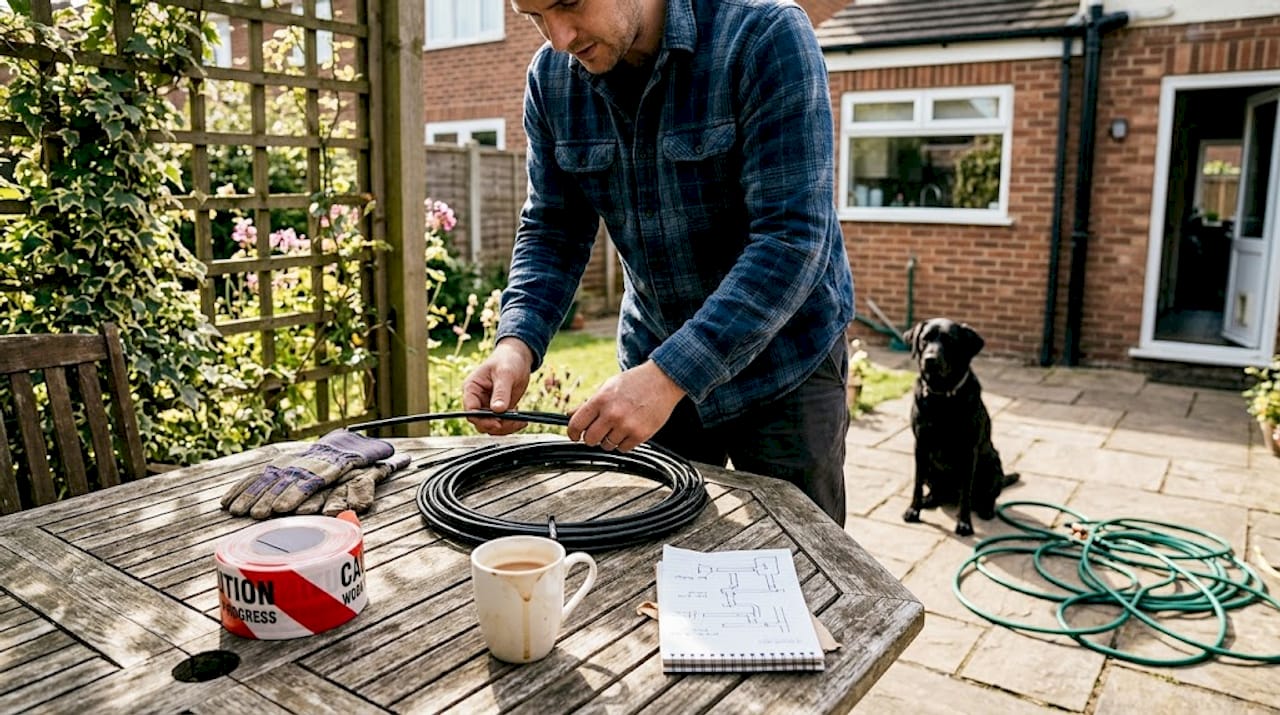
Step 1: Conduct a CCTV drain survey
This is non-negotiable for a suspected collapse. A camera pushed through the drain reveals exactly where and how severely the pipe has failed. Without this, you’re guessing.
Step 2: Mark the damage location above ground
Once the camera confirms the collapse point, mark the ground directly above it. This saves time during excavation or relining.
Step 3: Choose your repair method
This is where most homeowners face a decision. Here’s a quick comparison:
| Method | Best for | DIY feasible? | Approx. cost |
|---|---|---|---|
| Patch lining | Small cracks or localised damage | Rarely | £300 to £800 |
| Full drain relining | Longer pipe sections, minor collapse | No | £800 to £2,500 |
| Excavation and replacement | Severe collapse, pipe misalignment | No | £2,000 to £6,000+ |
Drain relining and excavation are the most common repair methods, and each suits a different scale of damage. Relining inserts a resin-coated liner into the existing pipe, which hardens and forms a new pipe within the old one. Excavation physically removes and replaces the collapsed section.
Step 4: Handle sewage exposure safely
If sewage is exposed during investigation, treat it as a biohazard. Keep children and pets away, disinfect any contaminated surfaces, and wash your hands thoroughly even if you wore gloves.
Step 5: Test before backfilling
Never backfill an excavation or sign off a relining job without a post-repair camera inspection. blocked drains advice consistently highlights that confirming repair integrity before closing the site prevents repeat failures.
Pro Tip: Always review the drain relining steps in detail before agreeing to a quote. Understanding the process helps you ask the right questions and avoid being upsold on unnecessary work.
Testing, aftercare and how to prevent future collapses
Repair isn’t complete until you check your work and make sure it lasts. Skipping this stage is one of the most common mistakes property owners make, and it often leads to the same problem resurfacing within a year.
Post-repair testing steps:
- Run water through all connected fixtures for at least 10 minutes and observe flow rate
- Commission a follow-up CCTV survey to confirm pipe integrity
- Check the surrounding ground for any ongoing subsidence or wet patches
- Confirm that all manhole covers are properly reseated and sealed
- Document the repair with photos and retain all contractor invoices
Aftercare tasks to schedule:
- Book a reinspection at six months, particularly for properties with mature trees nearby
- Arrange annual high-pressure jetting to clear grease, silt, and debris before it accumulates
- Switch to drain-safe cleaning products to avoid chemical degradation of pipe linings
Preventive maintenance lowers the risk of repeat emergencies, and this is especially true in Southampton, where older drainage networks are already under stress from soil movement and root ingress.
For properties in flood-risk zones or near watercourses, additional precautions apply. The drainage flood risk Environment Agency guidance recommends regular checks to ensure drainage systems are not contributing to surface water runoff issues.
For period properties, check the drain infrastructure tips relevant to Southampton’s older stock. Victorian clay pipes often benefit from full relining rather than repeated patching, as the underlying material degrades over time. A single investment in relining can protect a drain for 50 years or more.
Key prevention measures include installing root barriers around trees adjacent to drain runs, keeping gully traps clear of leaves, and ensuring downpipes discharge correctly. Following the blocked drain prevention tips consistently is far cheaper than managing a second collapse.
Why quick action on collapsed drains saves more than money
Most coverage of drain collapse focuses almost entirely on repair bills, and whilst timely drain repairs can genuinely save £14,000 or more in secondary damage costs, money is only part of the story.
Delays in drain repair often lead to water damage and increased repair bills, but they also trigger mould growth inside wall cavities, accelerate structural subsidence, and in commercial settings, force business closures or tenant departures. These consequences rarely appear on a simple cost comparison.
Southampton’s built environment makes this particularly pointed. Heritage buildings in areas like the Old Town carry foundations that were never designed to tolerate prolonged groundwater saturation. Newer estates on clay-heavy soils face their own subsidence risks. In both cases, a fast repair does not just restore function — it opens the door to a proactive upgrade rather than an emergency patch. That distinction matters enormously for long-term property value. The homeowners and commercial managers who fare best are the ones who treat drainage as infrastructure worth maintaining, not a problem to manage as cheaply as possible.
Expert help for collapsed drains in Southampton
If a collapsed drain feels daunting, know that experienced help is just a call away. Our team at Blocked Drains Southampton provides fast CCTV drain surveys that pinpoint the exact failure location, followed by permanent drain repair services tailored to the severity of the damage.

We cover both residential and commercial properties across Southampton and the surrounding areas, offering emergency response, drain relining, and full excavation where necessary. Understanding Southampton’s drain infrastructure challenges means we work efficiently and price fairly. Whether you need an immediate call-out or a scheduled survey, get in touch today for an affordable, no-obligation quote and restore your drainage with confidence.
Frequently asked questions
How much does it cost to repair a collapsed drain?
Repair costs typically start from a few hundred pounds for minor relining but severe collapses needing excavation can exceed several thousand. Timely repairs can save thousands in secondary damage costs, so acting quickly is always the more economical choice.
Can you repair a collapsed drain yourself?
Homeowners can sometimes temporarily patch small sections, but lasting repairs usually require professional tools and expertise. Drain relining on accessible pipes can be attempted by confident DIYers, but complex or deep damage almost always needs a professional.
What causes a drain to collapse?
Common causes include root intrusion, ground movement, and old or poorly installed pipework. Root intrusion and pipe ageing are the leading reasons for drain collapse in older Southampton homes.
How soon should I repair a collapsed drain?
Immediate repair is strongly recommended to prevent further damage and escalating costs from leaks or blockages. Delaying repairs results in higher bills and significant property risk, so do not wait to seek expert assessment.