TL;DR:
- Southampton homeowners should address minor drainage issues promptly to prevent costly repairs caused by aging infrastructure and clay soils. Recognizing early warning signs and employing quick DIY fixes can manage surface problems, but persistent or widespread issues require professional assessment. Long-term solutions involve proper outdoor grading, gutter maintenance, and eco-friendly features like rain gardens, complemented by expert intervention when necessary.
A slow-draining sink or a puddle forming on your lawn might seem trivial, but for Southampton homeowners these small signs often point to something more serious brewing beneath the surface. Southampton’s ageing Victorian infrastructure, clay-heavy soils, and proximity to tidal waterways make drainage problems here far more likely to escalate than in many other parts of the country. Acting quickly on minor issues is not just sensible, it is genuinely the most cost-effective approach available to you. This guide covers practical, proven solutions you can apply today, along with clear guidance on when to stop and call in expert help.
Table of Contents
- How to spot and assess minor drainage problems
- Quick fixes for indoor drain and pipe blockages
- Simple outdoor drainage solutions: gutters, soil and grading
- Nature-based quick fixes: rain gardens and swales
- Limits of quick fixes and when to call for help
- Why you shouldn’t rely on quick fixes alone: a drainage expert’s view
- Professional drainage solutions in Southampton
- Frequently asked questions
Key Takeaways
| Point | Details |
|---|---|
| Act quickly on minor issues | Addressing drainage problems early prevents escalating costs and property damage. |
| DIY works for simple clogs | Most blockages can be cleared safely at home, though recurring clogs require professional attention. |
| Regular outside maintenance matters | Clean gutters and manage soil and surface grading to stop bigger drainage issues. |
| Nature-based fixes need good soil drainage | Rain gardens and swales are effective only if your garden soil lets water through quickly enough. |
| Know your limits | Seek professional help if quick fixes fail or water problems persist across your property. |
How to spot and assess minor drainage problems
Before reaching for tools or spending money, it pays to know what you are actually dealing with. Minor drainage problems often announce themselves gradually, and catching them early gives you options that disappear once things worsen.
Common early warning signs include:
- Sinks, baths, or showers draining noticeably more slowly than usual
- Gurgling sounds from plug holes or toilets after flushing
- Persistent musty or rotten-egg odours near drains
- Water pooling in the garden after moderate rainfall
- Damp patches on walls or floors close to waste pipes
- Unexplained increases in your water bill
When symptoms are limited to a single fixture or one area of the garden, you are likely dealing with a localised, minor issue. A single slow sink almost always points to a surface clog within a metre of the drain. Localised lawn puddles after light rain usually signal compacted soil or a blocked gulley rather than a structural failure.
However, some signs demand immediate professional attention. If multiple fixtures drain slowly at the same time, if sewage smells are strong and persistent, or if flooding recurs after every rainfall, these suggest problems deeper in the system. Understanding the causes of blocked drains in Southampton, including tree root intrusion, fat and grease build-up, and collapsed Victorian clay pipes, helps you assess the risk correctly.
Water leaks are another hidden culprit that homeowners frequently overlook. A worn toilet flapper, for example, can silently release enormous amounts of water. Household leaks waste 9,300 gallons yearly on average, and replacing worn toilet flappers every five years is one of the simplest preventive actions available. Check your toilet for phantom flushing or a constant hissing sound — these almost always signal a slow leak.
Pro Tip: Drop a few drops of food colouring into your toilet cistern and wait 15 minutes without flushing. If the colour appears in the bowl, you have a leaking flapper wasting water and potentially contributing to drainage overload.
Quick fixes for indoor drain and pipe blockages
Once you have identified a manageable problem indoors, here is how to act fast without making things worse.
The good news is that DIY unclogging is genuinely effective for surface clogs caused by hair, grease, soap scum, or food debris, particularly when you use the right tool for the job. The bad news is that recurring blockages are a strong signal that something structural is going on, and repeated DIY attempts will not fix that.
Step-by-step method for clearing indoor blockages:
- Remove the drain cover and pull out any visible debris by hand. Wear rubber gloves. You will be surprised how much a simple manual clear removes.
- Use a cup plunger for sinks and baths. Cover the overflow hole with a damp cloth first to create proper suction. Plunge firmly 10 to 15 times in a steady rhythm.
- Try a Zip-It tool or drain snake for hair clogs, especially in bath and shower drains. These flexible plastic strips with barbs grab hair effectively and cost very little.
- Use a hand auger (also called a drain rod or cable auger) for more stubborn blockages further into the pipe. Feed it gently to avoid scratching or cracking older pipes.
- Flush with hot (not boiling) water after clearing to shift any remaining residue. Boiling water can damage plastic waste pipes.
- For greasy kitchen sink blockages, pour a cup of bicarbonate of soda followed by a cup of white vinegar down the drain, wait 20 minutes, and then flush with hot water.
Pro Tip: Avoid chemical drain unblockers as a first resort. They are harsh on older pipework, create dangerous fumes, and often only partially dissolve a clog, leaving residue that is harder to shift mechanically later.
When blockages return within days or weeks, that pattern matters. It often points to issues like tree root intrusions, collapsed pipe sections, or a build-up that has progressed well beyond the surface. Reviewing blocked drain prevention tips can help you understand what habits or conditions are feeding the problem.
For those who want structured blockage clearance steps tailored to Southampton properties, guidance is available specifically for local pipe types and conditions. Older properties in Southampton often have narrower waste pipes or ceramic fittings that require a gentler approach. The best drain cleaning advice always accounts for the age and material of your pipework before selecting a method.
Simple outdoor drainage solutions: gutters, soil and grading
Having fixed indoor blockages, the focus shifts outside for equally quick improvements. Outdoor drainage problems in Southampton are extremely common, particularly in low-lying areas or properties built on clay soil.
Cleaning gutters and downspouts
Blocked gutters are one of the most underestimated causes of property water damage. When gutters overflow, water cascades down exterior walls, saturating foundations and contributing to damp, subsidence, and drain overload. Clearing gutters, downspouts, and storm drains regularly prevents blockages and protects your drainage system. Clear debris before basins reach 50% capacity — once debris accumulates beyond that point, water cannot bypass it efficiently during heavy rainfall.
- Clear gutters by hand or with a gutter scoop, working away from downspouts.
- Flush downspouts with a hose to check flow is unobstructed.
- Install gutter guards if leaf build-up is a persistent problem.
- Check that downspout extensions direct water at least 1.5 metres from your foundation.
Improving lawn and garden soil drainage
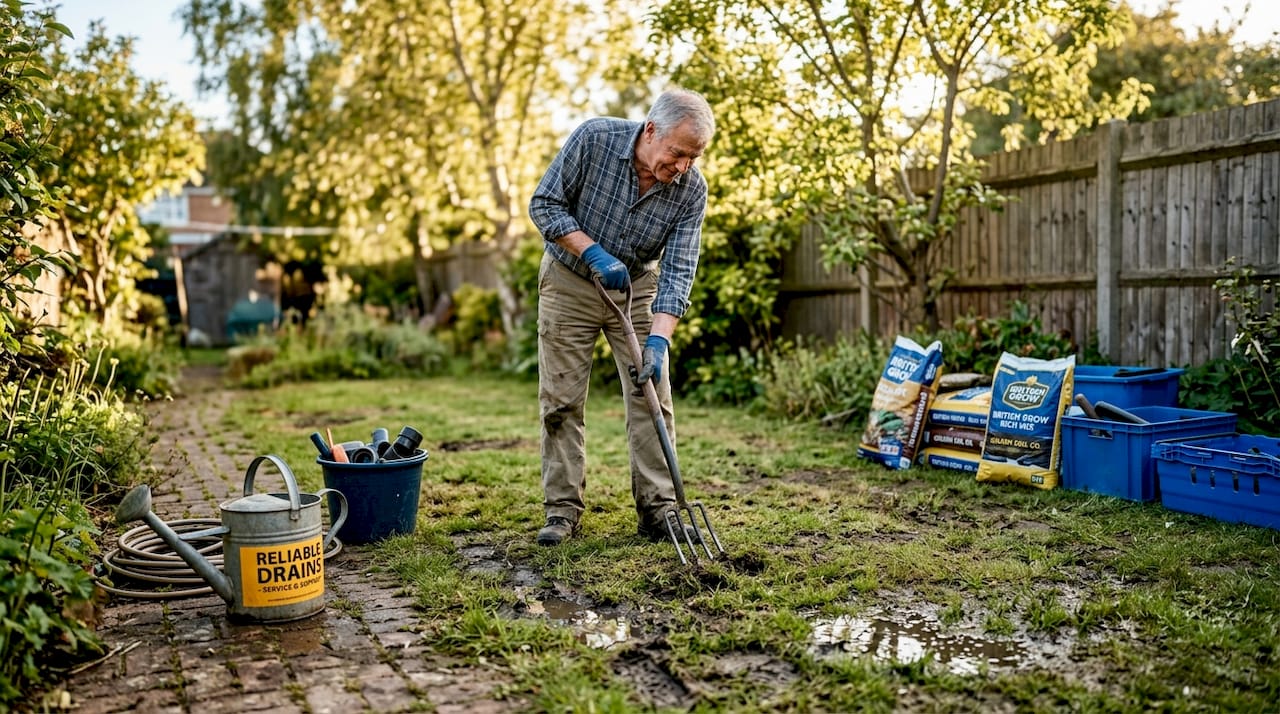
Compacted soil in Southampton gardens, particularly in areas with clay-heavy ground, prevents rainwater from soaking away naturally. The RHS recommends aerating compacted lawn soil using a garden fork or hollow-tined aerator to a depth of 10 to 15cm, then top-dressing with horticultural sand to open up drainage pathways. Do this in autumn for best results, and repeat annually in heavy clay areas.
Ground grading near your foundation
One of the simplest and most impactful fixes for garden pooling is correcting the slope around your house. Ground should slope away from your foundation at a 5% grade, which means roughly 7.5cm of drop over 1.5 metres. This alone can prevent significant water ingress into basements and crawl spaces. Extending downspouts to direct water further from the building works hand-in-hand with proper grading.
| Outdoor drainage task | Frequency | Estimated time | DIY difficulty |
|---|---|---|---|
| Gutter cleaning | Twice yearly | 1 to 2 hours | Low |
| Downspout inspection | Twice yearly | 30 minutes | Low |
| Lawn aeration | Annually (autumn) | 2 to 4 hours | Medium |
| Sand top-dressing | Annually | 1 to 2 hours | Low |
| Ground regrading near foundations | As needed | Half to full day | Medium to high |
For property-specific local drainage solution examples in Southampton, including older terraced houses and semi-detached properties with shared drainage, tailored guidance makes a genuine difference. Owners of older homes should also review drainage for older properties before starting any ground-level works near Victorian-era pipes.
Nature-based quick fixes: rain gardens and swales
For those looking for eco-friendly, sustainable fixes, landscaping features offer unique advantages that traditional drainage improvements cannot match.
A rain garden is a shallow, planted depression in the ground that collects and filters stormwater runoff from roofs, paths, or lawns. Water pools briefly in the depression and then soaks slowly into the ground, reducing the volume reaching drains. A swale is a shallow, planted channel that redirects and slows runoff across the surface of a garden, guiding it away from vulnerable areas.
Both solutions are genuinely quick to install compared to piped drainage systems and can be completed over a weekend for a modest garden. However, they are not universally effective. Nature-based solutions need a soil drainage rate of at least 1.25cm per hour to function properly, and they must include overflow provisions for heavy rainfall events. If your Southampton garden sits on heavy clay that barely drains at all, a rain garden will simply become a pond.
Pro Tip: Before digging a rain garden, conduct a simple percolation test. Dig a hole 30cm deep, fill it with water, and time how long it takes to drain completely. If it takes more than 24 hours, the soil drainage rate is too low and you will need to address the underlying soil structure first.
Southampton properties near the River Itchen or in low-lying areas of Shirley and Bitterne can benefit significantly from swales when designed correctly. They function as a first line of defence against surface flooding, and flood protection through drainage is an important consideration for many areas of the city.
| Feature | Rain garden | Swale |
|---|---|---|
| Best use | Collecting runoff from roofs/paths | Redirecting and slowing surface flow |
| Space needed | Small to medium plot | Longer, narrower plot |
| Soil requirement | Min 1.25cm/hour drainage rate | Same |
| Maintenance | Annual planting upkeep | Periodic vegetation trimming |
| Cost | Low to medium | Low |
| Effective in clay soils | No (without amendments) | Partially |
Limits of quick fixes and when to call for help
Nature-based or routine fixes will not always solve the problem. Knowing when you have reached that limit is one of the most valuable things any Southampton homeowner can understand.
Signs that your drainage problem has moved beyond DIY territory:
- Drains remain slow or blocked despite multiple clearing attempts
- Flooding occurs in the same spot after every significant rainfall
- Water is backing up through multiple fixtures simultaneously
- Visible cracking in paths, drives, or walls adjacent to drainage routes
- Persistent damp inside your home despite no obvious pipe leaks
- Ground subsidence near drains or manholes
These are not problems a plunger or a bag of horticultural sand will resolve. Quick fixes like aeration and pipe cleaning work well for minor surface issues but are completely ineffective for high water tables, severely compacted clay soils, or collapsed pipe sections that need full piped systems or pumping solutions.
One of the most common mistakes Southampton homeowners make is continuing to apply quick fixes to a problem that clearly needs professional investigation. Each DIY attempt on a structural issue delays proper diagnosis and, in some cases, physically worsens the problem. Forcing a drain rod into a cracked pipe or repeatedly using chemical unblockers on a collapsed section achieves nothing useful.
“Knowing when to stop is as important as knowing where to start. A single professional CCTV drain survey often identifies issues in ten minutes that homeowners have been struggling with for months.”
Local context matters here too. Southampton’s mix of Victorian terrace housing, post-war developments, and modern builds means drainage conditions vary enormously street by street. The root causes of persistent drainage problems in older areas of the city, such as Northam or Freemantle, are often very different from those affecting newer estates in Hedge End or Lordshill.
Pro Tip: If you have already attempted two or three clearance methods without lasting success, stop and book a professional inspection. The cost of a diagnostic survey is a fraction of the cost of repairing damage caused by an undetected structural fault.
Why you shouldn’t rely on quick fixes alone: a drainage expert’s view
Here is a perspective that most guides on this subject do not share: quick fixes are genuinely useful, but they carry a hidden risk when they work too well.
When a quick fix resolves your immediate symptom, it is tempting to assume the underlying problem is gone. It rarely is. A kitchen sink that drains freely again after a plunging session may have a partial grease build-up 5 metres downstream that is still narrowing the pipe. You have bought time, not a solution.
We see this pattern regularly with Southampton properties. A homeowner clears a blocked drain themselves, feels satisfied with the result, and then calls us six months later when the same pipe has collapsed entirely. The cost of that call is three to ten times what a proper assessment would have been at the start.
The most important thing to understand about underlying drainage issues is that they rarely fix themselves. Tree roots grow back. Grease accumulates again. Cracked clay pipes in Victorian terrace housing do not self-repair. Quick fixes interrupt these processes temporarily, but they do not reverse them.
What does protect your property long-term is understanding the pattern. If a problem returns within weeks, that is diagnostic information. Use it as a trigger to seek a professional assessment rather than simply repeat the same fix. Preventing expensive repairs is far cheaper than fixing damage that builds quietly over months while a homeowner believes the problem is under control.
The homeowners who avoid major drainage costs are not the ones who are fastest with a plunger. They are the ones who treat returning symptoms as warnings rather than inconveniences.
Professional drainage solutions in Southampton
When quick fixes have done their job but the problem keeps coming back, or when you suspect something more serious is going on beneath your property, it is time to speak with someone who knows Southampton’s drainage system inside and out.
Our team at Blocked Drains Southampton offers fast, reliable support for everything from routine drainage services in Southampton, including CCTV surveys, high-pressure jetting, and drain relining, through to emergency call-outs for sudden blockages or flooding. Whether you are a homeowner in Woolston or managing a commercial property in the city centre, we provide honest assessments and lasting solutions rather than temporary fixes. For residents searching for best local drain unblocking options or specifically needing Woolston area drain help, we cover you fully. Contact us today to stop a minor issue becoming a major repair.
Frequently asked questions
What is the fastest way to unblock a kitchen sink?
Use a plunger or drain snake for immediate clearance, and avoid harsh chemicals to protect your pipes. DIY unclogging works well for surface-level grease and food debris, but recurring blockages suggest a deeper issue requiring professional attention.
How can I tell if my drainage problem needs professional help?
Persistent blockages, multiple slow-draining fixtures, and recurring garden flooding despite fixes all indicate a deeper structural problem. Quick fixes work for minor issues but are ineffective against high water tables, collapsed pipes, or clay-heavy ground conditions.
How often should I clean my gutters to prevent drainage issues?
Gutters and downspouts should be cleared at least twice a year. Clear debris before basins reach 50% capacity to maintain proper water flow and prevent overflow damage to your foundations and exterior walls.
Do rain gardens fix all garden drainage problems?
Rain gardens help manage runoff effectively in well-draining soils, but they will not work if your soil drains too slowly or your water table is high. Swales and rain gardens require a minimum drainage rate of 1.25cm per hour to function as intended.
What is the best quick fix for water pooling near my foundation?
Regrade the ground to slope away from your foundation at a 5% grade and extend downspouts to direct water further from the property. This simple adjustment prevents water ingress and reduces the risk of damp and subsidence.