TL;DR:
- Drain relining uses CIPP technology to repair pipes from inside without excavation.
- It is a cost-effective, long-lasting solution ideal for older, root-invaded, or cracked pipes.
- Proper assessment, preparation, and verification are essential for successful, warranty-backed relining.
If you own a property in Southampton, you already know how quickly a damaged drain can spiral into a costly nightmare. Traditional pipe repairs often mean torn-up gardens, cracked driveways, and days of disruption. Drain relining changes that picture entirely. Using cured-in-place pipe (CIPP) technology, professionals can restore your drainage system from the inside out, without a single spade in the ground. Some local Southampton providers even back their relining work with lifetime warranties, which tells you everything about how confident the industry has become in this method. This guide walks you through every stage, from understanding what relining is, to verifying the finished result.
Table of Contents
- What is drain relining and who should consider it?
- Drain relining prerequisites and materials: What you need to start
- Step-by-step drain relining process: How to restore your pipes
- Post-relining verification and troubleshooting: Ensuring lasting results
- Why relining beats digging: A Southampton expert’s perspective
- Get expert drain relining help for your Southampton property
- Frequently asked questions
Key Takeaways
| Point | Details |
|---|---|
| Minimal disruption | Drain relining avoids major excavation, preserving lawns and driveways. |
| Long-term durability | Most relined drains last over 50 years and some providers offer lifetime warranties. |
| Step-by-step clarity | The process is systematic and straightforward, from cleaning to final survey validation. |
| Local expertise | Southampton companies are highly rated for fast, reliable relining solutions. |
What is drain relining and who should consider it?
Drain relining is the process of inserting a flexible, resin-saturated liner into a damaged pipe and then curing it in place to form a new, smooth pipe within the old one. The result is a structurally sound inner pipe that seals cracks, stops root intrusion, and restores full flow capacity. The dominant technology used today is CIPP, which stands for cured-in-place pipe. It works for circular, oval, and even irregularly shaped pipes, making it remarkably versatile for Southampton’s mix of Victorian-era and modern drainage infrastructure.
So who actually benefits from relining? If your property has older clay or cast iron pipes, you are a prime candidate. Root intrusion from trees and shrubs is another common trigger, particularly in properties with mature gardens. Minor cracks, joint displacement, and general pipe deterioration caused by age or ground movement are all ideal candidates too. For Redbridge drain solutions and similar residential areas across Southampton, relining is often the most practical fix available.
Signs you may need drain relining:
- Repeated blockages that keep returning despite clearing
- Persistent foul odours from drains inside or outside
- Slow drainage across multiple fixtures simultaneously
- Visible cracks or joint gaps on CCTV camera surveys
- Unexplained damp patches near buried drain runs
- Tree root fragments appearing in cleared waste
Relining vs. traditional excavation: A quick comparison
| Factor | Drain relining | Traditional excavation |
|---|---|---|
| Disruption to property | Minimal | High (garden, drive, paving) |
| Time to complete | Hours to one day | Several days |
| Cost | Moderate | Often significantly higher |
| Lifespan | 50+ years | Varies by material |
| Structural guarantee | Lifetime warranty available | Rarely offered |
| Environmental impact | Low | High (spoil disposal, machinery) |
As you can see from the table, relining wins on nearly every practical measure. For a deeper look at how this fits into broader drainage solution examples across Southampton properties, it is worth reviewing what local specialists recommend for different pipe ages and conditions.
Pro Tip: The earlier you catch a crack or joint issue, the simpler and cheaper the relining job will be. A single camera survey can save you thousands by catching problems before they become collapses.
Drain relining prerequisites and materials: What you need to start
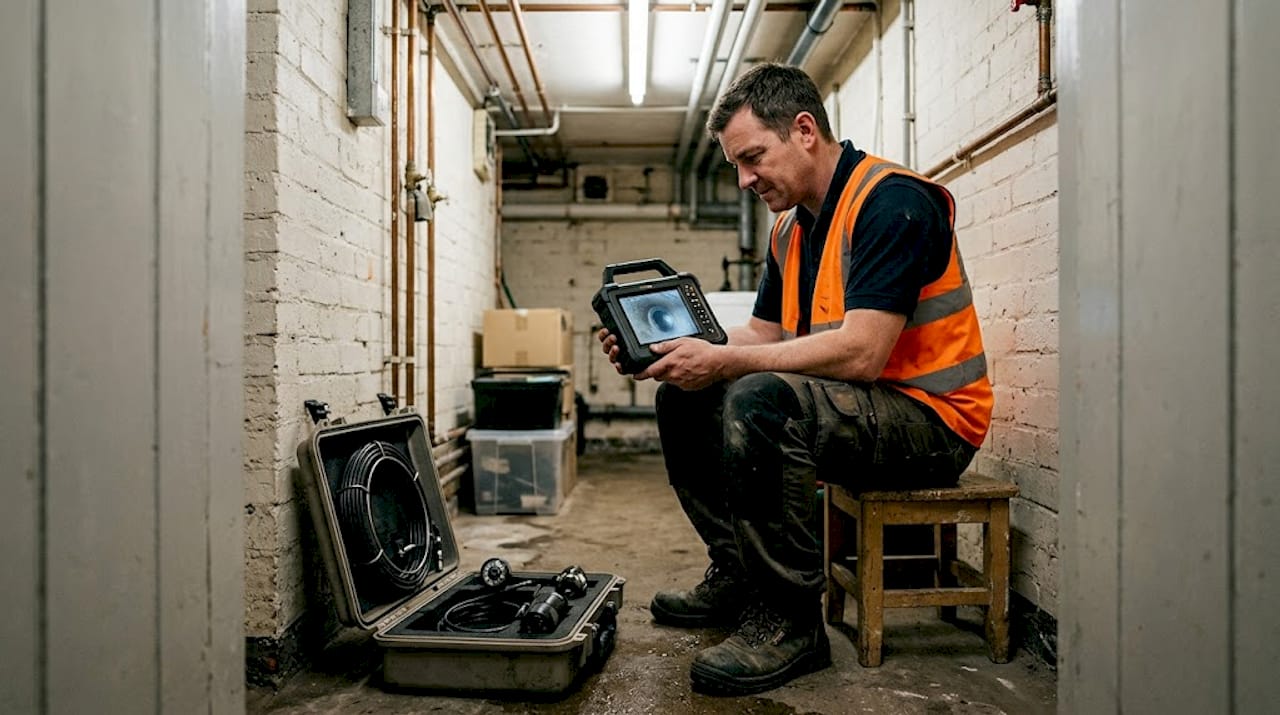
Before any relining work begins, a proper assessment of the site and pipe condition is essential. Rushing this stage is where most problems originate. Professionals working on Southampton properties, particularly older terraced homes and commercial buildings near the waterfront, always confirm access routes, pipe dimensions, and the extent of damage before ordering materials.
Materials and equipment at a glance:
| Item | Purpose |
|---|---|
| CCTV drain camera | Pre-inspection and post-cure verification |
| High-pressure water jetter | Clears debris, grease, and root matter before lining |
| Resin-impregnated liner | Forms the new inner pipe wall |
| Calibration tube or bladder | Presses liner firmly against pipe wall during cure |
| UV or ambient cure system | Hardens the resin to full structural strength |
| PPE (gloves, goggles, coveralls) | Protects operatives from resin and confined space hazards |
| Pipe end caps and bypass pumps | Maintains drainage flow during works |
For solutions for property owners managing multiple drainage runs, it is worth noting that liner materials come in different wall thicknesses and resin formulations. The choice depends on pipe diameter, existing pipe material, and the level of structural damage present.
Key site checks before you begin:
- Confirm the pipe diameter and length to be relined
- Verify access points are clear and large enough for equipment
- Check for live flow and arrange bypass pumping if needed
- Identify any sharp bends greater than 45 degrees that may affect liner insertion
- Confirm ground conditions around the pipe are stable
Providers in Southampton who follow best practice offer lifetime warranties for properly relined drains, but this is only valid when the preparation stage is done correctly. Teams at Bassett drain expertise understand that skipping any preparation step can invalidate the warranty and compromise the result.
Pro Tip: Always confirm that your liner and calibration tube are rated for the exact pipe diameter you are working with. An undersized liner will not bond properly, and an oversized one will not insert cleanly.
Step-by-step drain relining process: How to restore your pipes
This is where the practical work happens. Southampton drainage professionals follow a consistent sequence to ensure quality results every time. Deviating from this order, even with good intentions, tends to cause problems that are expensive to fix.
- Initial CCTV inspection. A camera is sent through the drain to map the damage, measure pipe dimensions, and confirm the relining is appropriate. This footage is recorded for warranty purposes.
- High-pressure jetting. The pipe is thoroughly cleaned using a water jetter operating at up to 4,000 psi. This removes grease, scale, root matter, and loose debris that would prevent the liner from bonding.
- Root cutting (if required). Rotary cutters are used to remove any remaining root intrusions before the liner goes in.
- Liner preparation. The resin-impregnated liner is cut to length, checked for uniform saturation, and prepared for insertion at the correct temperature.
- Liner insertion. The liner is pulled or inverted into position using air or water pressure, ensuring full contact with the pipe wall along the entire run.
- Curing. Depending on the system used, curing takes place via ambient temperature, hot water, steam, or UV light. Cure times vary from 30 minutes to several hours.
- Post-cure camera inspection. Once cured, a second CCTV survey confirms the liner has bonded correctly, with no voids, wrinkles, or missed sections.
Safety notice: Always use full PPE when handling uncured resin. Confirm pipe stability before entry or insertion. Never reline a pipe that shows signs of imminent collapse without structural support first.
The Sholing drainage experts and teams serving Peartree drain solutions follow this exact sequence on every job. For Bitterne Park repairs, where older clay pipes are common, the jetting and root-cutting stages are particularly thorough. Top-rated local providers maintain high customer satisfaction precisely because they do not cut corners on any of these steps.
Pro Tip: Never skip the post-cure camera inspection. It is the single most important step for validating your warranty and confirming the job is genuinely complete.
Post-relining verification and troubleshooting: Ensuring lasting results
Once the liner has cured, the work is not quite finished. Verification is what separates a professional job from a rushed one. This stage confirms that the new liner is performing as it should, and it gives you the documented evidence you need for warranty claims or future property surveys.
Post-process checks to carry out:
- CCTV camera survey through the full relined section
- Water flow rate test to confirm drainage capacity has been restored
- Visual inspection of access points for resin residue or liner overhang
- Check for any odour escaping from joints or inspection chambers
- Confirm liner end terminations are smooth and sealed correctly
Here is a statistic worth remembering: relined drains last 50+ years according to providers operating in Southampton, with lifetime warranties available when the process is correctly followed. That is a longer lifespan than many of the original pipes being repaired.
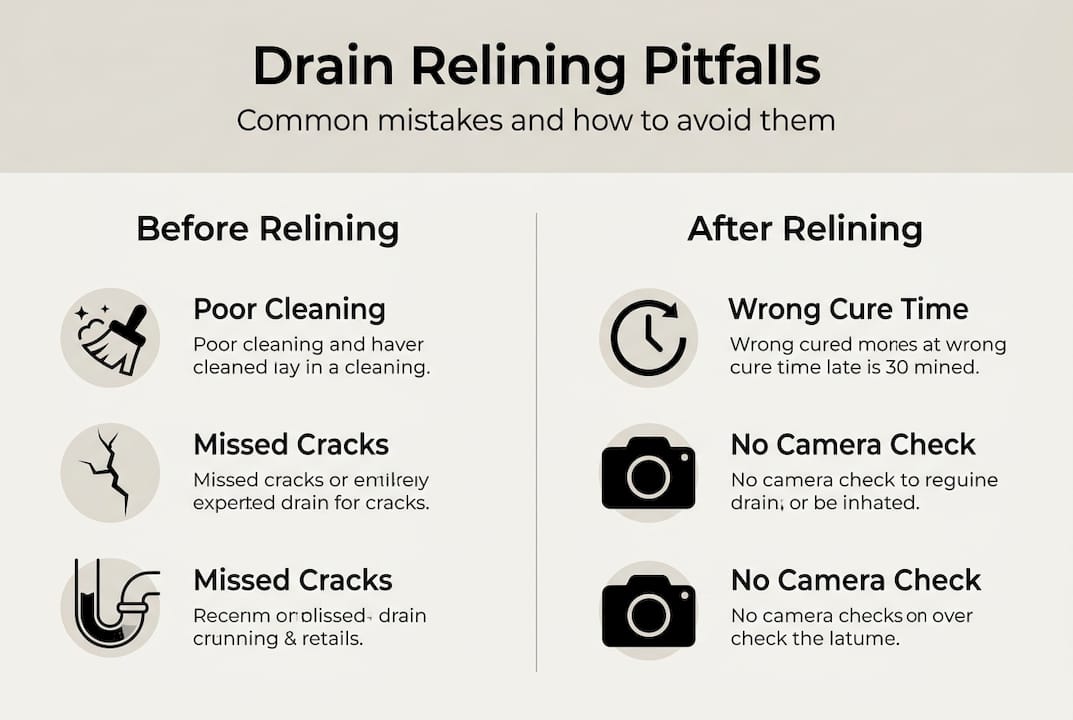
Common pitfalls include incomplete cleaning before lining, which causes poor adhesion, and incorrect cure times, which leave the liner under-hardened. If you notice a slow flow shortly after relining, it is often caused by a small wrinkle in the liner rather than a new blockage. This can usually be resolved with a light jetting pass. For persistent odour after relining, check that all joints and end terminations are properly sealed.
For Harefield drainage advice and similar areas, we recommend scheduling a follow-up camera survey six months after relining to catch any early issues. Reviewing property drainage solutions as part of an ongoing maintenance plan keeps your system in peak condition year after year.
Why relining beats digging: A Southampton expert’s perspective
There is a persistent belief among some property owners that digging up a drain is the thorough option, the proper fix. We respectfully disagree, and here is why. Excavation destroys landscaping, disrupts daily life for days, and generates significant spoil disposal costs. Relining, done properly, achieves the same structural outcome in a fraction of the time, with far less collateral damage to your property.
The environmental argument is equally compelling. No heavy machinery tearing up soil means less carbon output, less ground disturbance, and no risk of damaging adjacent services. We have seen properties in Southampton where excavation was quoted as the only option, only for relining to solve the problem in under a day. The latest drainage technology in 2026 has made relining even more reliable, with faster cure times and stronger resin formulations than were available even five years ago.
Our strong advice is to invest in preventive drain surveys before problems escalate. A survey costs a fraction of what relining costs, and relining costs a fraction of what excavation costs. The logic is straightforward.
Pro Tip: Schedule a CCTV drain survey every two to three years, especially if your property has mature trees nearby. Finding a hairline crack early means a simple reline. Missing it means a collapse.
Get expert drain relining help for your Southampton property
If this guide has confirmed what you suspected about your drains, the next step is to speak with a local specialist who knows Southampton’s drainage challenges inside out.
Our drain relining services cover the full process, from initial survey through to post-cure verification, using modern CIPP technology and equipment rated for Southampton’s varied pipe stock. If you have an urgent situation, our emergency clearing process gets a qualified team to your property fast. For ongoing protection, our drain survey protection service gives you the documented evidence and early warning system every property owner needs. Get in touch today and let us restore your drains properly.
Frequently asked questions
How long does drain relining last in Southampton properties?
Drain relining typically lasts 50+ years, and some Southampton providers back their work with lifetime warranties when the process is correctly completed.
Is drain relining suitable for all types of drainage pipes?
CIPP relining technology works across most pipe materials including clay, cast iron, and plastic, though severely collapsed pipes or major root damage may still require excavation.
What is the usual process for drain relining?
The process follows a clear sequence: CCTV inspection, high-pressure jetting, liner insertion, curing, and a final camera verification survey to confirm the result.
Will I need to excavate my garden or drive for relining?
In the vast majority of cases, no excavation is needed. Relining is carried out entirely through existing access points, leaving your garden and driveway completely undisturbed.
How do I know if my property needs drain relining?
Key warning signs include recurring blockages, persistent foul smells, slow drainage across multiple outlets, and cracks or joint gaps visible on a CCTV camera survey.