TL;DR:
- Drain patch repair is a trenchless, cost-effective method for fixing localized pipe damage.
- It involves inserting a resin liner to seal cracks, roots, and minor defects without excavation.
- Suitable for certain pipe conditions, patch repair offers long-lasting, minimally disruptive solutions in Southampton.
Most Southampton homeowners assume that fixing a damaged drain means torn-up gardens, smashed driveways, and a week of disruption. That assumption is costing people money. Drain patch repair is a trenchless, no-dig method that seals localised pipe defects without any excavation. It is a modern, highly effective solution that most property owners in Southampton simply do not know exists. This article covers exactly what patch repair is, how it works, whether it suits your property, and how to choose the right local expert to get it done properly.
Table of Contents
- What is drain patch repair?
- Step-by-step: How does drain patch repair work?
- Is patch repair right for your drain?
- Benefits of patch repair for Southampton homes
- Expert tips: Choosing local patch repair services in Southampton
- The real costs (and big savings) of patch repair: A local expert’s view
- Patch repair solutions tailored for Southampton properties
- Frequently asked questions
Key Takeaways
| Point | Details |
|---|---|
| No-dig drain repair | Drain patch repair solves localised defects without messy excavation or digging. |
| Quick and durable fix | Repairs are completed within hours and typically last over 50 years. |
| Lower cost solution | Typical patch repair costs substantially less than traditional methods. |
| Ideal for urban homes | Perfect for Southampton properties where disruption must be kept to a minimum. |
What is drain patch repair?
Drain patch repair is a non-invasive method for fixing small sections of damaged pipe without digging up your garden, driveway, or floor. Rather than excavating to reach a cracked or leaking section of pipe, a specialist inserts a short, resin-impregnated liner directly into the damaged area through an existing access point. Once positioned and inflated, the resin cures hard, creating a watertight seal inside the original pipe.
The liner itself is typically made from fibreglass or felt, saturated with a structural resin, and measures roughly 0.5 to 1 metre in length. That relatively short patch is what makes this method so efficient. You are not relining the entire pipe run. You are targeting only the damaged section, which keeps costs down and the job quick.
Common defects that patch repair addresses include:
- Hairline cracks and fractures caused by ground movement or age
- Root ingress where fine roots have entered through a joint or crack
- Displaced joints where pipe sections have shifted slightly out of alignment
- Minor corrosion particularly in older cast iron or clay pipes
- Small holes from deterioration or accidental damage
As patch repair uses a short resin-impregnated liner for localised cracks, holes, small root ingress, and joint defects, it is perfectly suited to the kind of wear and tear that older Southampton properties accumulate over decades. Southampton’s housing stock includes a high proportion of Victorian and Edwardian terraces, many of which still have original clay pipe runs underneath them. These pipes crack, shift, and let in roots. Patch repair was essentially designed for situations like these.
“The beauty of patch repair is precision. You are not replacing what does not need replacing. You treat exactly what is broken and leave the rest of the system untouched.”
For homeowners dealing with blocked drain solutions in Southampton’s older districts, patch repair offers a targeted, cost-effective route to a lasting fix without weeks of upheaval.
Step-by-step: How does drain patch repair work?
Knowing what patch repair is leads naturally to the next question: what actually happens on the day? The process is straightforward when carried out by a qualified team, and understanding it helps you know what to expect and what to ask for.
The typical sequence of CCTV inspection, jetting, patch insertion, inflation for curing, and post-inspection follows a clear logic from diagnosis through to verification.
- CCTV drain survey A camera is fed through the pipe to locate the defect precisely. This confirms the type, size, and exact position of the damage.
- High-pressure jet cleaning The pipe is thoroughly cleaned using a jetting machine to remove debris, grease, and loose material. A clean surface is essential for the resin to bond properly.
- Patch preparation The resin-impregnated liner is cut to the correct length and prepared for insertion.
- Insertion and positioning The patch is attached to an inflatable packer and fed through the pipe to the exact position identified during the CCTV survey.
- Inflation and curing The packer is inflated, pressing the liner firmly against the pipe wall. The resin then cures, typically within a few hours depending on the product used.
- Packer removal and final inspection The packer is deflated and removed. A second CCTV pass confirms the patch has cured correctly and the repair is watertight.
The entire job is commonly completed within a single working day, which makes it remarkably convenient. Curing times vary, but most modern resins are fully hardened in two to four hours.
| Stage | Typical duration |
|---|---|
| CCTV survey | 30 to 60 minutes |
| Jet cleaning | 30 to 90 minutes |
| Patch insertion and curing | 2 to 4 hours |
| Post-repair inspection | 20 to 30 minutes |
| Total | Half to one full day |
Pro Tip: Always insist on both a pre-repair and post-repair CCTV inspection. This is your guarantee that the defect was correctly identified and the patch has seated and cured properly. Any reputable firm using advanced drainage technology will include this as standard, not as an optional extra.
Is patch repair right for your drain?
Patch repair is not a universal solution. It excels in specific scenarios and falls short in others. Knowing the difference saves you from paying for the wrong fix or, worse, accepting a temporary solution when you actually need something more substantial.
Patch repair suits isolated defects in clay, PVC, cast iron, or concrete pipes, but cannot fix collapsed pipes. That distinction matters enormously. If your pipe has lost its round shape, the patch liner simply cannot be inflated correctly, and the repair will fail.
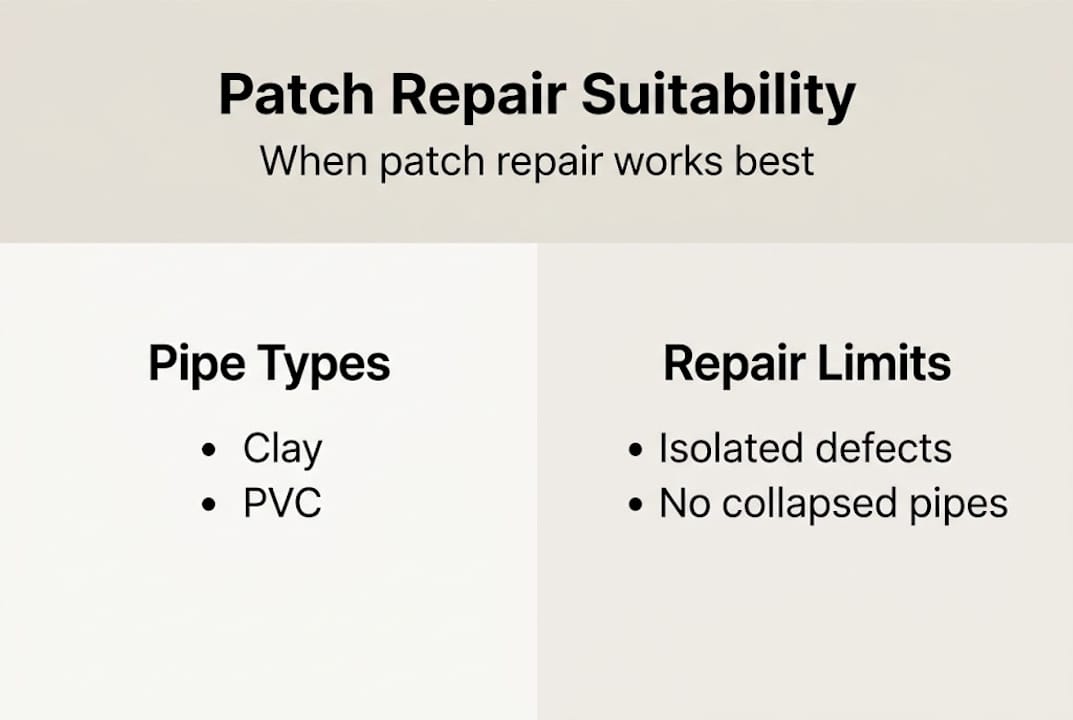
Here is a quick comparison to help you assess your situation:
| Pipe condition | Patch repair suitable? |
|---|---|
| Single crack or fracture | Yes |
| Root ingress at one joint | Yes |
| Displaced joint (minor) | Yes |
| Minor corrosion or pinhole | Yes |
| Multiple defects across long run | No, consider full lining |
| Fully collapsed pipe | No, requires excavation |
| Major structural deformation | No, requires excavation |
Pipe materials that respond well to patch repair include:
- Clay (common in pre-1970s Southampton properties)
- PVC (standard in more recent builds)
- Cast iron (found in commercial and older residential properties)
- Concrete (used in larger-diameter drainage systems)
Pro Tip: If you are unsure, a CCTV survey is the only reliable way to confirm. Do not guess based on symptoms alone. A slow drain could be a partial blockage, a crack, root ingress, or a collapsed section. Each requires a different approach.
For properties in areas like Bassett, local drainage repair help is available to assess the exact condition of your pipes before any work begins. If patch repair turns out not to be suitable, exploring full drain lining options may be the next logical step depending on the extent of the damage.
Benefits of patch repair for Southampton homes
For busy Southampton homeowners and landlords, the practical advantages of patch repair go well beyond simply avoiding a bit of digging. The differences in cost, speed, and disruption compared with traditional excavation are significant.
On cost alone, patch repair averages £300 to £800 in the UK, while excavation costs £1,000 to £5,000 or more, and a professionally installed patch lasts 50 years or more. That is a compelling argument for choosing patch repair wherever it is appropriate.
The key benefits for Southampton properties include:
- No excavation Your garden, driveway, or patio stays exactly as it is
- Same-day completion Most patch repairs are finished within a single visit
- Durability Cured resin liners match or exceed the lifespan of the original pipe
- Lower cost Typically 70 to 80% less expensive than digging out and replacing pipe
- Less waste No soil removal, no skip hire, no disposal of broken pipe sections
- Minimal mess Access is through an existing inspection chamber or drain opening
For urban Southampton locations, where properties are close together and driveways are shared or narrow, the no-dig approach is particularly valuable. Excavating a front drive in a terrace on a busy street is logistically complicated and expensive. Patch repair removes that problem entirely.
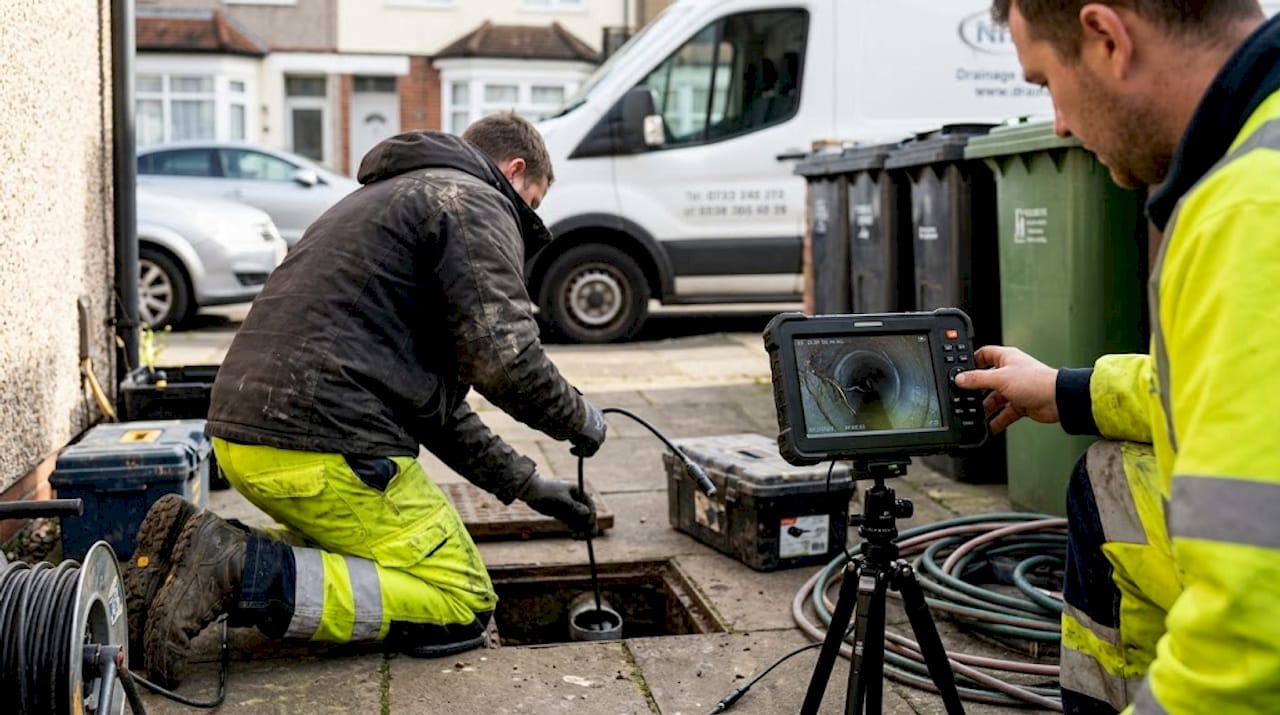
For properties affected by tree roots, combining patch repair with removing drain roots first ensures the liner bonds to a clean surface and lasts as long as possible. Local Southampton repair experts typically offer both services together.
Expert tips: Choosing local patch repair services in Southampton
Knowing the benefits is one thing. Finding a reliable local firm to carry out the work is another. Southampton has no shortage of drainage companies, but quality varies. Here is how to choose confidently.
It pays to prioritise CCTV-preceded patch repairs from local Hampshire experts for best value and faster resolution. Local firms understand the specific pipe types, soil conditions, and infrastructure quirks that make Southampton’s drainage different from a generic textbook scenario.
When you contact a drainage company, ask these questions:
- Is a CCTV survey included before and after the repair? This is non-negotiable for quality assurance.
- What guarantee do you offer on the patch repair? Reputable firms typically offer five to ten years minimum.
- Can you show examples of previous patch repairs in Southampton? Local case studies demonstrate real experience with local pipe types.
- Do you provide a written, itemised quote before starting work? Transparency on costs protects you from surprises.
- How quickly can you respond? For active leaks or blockages, response time matters.
“A good drainage firm will always show you the CCTV footage before and after. If they are reluctant to do that, treat it as a red flag.”
You also want a firm with genuine local coverage. Specialists for the Redbridge area or Peartree drain experts will know the local sewer maps, common failure points, and how to navigate access challenges that a national call-centre operation simply will not. For a broader understanding of how professionals approach pipe faults, drain repair explained by Metro Rod covers the underlying principles clearly.
The real costs (and big savings) of patch repair: A local expert’s view
Here is something you will rarely hear from a drainage company: the most expensive repair is not always the best one. In our experience working across Southampton, patch repair is consistently underused. Not because it does not work, but because of outdated assumptions about how reliable it is.
Some homeowners reach for DIY epoxy or repair tape when a pipe starts leaking. These are genuinely short-term fixes. Temporary DIY patches are short-term solutions; professional patch lining is permanent, quick, and often 70 to 80% cheaper than excavation. Tape and epoxy will fail. A resin liner will not.
Other homeowners skip straight to full relining because they assume patch repair is somehow inferior. It is not. If the pipe is structurally sound except for one or two localised defects, a full reline is simply unnecessary expenditure. Patch repair is the precise, proportionate response.
The biggest mistake we see is skipping regular drain surveys altogether until a problem becomes an emergency. Catching a small crack early means a £400 patch repair. Ignoring it until it causes a collapse means a £4,000 excavation. The maths are not complicated.
Patch repair solutions tailored for Southampton properties
Ready to address a drainage issue without the disruption of excavation? Expert local help is closer than you think.
At Blocked Drains Southampton, we combine CCTV drain surveys with professional patch repair and root removal to give Southampton homeowners and landlords a complete picture of their drainage health before any work begins. Our local knowledge means faster diagnosis, accurate quotes, and repairs done right the first time. Whether you need a single patch or a full assessment, explore our Southampton drainage services or find out more about our drain root removal methods if roots are part of your problem. Get in touch today for a straightforward, no-obligation assessment.
Frequently asked questions
How long does a drain patch repair last?
A professionally installed patch repair has a lifespan of 50 years or more, making it a genuinely long-term fix rather than a temporary measure.
Can patch repair fix collapsed drains?
No. Patch repair cannot fix fully collapsed pipes because the liner requires the pipe to retain its original circular shape for correct inflation and bonding.
Is patch repair disruptive to my property?
Patch repair is trenchless and requires no digging, meaning your garden, driveway, or patio remains completely undisturbed throughout the process.
What does patch repair cost in Southampton?
The UK average for patch repair is £300 to £800, which is substantially less than excavation-based repairs that routinely run to several thousand pounds.
Do I need a CCTV survey before patch repair?
Yes. A CCTV inspection is required before patch repair to accurately locate the defect and confirm that the pipe is structurally suitable for the method.