
TL;DR:
- Drain covers prevent debris from entering pipes, reducing clogging and costly repairs.
- Regular maintenance and proper selection extend drain system lifespan and safety.
- Professional help is recommended for deep blockages or damaged covers, especially on complex systems.
A single blocked drain can cost hundreds of pounds to fix, yet the cause is often something as simple as a handful of wet leaves sitting over an uncovered grate. Many homeowners assume blockages only happen because of what goes down the drain, but the truth is that what sits at the drain opening matters just as much. Drain covers are one of the most underrated tools in property maintenance, quietly intercepting debris before it ever reaches your pipes. This guide explains how they work, what types suit Southampton properties best, and how to keep them performing at their peak.
Table of Contents
- What do drain covers do and why are they essential?
- How drain covers prevent blockages and costly problems
- Types of drain covers and their benefits for Southampton properties
- Installation and maintenance: Getting the most from your drain covers
- Why investing in quality drain covers matters more than you think
- Expert help for Southampton drains
- Frequently asked questions
Key Takeaways
| Point | Details |
|---|---|
| Blocks debris | Drain covers filter out hair, leaves, and rubbish to stop clogs forming in pipes. |
| Prevents costly flooding | A blocked or missing drain cover can lead to water damage and expensive repairs. |
| Requires regular maintenance | Cleaning and checking drain covers boosts efficiency and extends their lifespan. |
| Choice matters | Selecting the right type and material improves protection for Southampton properties. |
What do drain covers do and why are they essential?
At their most basic, drain covers are protective grates or screens placed over drain openings. They allow water to flow freely while stopping solid material from entering the system beneath. As noted in guidance on drain cover function, covers block debris such as hair, leaves, food particles, and dirt to prevent clogs and blockages in plumbing and drainage systems. That simple barrier makes an enormous difference to how reliably your drainage performs over time.
In Southampton, where older terraced streets sit alongside modern developments, drain covers come in a wide range of formats. You will find:
- Grated covers over external yard and patio drains
- Mesh screens inside kitchen sinks and bathroom plug holes
- Solid covers with slots on commercial forecourts and car parks
- Decorative covers designed to blend with period properties
Each type serves the same fundamental purpose: keeping unwanted material out of the pipe network below.
Beyond blockage prevention, covers also provide genuine safety benefits. An uncovered drain in a garden or driveway is a trip hazard, particularly for children and elderly residents. Small objects, tools, and even jewellery can disappear into open drains in seconds. Fitting a well-sized cover eliminates these risks at virtually no cost.
A drain cover is not just a filter. It is the first physical line of defence between your property’s surface and the pipe network that keeps everything running smoothly.
For a broader look at how to keep your system clear, the blocked drain prevention tips on our site are worth reading alongside this guide. Understanding the causes of blocked drains will also help you see exactly where covers fit into the bigger picture of property maintenance.
How drain covers prevent blockages and costly problems
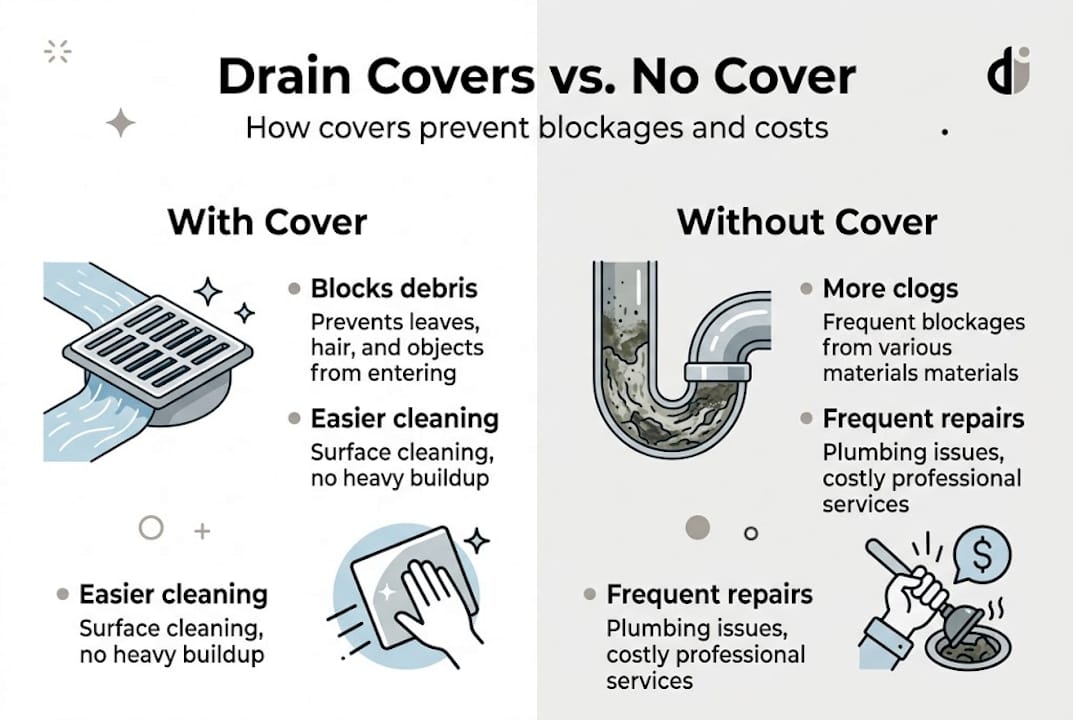
The financial case for drain covers is straightforward once you understand what happens without them. Debris that enters unprotected pipes builds up gradually, narrowing the flow path until water backs up. That backup can cause flooding inside a property, structural dampness, foul odours, and emergency call-out costs that run into hundreds or even thousands of pounds.
Drain covers intercept the problem at the surface, before it ever reaches the pipe. As drainage guidance confirms, a well-maintained cover reduces risk of backups, slow drainage, and costly repairs by stopping solids before they enter the system. That interception point is where the real value lies.
Research backs this up at a wider scale too. Peer-reviewed hydrology data shows that clogged grated inlets increase urban flood depths, and that even partial clogging reduces hydraulic efficiency significantly. For a city like Southampton, which experiences heavy autumn rainfall and coastal weather events, that finding has direct practical relevance.
| Factor | Covered drain | Uncovered drain |
|---|---|---|
| Debris entry | Blocked at surface | Enters pipes freely |
| Flood risk | Significantly reduced | Higher during heavy rain |
| Maintenance frequency | Monthly surface clean | Frequent pipe jetting needed |
| Emergency call-out cost | Rare | Common |
| System lifespan | Extended | Shortened by repeated clogs |
The comparison above makes the maintenance argument clear. Covered drains require far less reactive intervention because the problem is stopped before it starts.
Pro Tip: Clear your drain covers after every significant rainfall. A quick sweep or rinse takes two minutes and prevents the slow build-up that eventually forces water to back up onto your driveway or into your property.
For properties that have already experienced repeated blockages, professional drain cleaning can reset the system entirely. Pairing that with preventive drain surveys gives you a clear picture of whether covers alone are sufficient or whether deeper issues need addressing.
Types of drain covers and their benefits for Southampton properties
Choosing the right cover depends on where it will be used, what debris it needs to handle, and how much foot or vehicle traffic it will face. Southampton properties range from Victorian terraces with cast iron heritage fittings to modern flats with plastic utility covers, and each setting has different requirements.
Here is a breakdown of the main types and materials:
- Cast iron grates: Extremely durable, suited to driveways and commercial areas. Heavy to lift but long-lasting. Common in older Southampton streets.
- Stainless steel covers: Corrosion-resistant and hygienic. Ideal for kitchen areas, food businesses, and coastal properties where salt air accelerates rust.
- Plastic covers: Lightweight and affordable. Best suited to low-traffic garden or patio areas. Less durable under heavy loads.
- Mesh screens: Fine filtration for indoor drains. Catch hair and small particles effectively. Need frequent clearing.
| Cover type | Best location | Durability | Ease of cleaning |
|---|---|---|---|
| Cast iron grate | Driveway, road edge | Very high | Moderate |
| Stainless steel | Kitchen, coastal areas | High | Easy |
| Plastic grate | Garden, patio | Moderate | Very easy |
| Mesh screen | Bathroom, kitchen sink | Low to moderate | Easy but frequent |
One important limitation worth noting: as drainage experts point out, covers do not stop grease or chemical blockages. Fats poured down a kitchen sink will pass straight through any grate and solidify further down the pipe. Covers must be paired with responsible disposal habits to be fully effective.
Pro Tip: When selecting a cover, check how easily it lifts for cleaning. A cover that requires tools or significant effort to remove will be cleaned far less often, reducing its effectiveness over time.
For properties with complex or historic drainage layouts, our drainage infrastructure guide covers Southampton-specific considerations in detail. If your garden has mature trees nearby, tree root prevention methods are also worth reviewing alongside your cover choices.
Installation and maintenance: Getting the most from your drain covers
Fitting a drain cover correctly is straightforward for most standard sizes, but getting it wrong means gaps that allow debris through or covers that shift underfoot and become a hazard. Here is a simple process for basic installations:
- Measure the drain opening accurately before purchasing. Covers that are too small leave gaps; covers that are too large will not sit flush.
- Clear the drain surround of any existing debris, moss, or old sealant before fitting.
- Place the cover centrally and press it firmly into the frame or recess.
- Test for stability by applying foot pressure across the cover. It should not rock or shift.
- Check the gap between cover and surround is no wider than 5mm to prevent small debris from bypassing the filter.
Once installed, maintenance is what keeps covers performing. As hydrology research confirms, partial blockage dramatically affects efficiency, meaning even a partially obstructed cover provides significantly less protection than a clean one.
A reliable maintenance routine looks like this:
- Monthly: Remove the cover, brush away accumulated debris, rinse with water.
- After storms: Check immediately for leaf build-up or displaced covers.
- Seasonally: Inspect for rust, cracks, or warping that could compromise fit.
- Annually: Check the drain channel beneath for sediment build-up that the cover may have slowed but not stopped entirely.
Southampton’s autumn months bring heavy leaf fall from street trees, and coastal winds deposit salt and grit across exposed drains. Both factors accelerate wear on covers and increase the frequency of surface blockages. Properties near the waterfront or in leafy suburbs like Bassett and Chandler’s Ford should clean covers more often during October and November.

Signs that you need professional help include persistent standing water after cleaning, covers that no longer sit flush, foul smells rising from covered drains, or visible cracks in the surrounding channel. Our drain cover cleaning tips offer further guidance, and for older properties, historic property drainage solutions addresses the specific challenges of Southampton’s Victorian and Edwardian housing stock.
Why investing in quality drain covers matters more than you think
Most drainage advice focuses on what you should not pour down the sink. That is useful, but it misses something we see repeatedly when working with Southampton properties: the drain cover itself is often the weakest link, and nobody checks it until something goes wrong.
We have attended call-outs where a single blocked external cover, unnoticed for a season, had caused water to back up through the entire property’s drainage system. The cover cost less than £15 to replace. The remedial work cost over £600.
The analogy we use with property managers is this: treat drain covers like smoke alarms. You would not fit one and then forget it exists for five years. Schedule a check, keep a spare cover for common sizes, and replace anything that shows signs of rust or damage before it fails entirely.
Quality covers from reputable suppliers also make a real difference. Cheap plastic covers warp under UV exposure and vehicle weight, creating gaps that defeat the purpose entirely. Spending a little more upfront on a stainless steel or cast iron cover pays for itself within the first year of avoided call-outs.
For a full picture of how local drainage experts approach property-wide drainage health in Southampton, it is worth understanding that covers are just one part of a system that needs regular attention at every level.
Expert help for Southampton drains
If you have fitted good-quality covers and maintained them regularly but still experience recurring blockages or slow drainage, the problem is likely deeper in the system. That is where professional support makes the difference.
At Blocked Drains Southampton, we offer a full range of drain cover and blockage services for residential and commercial properties across the city. From CCTV surveys that pinpoint hidden problems to professional jetting that clears years of build-up, we handle the issues that covers alone cannot solve. Our drainage infrastructure support helps you understand your property’s full system. For fast, reliable assistance with any drainage concern, visit Blocked Drains Southampton to book or get in touch today.
Frequently asked questions
What can drain covers not stop?
Drain covers block hair, leaves, and solid debris but cannot prevent grease or chemicals from causing clogs, as these pass through grates in liquid form and solidify deeper in the pipe.
How often should drain covers be cleaned?
Clean drain covers at least once a month and always after storms, since even partial blockage can significantly reduce drainage efficiency and increase flood risk.
Are drain covers required on all external drains in homes?
There is no universal legal requirement, but covers are strongly recommended on all external drains to prevent blockages, reduce safety hazards, and avoid costly emergency repairs.
Can drain covers help with flooding?
Yes. Keeping covers clear of debris directly reduces the risk of surface flooding, as clogged inlets increase urban flood depths during heavy rainfall events.
Is it easy for homeowners to replace drain covers themselves?
Most standard covers can be replaced using basic tools and careful measurement, though heavy cast iron or specialised commercial covers may require professional fitting to ensure a safe and secure result.