TL;DR:
- Tree roots can enter drains through tiny cracks and cause gradual blockages.
- Early warning signs include slow drainage across multiple fixtures and lush grass above pipes.
- Professional mechanical removal and sealing entry points prevent recurring root-related drain issues.
Tree roots invading household drains is one of those problems that creeps up on you. You might notice the odd slow drain or a faint gurgling sound and assume it’s nothing serious. But roots can enter pipes through gaps as small as 0.5mm, attracted by the warmth, moisture, and nutrients inside your drainage system. By the time most homeowners in Southampton realise what’s happening, the blockage is already well established. This guide walks you through exactly how roots get in, what warning signs to watch for, how to remove them effectively, and what you can do to stop them coming back.
Table of Contents
- How tree roots infiltrate and grow inside drains
- Why blocked drains from roots get worse over time
- Identifying root-related blockages: Warning signs and diagnosis
- Removing roots and preventing repeat drain blockages
- Our take: Why most DIY fixes fail and what really protects your drains
- Clear your drains and protect your property with local help
- Frequently asked questions
Key Takeaways
| Point | Details |
|---|---|
| Roots enter via tiny cracks | Tree roots need only minute gaps to invade and block household drains, even in newer systems. |
| Slow blockages worsen over time | Roots form dense obstructions, catching debris and causing gradual yet severe drainage issues. |
| Warning signs are subtle | Persistent slow drains, odd noises, or lush patches in your garden often tip you off before a crisis occurs. |
| Mechanical removal is essential | Physical cutting and repairing entry points are vital for permanent solutions; chemicals alone are insufficient. |
| Prevention saves money | Regular CCTV surveys and early repairs prevent expensive emergencies and keep drains clear for longer. |
How tree roots infiltrate and grow inside drains
It’s a common assumption that only old, crumbling pipes suffer from root intrusion. The reality is quite different. Even relatively modern pipework can develop hairline cracks from ground movement, frost, or the natural settling of soil. Those tiny imperfections are all a root needs to get started.
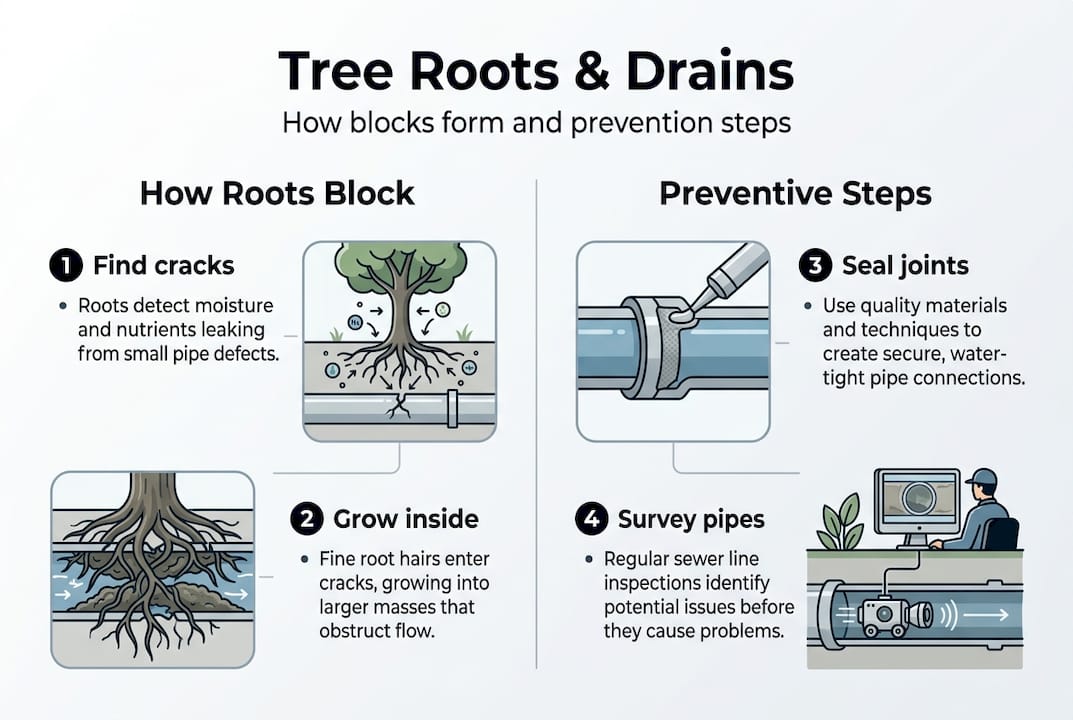
Tree roots are opportunistic. They don’t seek out drains on purpose, but they respond to the vapours, warmth, and moisture that escape through any small defect in a pipe. Once a fine root hair finds its way through a crack or a slightly loose joint, it begins to grow towards the richest source of water and nutrients it can find: the wastewater flowing through your drain.
Roots enter drains through cracks, joint gaps, or corrosion perforations, drawn in by moisture and nutrients from wastewater. What starts as a single thread quickly branches into a mass of fibrous growth inside the pipe.
Southampton’s soil conditions add another layer of risk. The city sits on a mix of clay-heavy ground and made-up land, particularly in older residential areas. Clay soils shift and compress over time, placing stress on pipe joints. Many properties in Southampton also have mature trees, including willows, poplars, and large oaks, all species known for aggressive root systems that travel considerable distances in search of water.
Common entry points for tree roots in drains:
- Hairline cracks caused by ground movement or frost
- Loose or degraded pipe joints, especially in older clay or pitch fibre pipes
- Corroded sections in older metal pipework
- Poorly sealed repair patches
- Joints disturbed by nearby construction or excavation
| Entry point type | Risk level | Common pipe material affected |
|---|---|---|
| Hairline cracks | High | Clay, concrete |
| Loose joints | Very high | Clay, pitch fibre |
| Corrosion perforations | Medium | Cast iron, steel |
| Poor repair seals | High | All types |
| Construction disturbance | Medium | All types |
“Even a gap of half a millimetre is enough for a fine root hair to enter. Once inside, the root thickens and widens the crack further, making the problem progressively worse.”
Once roots breach the pipe wall, growth accelerates. The warm, nutrient-rich environment inside a drain is ideal. Roots can spread across the full diameter of a pipe within months, not years. Understanding the root removal methods available is important, but first you need to understand why the problem rarely stays small.
Why blocked drains from roots get worse over time
A root blockage doesn’t announce itself dramatically. That’s actually what makes it so damaging. The process is gradual, and each stage of growth makes the next one harder to resolve.
When roots first enter a pipe, they form fine, hair-like tendrils. These don’t block flow immediately, but they act as a net. Grease, food particles, wet wipes, and other debris passing through the drain start to catch on those fibres. Over weeks and months, a dense mat builds up. Roots grow into fibrous masses that act as strainers for debris, grease, and solids, causing slow drains rather than sudden blockages.
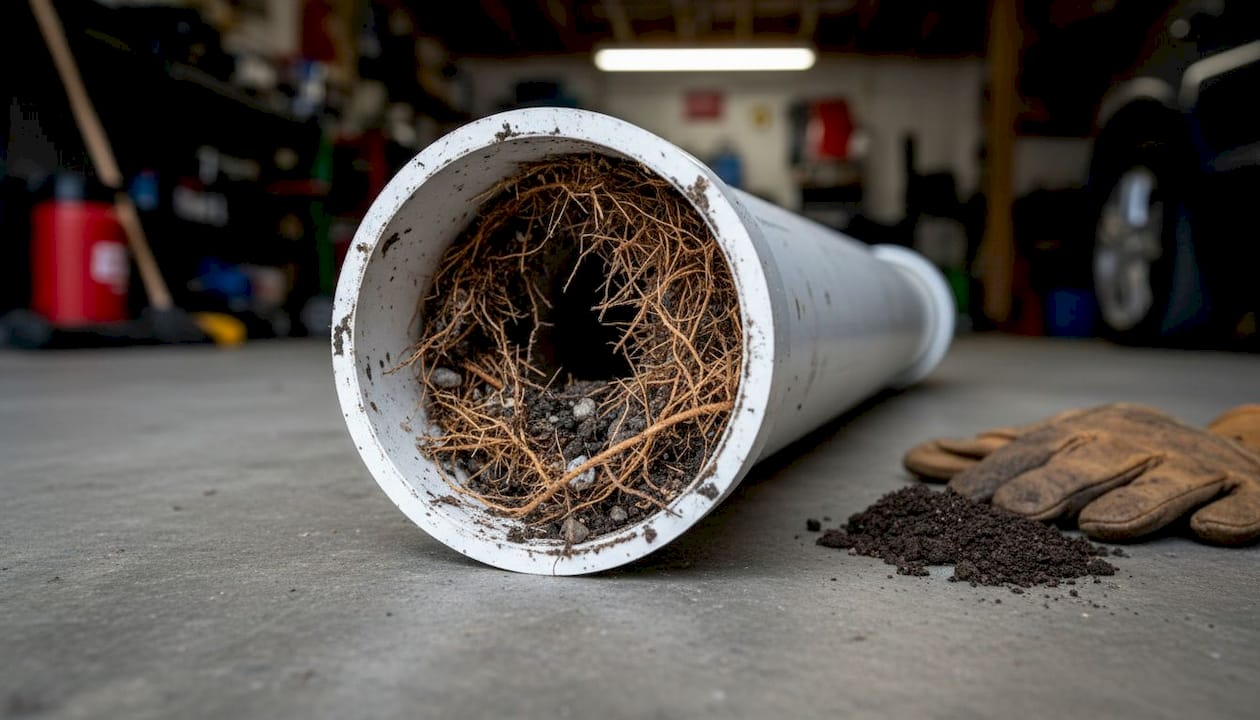
This is why so many homeowners dismiss the early signs. A drain that takes slightly longer to empty doesn’t feel urgent. But by the time you notice a real problem, the root mass may already be substantial.
How root blockages develop in stages:
- Fine root hairs enter through a crack or joint gap
- Roots branch and spread across the pipe interior
- Debris begins to accumulate on the root mass
- Flow is partially restricted, causing slow drainage
- The blockage thickens, trapping more material
- Sewage backup or overflow occurs in severe cases
| Stage | What you notice | Urgency |
|---|---|---|
| Early root entry | Nothing visible yet | Low (but act if suspected) |
| Root branching | Slightly slow drainage | Medium |
| Debris accumulation | Gurgling sounds, odours | High |
| Partial blockage | Slow drains across multiple fixtures | High |
| Full blockage | Sewage backup, overflow | Emergency |
Pro Tip: If more than one drain in your home is running slowly at the same time, this often points to a shared pipe issue rather than a localised blockage. Root intrusion in a main drain can affect multiple fixtures simultaneously.
Ignoring early symptoms is the most expensive mistake you can make. A partial root blockage that costs a few hundred pounds to clear can become a collapsed pipe repair running into thousands if left untreated. Southampton homeowners dealing with recurring issues should look into Southampton drain solutions to understand what a proper fix actually involves.
Identifying root-related blockages: Warning signs and diagnosis
Not every slow drain is caused by tree roots. Hair, grease, and scale build-up are far more common culprits. Knowing the difference saves you time and money.
Root blockages tend to display a particular pattern. They affect multiple fixtures rather than just one. They recur even after basic clearing. And they’re often accompanied by specific signs that point below ground rather than inside your home.
Warning signs that suggest root intrusion:
- Persistent slow drainage across several sinks, baths, or toilets
- Gurgling noises from drains or toilets after flushing
- Foul smells from external drain covers
- Unusually lush or green patches of grass directly above drain runs
- Recurring blockages that return within weeks of clearing
- Visible root material when lifting an inspection chamber cover
The lush grass sign is one that surprises many people. When a drain is leaking due to root damage, nutrients and moisture seep into the surrounding soil. The result is a noticeably greener strip of lawn directly above the pipe run. If you see that in your garden, it’s worth investigating further.
Professional diagnosis is the only reliable way to confirm root intrusion. Mechanical cutting is preferred over chemicals alone as roots regrow without addressing entry points, and CCTV surveys are essential to avoid incomplete fixes. A CCTV drain survey involves passing a small camera through the pipe to view the interior in real time. It shows exactly where roots have entered, how much growth is present, and whether the pipe itself is structurally damaged.
Pro Tip: Don’t rely on a drain rod or a basic plunger to diagnose root blockages. These tools can temporarily shift debris but won’t reveal the root mass or the crack that allowed entry. You’ll simply be clearing the symptom, not the cause.
Attempting to guess the cause and treat it without proper inspection often leads to repeat blockages within weeks. If you’re dealing with recurring issues, removing root blockages properly from the start is far more cost-effective than repeated partial fixes.
Removing roots and preventing repeat drain blockages
Once you’ve confirmed root intrusion, you have several options. The right approach depends on how advanced the growth is and whether the pipe has sustained structural damage.
Professional removal methods:
- Mechanical cutting (drain rodding with cutting heads): A rotating cutter is fed through the pipe to shred root masses. This is the most effective first step for clearing an active blockage.
- High-pressure water jetting: Follows mechanical cutting to flush out debris and root fragments. Jetting alone won’t cut through dense root masses.
- CCTV survey post-clearance: Confirms the pipe is clear and identifies any structural damage that needs repair.
- Patch lining or full pipe relining: Seals cracks and gaps from inside the pipe, eliminating the entry points roots used to get in.
- Root barrier installation: Physical barriers placed in the soil to redirect root growth away from pipes.
Mechanical cutting is preferred over chemicals alone because roots regrow rapidly if the entry point remains open. Chemical root killers can slow regrowth but don’t seal the crack that allowed access in the first place.
What to avoid:
- Relying solely on chemical treatments as a long-term fix
- Clearing a blockage without following up with a CCTV check
- Planting fast-growing or water-hungry trees near drain runs
- Ignoring a recurring blockage as “just one of those things”
“Addressing the entry point is non-negotiable. Clear the roots, then seal the gap. Without both steps, you’re on a cycle of repeat blockages.”
For long-term prevention, preventive drain surveys are the single most effective investment a Southampton homeowner can make. An annual or biennial CCTV check catches early root growth before it becomes a blockage, and identifies any new cracks that could become entry points. Pairing this with mindful tree placement when landscaping your garden gives your drains the best chance of staying clear. Explore the full range of removal methods to understand which approach suits your situation.
Our take: Why most DIY fixes fail and what really protects your drains
After years of attending root-related drain blockages across Southampton, we’ve noticed a consistent pattern. Homeowners try a chemical treatment or a basic rod, the drain clears temporarily, and they assume the problem is solved. Three months later, we’re back.
The uncomfortable truth is that root intrusion is a structural problem, not a maintenance one. The crack or gap that allowed roots in is still there after you clear the blockage. Roots will return, often faster the second time because the entry point has widened.
What actually works long term is a two-part approach: remove the roots properly using mechanical methods, then seal the entry point through relining or repair. Without the second step, you’re managing a problem rather than solving it.
We also see homeowners underestimate how far roots travel. A tree at the far end of your garden can still reach a drain under your house. Regular checks via drain surveys Southampton are the only way to stay ahead of this. Prevention genuinely costs less than cure, and in our experience, the homeowners who invest in annual surveys almost never face emergency callouts.
Clear your drains and protect your property with local help
Dealing with a root-blocked drain is stressful, but the right local support makes it straightforward. We cover every district across Southampton and respond quickly to both urgent blockages and planned surveys.

Whether you need immediate drain root removal or want to book a CCTV survey to check your pipes before a problem develops, our team has the tools and local knowledge to help. You can explore our full range of drain unblocking services or read the full removal guide for a detailed breakdown of what each method involves. Get in touch today for honest advice and a fast response from a team that knows Southampton’s drainage challenges inside out.
Frequently asked questions
How quickly can tree roots block a drain?
Once inside a pipe, roots grow into fibrous masses that trap debris and restrict flow, meaning significant blockages can develop within months. Symptoms often appear gradually, which is why early action matters.
Are chemicals effective in removing tree roots from drains?
Chemical treatments may slow root growth temporarily, but mechanical cutting is preferred because roots regrow unless the entry point is sealed. A lasting fix requires both removal and structural repair.
What signs suggest my drain blockage is caused by tree roots?
Persistent slow draining across multiple fixtures, gurgling sounds, recurring blockages, and unusually lush grass above your drain run are all strong indicators of root intrusion rather than a simple grease or debris build-up.
Can I prevent roots from reaching my drains?
Yes. Regular CCTV drain surveys, sealing any cracks or loose joints promptly, and avoiding planting water-hungry trees near drain runs are the most reliable prevention methods available to Southampton homeowners.
Is professional intervention required or can I DIY tree root removal?
Basic drain rods can shift loose debris, but professional mechanical cutting and a follow-up CCTV inspection are necessary to fully clear root masses and confirm the pipe is undamaged and sealed against future intrusion.