TL;DR:
- Neglecting drain maintenance can lead to costly structural damage and damp issues.
- Professional cleaning with CCTV inspection and high-pressure jetting is more effective than DIY methods.
- Regular expert maintenance saves money by preventing emergencies and extensive repairs.
Blocked drains are one of the most underestimated threats to a Southampton home. A slow-draining sink or a gurgling toilet might seem minor, but left unattended, these early warning signs can escalate into structural damage, damp, and repair bills running into thousands of pounds. Many homeowners reach for a bottle of chemical cleaner or a plunger and assume the problem is solved. It rarely is. This guide walks you through the real risks of neglected drains, the honest comparison between DIY and professional cleaning, and the clear financial case for investing in expert maintenance before a small clog becomes a very expensive crisis.
Table of Contents
- Why blocked drains are a growing issue for Southampton homeowners
- DIY vs professional drain cleaning: What actually works?
- Hidden costs of neglecting professional maintenance
- Why professional cleaning is the smart choice for Southampton homes
- What most guides miss about drain maintenance
- Choose reliable professional drain cleaning in Southampton
- Frequently asked questions
Key Takeaways
| Point | Details |
|---|---|
| Local drain issues | Southampton homeowners face unique risks from outdated infrastructure and weather patterns. |
| DIY vs professional results | Expert cleaning offers lasting solutions while DIY often provides only short-term relief. |
| Cost savings | Routine professional maintenance helps avoid emergency repair bills and property damage. |
| Advanced tools | Professionals use specialist equipment to pinpoint and fix problems before they escalate. |
| Peace of mind | Reliable experts safeguard your home’s health, comfort, and value. |
Why blocked drains are a growing issue for Southampton homeowners
Southampton’s drainage challenges are not just about what goes down the plughole. The city’s ageing pipe network, combined with its coastal weather and heavy rainfall, creates conditions where blockages form faster and cause more damage than in newer developments elsewhere. Older infrastructure and weather patterns are well-documented contributors to the frequency of blocked drains across Southampton homes.
The most common culprits behind blockages include:
- Cooking grease and fat that solidifies inside pipes over time
- Wet wipes and cotton products flushed despite being labelled “flushable”
- Hair and soap residue accumulating in bathroom drains
- Leaf debris and garden waste entering outdoor gullies
- Tree roots infiltrating older clay or concrete pipes
What makes Southampton particularly vulnerable is the combination of Victorian-era pipework in many residential areas and the region’s seasonal downpours. Heavy rain pushes debris deeper into already-narrowed pipes, turning a partial blockage into a full one almost overnight.
Did you know? Water damage is now one of the most frequently cited causes of home insurance claims in the UK, with repair costs averaging between £2,500 and £9,000 per incident depending on severity.
The danger is that most homeowners do not notice a problem until it is already serious. A drain that empties slowly for weeks is quietly building pressure, trapping waste, and creating the perfect conditions for a burst or overflow. Understanding the full range of blocked drain causes is the first step toward preventing them.
DIY vs professional drain cleaning: What actually works?
Having understood what causes drain blockages, it is time to look at your cleaning options side by side.
DIY methods are popular because they are cheap and immediately available. A plunger can shift a surface-level blockage. Boiling water dissolves some grease. Chemical drain cleaners promise fast results. But each of these approaches has real limitations that most product labels do not mention.
Chemical cleaners, for instance, work by corroding the blockage. The problem is they can also corrode older pipes, particularly the cast iron and clay pipes common in Southampton’s older housing stock. Repeated use weakens joints and seals, which can lead to leaks that cost far more to fix than the original blockage. Home solutions often provide only temporary relief and can make underlying issues worse if used incorrectly.
| Method | Effectiveness | Risk level | Cost |
|---|---|---|---|
| Plunger | Low to moderate | Low | Minimal |
| Chemical cleaner | Temporary | Medium to high | Low |
| Boiling water | Minimal | Low | None |
| CCTV inspection | Highly accurate | None | Professional fee |
| High-pressure jetting | Highly effective | Low (when professional) | Professional fee |
Professional drain cleaning uses tools and techniques that simply are not available over the counter. CCTV drain cameras allow engineers to see exactly where a blockage sits and what is causing it, whether that is a grease build-up, a collapsed section of pipe, or an invading tree root. High-pressure water jetting then clears the obstruction thoroughly, rather than just pushing it further along.
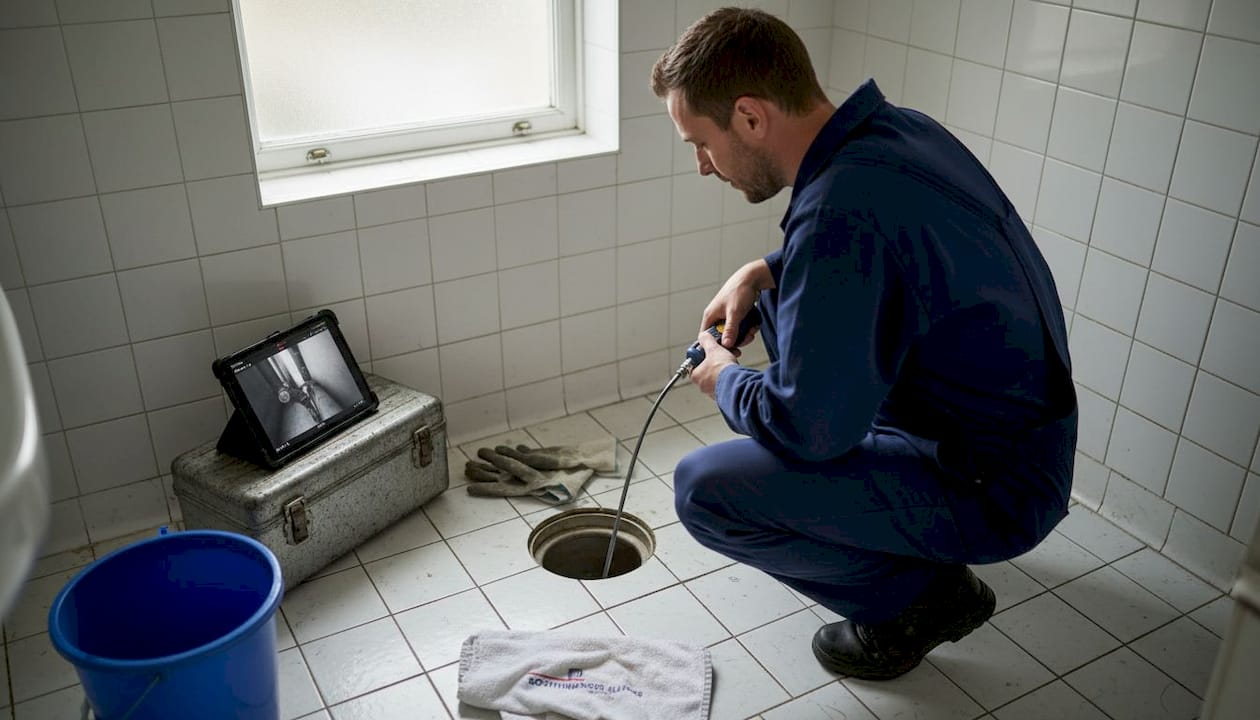
Pro Tip: If your drain clears after a DIY attempt but blocks again within a few weeks, that is a strong sign the root cause has not been addressed. A professional inspection will find what the plunger missed.
The insurance angle is also worth noting. If you attempt a DIY repair that causes further damage, your insurer may refuse to cover the resulting claim. Calling a professional from the outset protects both your pipes and your policy.
Hidden costs of neglecting professional maintenance
Understanding the difference in cleaning approaches highlights why the “wait and see” approach is a genuine financial gamble.
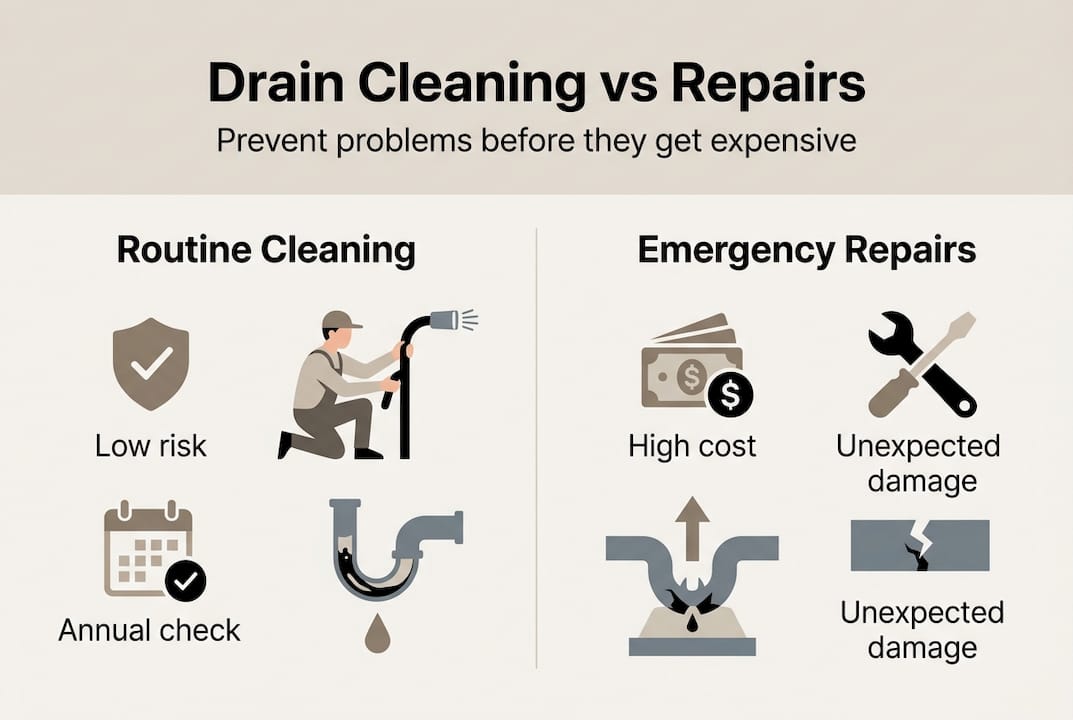
The numbers tell a stark story. Emergency plumbing is typically 3 to 4 times more costly than routine cleaning carried out before a problem becomes urgent. A scheduled maintenance visit might cost between £80 and £150. An emergency call-out for a burst pipe or sewage overflow can easily reach £500 to £1,500, before you factor in any structural repairs.
| Scenario | Estimated cost |
|---|---|
| Routine professional cleaning | £80 to £150 |
| Emergency drain clearing | £300 to £600 |
| Pipe repair after neglect | £500 to £2,000 |
| Structural damp remediation | £1,500 to £9,000 |
Here is how a small problem typically escalates:
- A partial blockage slows drainage but does not stop it entirely
- Homeowner uses chemical cleaner, which provides temporary relief
- Blockage reforms and worsens over several months
- Pipe pressure builds, causing a joint to fail or a pipe to crack
- Water leaks into walls or flooring, causing damp and mould
- Structural assessment reveals damage requiring significant remediation
“The most expensive drain repair we see is always the one that was ignored for too long. What starts as a £100 clean ends up as a £4,000 job once the structure is involved.”
Beyond the direct repair costs, damp and mould carry health implications for your household, particularly for children and those with respiratory conditions. There are also potential impacts on your property’s value and its saleability if a buyer’s survey flags drainage issues. Investing in emergency drain clearing before things reach crisis point is always the smarter financial decision.
Why professional cleaning is the smart choice for Southampton homes
With the dangers and costs of neglect laid bare, let us look at why professionals are the preferred choice for smart Southampton homeowners.
The benefits go well beyond simply clearing a blockage. Professional drain cleaning delivers:
- Lasting results because the entire pipe is cleared, not just the surface obstruction
- Accurate diagnosis using CCTV cameras that reveal hidden cracks, root intrusions, and misaligned joints
- Health and sanitation protection by removing bacteria-laden waste build-up that DIY methods leave behind
- Insurance compliance since professional reports provide documented evidence of maintenance
- Predictable costs through scheduled maintenance plans rather than reactive emergency spending
The technology professionals bring to the job genuinely changes the outcome. High-pressure jetting removes years of grease and scale from pipe walls, restoring flow to near-original capacity. CCTV surveys produce video evidence of your drain’s condition, which is invaluable if you are buying or selling a property.
Pro Tip: Ask your drainage engineer for a copy of the CCTV footage after an inspection. It is useful documentation for insurance purposes and gives you a baseline to compare against in future visits.
Local expertise matters too. Southampton’s mix of Victorian terraces, post-war housing, and modern developments means drainage systems vary enormously from street to street. Engineers who work locally understand which pipe materials are common in which areas, and they know the seasonal patterns that increase blockage risk. Advanced diagnostics from professional services find hidden problems before they become emergencies, which is something no bottle of drain cleaner can claim.
Rapid response times are another practical advantage. Local professionals can reach most Southampton addresses within hours, which matters enormously when a blocked drain is affecting your bathroom or kitchen.
What most guides miss about drain maintenance
Most advice you will find online focuses on what to do when a drain blocks. That framing is already too late. The real lesson, learned from years of working on Southampton’s drainage systems, is that prevention is not just cheaper, it is almost always simpler.
The homeowners who avoid the worst outcomes are not the ones who react fastest when something goes wrong. They are the ones who schedule a check before there is any visible sign of trouble. A drain that looks fine can have a significant build-up of grease or a slow-growing root intrusion that will cause a serious problem within twelve months.
There is also a pattern we see repeatedly: a homeowner clears a blockage themselves, feels satisfied, and does not book a professional for another two or three years. By that point, the underlying cause of the original blockage, often a structural issue or a persistent grease accumulation, has created a much bigger problem. Understanding the full range of common blockages makes it clear why a single DIY fix is rarely the end of the story.
Routine expert maintenance reframes the entire relationship you have with your drainage system. Instead of reacting to crises, you are managing a predictable, low-cost maintenance schedule. That shift alone saves most households significant money over a five-year period.
Choose reliable professional drain cleaning in Southampton
If you have reached this point, you already understand that professional drain cleaning is not an optional extra. It is a straightforward investment that protects your home, your health, and your finances.
Our team at Blocked Drains Southampton offers fast response times, transparent pricing, and the local knowledge to handle whatever Southampton’s drainage systems throw at us. Whether you need a routine clean, a CCTV survey, or urgent help with a blocked drain, our drain cleaning services cover the full range of residential needs. For a broader understanding of how Southampton’s drainage infrastructure works and why it matters for your home, our detailed drainage guide is an excellent starting point. Get in touch today and take the guesswork out of drain maintenance.
Frequently asked questions
How often should Southampton homeowners schedule professional drain cleaning?
Most homes benefit from annual professional drain cleaning. Households with mature trees nearby or a history of frequent blockages may need attention every six months.
What are the warning signs that a drain needs professional cleaning?
Slow drainage, persistent unpleasant odours, and blockages that keep returning are all clear indicators that it is time to call a professional rather than reach for a DIY solution.
Can DIY solutions damage my drains or void insurance?
Yes. Some chemical cleaners corrode older pipes and improper use of tools can cause cracks or joint failures. Insurers may also refuse claims where DIY interference is found to have worsened the damage, as home solutions can cause further issues if misused.
What advanced tools do professionals use for cleaning and diagnostics?
Professionals use CCTV drain cameras and high-pressure water jetting to locate and clear blockages with precision. Advanced diagnostics allow engineers to identify hidden problems such as root intrusions or collapsed sections before they escalate.
Is professional drain cleaning cost-effective?
Absolutely. Routine professional cleaning prevents the kind of emergencies where emergency plumbing costs 3 to 4 times more than scheduled maintenance, making it one of the most sensible investments a homeowner can make.