Choosing the wrong drainage solution for your Southampton property can cost far more than the initial installation. Blocked drains, waterlogged gardens, and flooded basements are not just inconvenient — they cause structural damage, attract pests, and create health hazards. Southampton’s mix of clay-heavy soil, ageing Victorian pipe networks, and coastal rainfall patterns makes drainage decisions genuinely complex. This article walks you through the most effective drainage options available, compares them side by side, and helps you match the right solution to your specific property, whether you manage a family home in Bassett or a commercial site near the docks.
Table of Contents
- How to evaluate drainage solutions
- Surface drainage solutions: Examples for gardens and landscapes
- Subsurface drainage solutions: Options for homes and commercial sites
- Specialised drainage for problem areas: Blocked drains and upgrades
- Comparison of drainage solution examples
- Choosing the right drainage solution for your Southampton property
- Get reliable drainage solutions from Southampton experts
- Frequently asked questions
Key Takeaways
| Point | Details |
|---|---|
| Local factors matter | Choosing drainage solutions depends on Southampton’s rainfall, soil, and building types. |
| Range of options | French drains, channel drains, soakaways, and land drains suit different situations and budgets. |
| Maintenance is essential | Regular checks and cleaning reduce blockages and extend the life of your drainage system. |
| Expert guidance | Professional local services offer reliable installation, upgrades, and emergency support. |
| Comparison aids decisions | Comparing features and costs helps homeowners and managers make the best choice for their property. |
How to evaluate drainage solutions
Before spending money on any drainage system, you need to understand what is actually driving the problem on your property. Not every solution works in every setting, and drainage effectiveness depends on climate and soil conditions specific to your location. Southampton’s clay-rich ground, for instance, absorbs water slowly, which means surface run-off builds up faster than in sandier regions.
Here are the key factors to assess before choosing a drainage solution:
- Rainfall and flood risk: Southampton receives around 750mm of rainfall annually, and low-lying areas near the River Itchen face genuine flood risk during heavy downpours.
- Soil type: Clay soil drains poorly and requires systems that redirect water rather than rely on natural absorption.
- Property usage: A residential garden needs different drainage to a commercial car park or a basement flat.
- Maintenance access: Some systems require regular jetting or inspection; others are largely passive once installed.
- Legal compliance: Certain drainage works require planning permission or must comply with building regulations, particularly for new soakaways or connections to public sewers.
Pro Tip: Before installing any new drainage system, check whether your property sits within a flood risk zone using the Environment Agency’s flood map. This one step can save you from choosing a solution that simply cannot cope with local conditions.
For a broader understanding of how Southampton’s infrastructure affects your options, the Southampton drainage infrastructure guide covers the city’s unique challenges in detail. You can also find ongoing practical advice through the drainage advice blog.
Surface drainage solutions: Examples for gardens and landscapes
Now that you know what to look for, let’s explore surface drainage solutions tailored for gardens and outdoor spaces. These systems manage water at ground level, preventing pooling and run-off before it causes damage.
French drains are one of the most popular choices for residential gardens. A French drain is a gravel-filled trench containing a perforated pipe that collects and redirects groundwater away from problem areas. French drains are widely used for garden drainage precisely because they are effective in clay-heavy soil, which is common across Southampton. They work quietly underground and require minimal maintenance once installed correctly.
Channel drains sit flush with the surface and are ideal for patios, driveways, and paths. Water flows into a narrow channel and is directed away through a connected pipe. They are particularly effective for hard-surfaced areas where water cannot soak into the ground at all.
Soakaways are underground chambers, typically filled with rubble or fitted with plastic crates, that collect surface water and allow it to disperse slowly into the surrounding soil. They work best in gardens with reasonable soil permeability and are a common requirement for new builds under current building regulations.
Here is a quick comparison of surface drainage options:
- French drain: Best for waterlogged lawns and borders; suits clay soil; moderate installation cost
- Channel drain: Best for driveways and patios; easy to clean; low to moderate cost
- Soakaway: Best for gardens with permeable soil; low maintenance; requires space and soil testing
For professional installation of any of these systems, our garden drainage services cover the full Southampton area. The garden drainage guide also provides further detail on which surface systems suit different property types.
Subsurface drainage solutions: Options for homes and commercial sites
For areas where surface solutions are not enough, subsurface systems bring powerful benefits, especially for commercial grounds and challenging home spots. These systems operate entirely below ground, managing large volumes of water that surface drains simply cannot handle.
Perforated pipe systems consist of networks of slotted pipes laid in trenches beneath lawns, car parks, or playing fields. Water seeps through the perforations and is carried away to a suitable outlet. These systems are particularly effective for large commercial sites where surface water accumulates quickly.
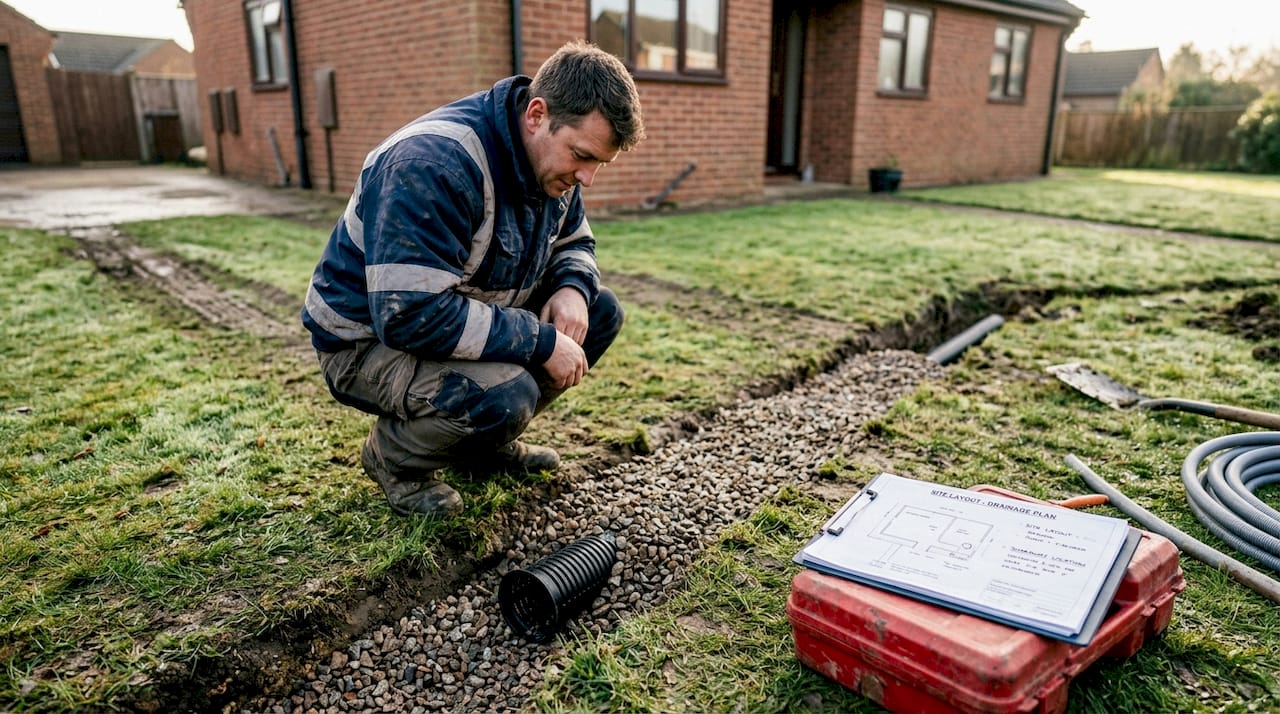
Land drains effectively manage saturation in commercial areas and are also widely used in residential settings where lawns remain boggy for days after rainfall. They are laid at a slight gradient to encourage water flow and can be connected to existing drainage networks.
Here are the key steps for maintaining a subsurface drainage system:
- Inspect annually: Check for signs of collapse, root intrusion, or sediment build-up in accessible inspection chambers.
- Jet clean every two years: High-pressure water jetting clears accumulated silt from perforated pipes before it causes a full blockage.
- Monitor outflow points: Ensure the outlet remains clear and unobstructed, particularly after storms or leaf fall in autumn.
- Check for root ingress: Tree roots are a common cause of subsurface pipe damage, especially in older residential gardens.
Pro Tip: If you are installing a subsurface system near mature trees, use solid pipe rather than perforated pipe in those sections. Roots are drawn to moisture and will find their way into any perforation over time.
For more detail on managing below-ground issues, the blocked drains guide covers common causes and fixes. Commercial property managers can also find targeted advice in our commercial drainage tips section.
Specialised drainage for problem areas: Blocked drains and upgrades
If your property faces frequent blockages or outdated systems, the latest specialised drainage solutions can offer lasting protection and peace of mind. Many Southampton properties still rely on Victorian-era clay pipes that were never designed for modern water usage volumes.
Modern upgrades available to Southampton homeowners and property managers include:
- CCTV drain surveys: A small camera is fed through the pipe network to identify exactly where blockages, cracks, or root intrusion are occurring. CCTV diagnostics identify blockages quickly and accurately, removing the guesswork from diagnosis.
- High-pressure water jetting: Powerful jets of water break up grease, scale, and debris that have built up inside pipes over years of use.
- Pipe relining: A resin-coated liner is inserted into a damaged pipe and cured in place, creating a new pipe within the old one without excavation.
- Drain re-routing: In cases where the original pipe layout is fundamentally flawed, re-routing creates a more efficient drainage path.
Persistent blockages are rarely a one-off problem. If your drains block more than twice a year, the underlying pipe condition almost certainly needs professional assessment rather than another temporary fix.
Understanding the causes of blocked drains helps you prevent recurring issues before they escalate. For properties in areas like Swaythling, our specialist drain services Southampton team provides targeted support for both residential and commercial clients.
Comparison of drainage solution examples
With each example explored, a head-to-head comparison highlights the best fit for different Southampton settings. Drainage solution costs and maintenance vary considerably depending on the system chosen and the complexity of the installation.
| Solution | Best suited for | Approx. cost | Maintenance | Local suitability |
|---|---|---|---|---|
| French drain | Waterlogged gardens | £500 to £1,500 | Low | Excellent for clay soil |
| Soakaway | Gardens with permeable soil | £300 to £1,000 | Very low | Good where soil allows |
| Channel drain | Driveways and patios | £200 to £800 | Low to moderate | Excellent for hard surfaces |
| Land drain | Large lawns and commercial sites | £1,000 to £3,000+ | Moderate | Very good for flat sites |
| CCTV and jetting | Blocked or damaged pipes | £150 to £500 | As needed | Essential for older pipes |
The costs above are approximate and will vary based on site access, pipe depth, and the extent of any existing damage. For a full breakdown of available options, our drainage service options page provides current pricing and service details.
Choosing the right drainage solution for your Southampton property
Finally, let’s distil all options into actionable next steps, making it easy for you to find the best drainage fit for your Southampton property. The right choice depends on your property type, your budget, and how urgently the problem needs addressing.
Follow these steps to make a confident decision:
- Identify the problem type: Is water pooling on the surface, seeping into a basement, or causing a blocked pipe? Each symptom points to a different solution.
- Assess your soil and site: Clay soil rules out soakaways as a primary solution. Hard surfaces need channel drains. Large open areas benefit from land drains.
- Set a realistic budget: Factor in both installation and long-term maintenance costs. A cheaper system that blocks annually costs more over time.
- Check compliance requirements: Confirm whether your planned works need planning permission or building regulations approval before starting.
- Engage local expertise: Local drainage services provide tailored solutions that account for Southampton’s specific soil, rainfall, and infrastructure conditions.
For homeowners in areas like Bassett, the drainage solutions Bassett Southampton page offers location-specific guidance and service options. Regular maintenance, regardless of which system you choose, remains the single most effective way to prevent costly emergency call-outs.
Get reliable drainage solutions from Southampton experts
Once you have chosen your ideal solution, reliable local support ensures the job is done safely and efficiently. Our team understands Southampton’s drainage challenges from the inside out, including the ageing pipe networks, the clay-heavy soil, and the flood-prone low-lying areas that catch many property owners off guard.
Whether you need a new soakaway installed, a persistent blockage cleared, or a full CCTV survey to assess your pipe condition, our Southampton drainage services cover every scenario for both residential and commercial clients. We offer fast response times, transparent pricing, and lasting results. The local drainage guide is a great starting point if you want to understand your options before booking. When you are ready to act, the blocked drains Southampton team is available to help you move forward with confidence.
Frequently asked questions
What drainage solution is best for a waterlogged garden?
French drains are effective for garden drainage and, alongside soakaways, are the top choice for managing waterlogged gardens in Southampton’s clay-rich soil. The best option depends on your soil permeability and the volume of water involved.
How often should commercial drainage systems be maintained?
Commercial drainage systems should be inspected and maintained at least annually. Maintenance prevents commercial drainage blockages from escalating into costly emergency repairs, particularly in high-usage sites.
Are CCTV surveys necessary for drainage issues?
CCTV diagnostics identify drain issues fast and are essential for persistent or complex problems. They remove guesswork and ensure the correct repair is carried out first time.
What is the difference between surface and subsurface drainage?
Surface drainage removes water using channels and grates at ground level, while subsurface drainage relies on pipes beneath the ground to redirect excess moisture. Surface and subsurface solutions address different drainage needs and are often used together for best results.
Can local Southampton drainage experts help with custom solutions?
Yes. Local drainage services tailor solutions to your property’s unique needs, taking into account local soil conditions, rainfall patterns, and the age of your existing pipe network.