
TL;DR:
- Pitch fibre pipes installed in Southampton’s older neighborhoods deteriorate over decades, causing frequent blockages and damage.
- Professional assessments with CCTV and specialized repair methods are essential for effective and durable solutions.
- Routine maintenance and regular inspections help prevent future drainage issues and costly emergency repairs.
Beneath the streets and gardens of Southampton’s older neighbourhoods, thousands of homes still rely on pitch fibre drainage pipes installed decades ago. These pipes were once considered modern and reliable, but time has not been kind to them. When they fail, the consequences range from persistent blockages and foul smells to full pipe collapse and significant structural damage. If your property was built between the 1950s and 1970s, there is a very real chance you are living above a drainage system that is quietly deteriorating, and this guide gives you a clear, practical path forward.
Table of Contents
- Understanding pitch fibre pipe issues in Southampton
- Essential tools and materials for pitch fibre repairs
- Step-by-step guide to repairing pitch fibre drains
- Verifying repair success and ongoing maintenance
- Why most DIY fixes fail and how Southampton homeowners can future-proof their drains
- Professional pitch fibre repair services for Southampton properties
- Frequently asked questions
Key Takeaways
| Point | Details |
|---|---|
| Pitch fibre risks | Ageing pitch fibre pipes are prone to collapse and blockages, especially in Southampton homes. |
| Proper tools matter | Using the right tools and safety equipment prevents further pipe damage and keeps repairs safe. |
| Professional repairs preferred | Expert help ensures durable repairs and avoids repeat drain problems in the future. |
| Verify and maintain | Post-repair checks and scheduled maintenance give peace of mind and protect property value. |
Understanding pitch fibre pipe issues in Southampton
Pitch fibre pipes are a type of drainage pipe made from layers of wood cellulose or paper bonded together with a coal-tar derivative called pitch. This material was lightweight, inexpensive, and easy to install, which made it enormously popular in post-war Britain when housing construction was booming. Southampton saw a surge of residential development during this period, and Bitterne Park drain repairs work routinely uncovers these pipes beneath gardens and driveways throughout the area.
The fundamental problem is that pitch fibre was never built to last forever. As pitch fibre pipes degrade over decades, they often collapse or become blocked, causing serious disruption to homes that had no reason to suspect a hidden problem. The material absorbs water over time, which causes the pipe walls to soften and then deform under the weight of surrounding soil. Instead of maintaining a circular cross-section, the pipe gradually takes on an oval or flattened shape. Waste flow slows, debris accumulates, and blockages become more frequent.
In Southampton specifically, the combination of clay-heavy soil in areas like Redbridge and the city’s relatively high water table accelerates this deterioration. Water pressure in the surrounding ground places constant stress on already-weakened pipe walls. Redbridge drainage issues are particularly common for this reason, and the pattern repeats in similarly aged properties across Peartree pipe problems territory too.
Common signs your pitch fibre pipes are failing:
- Recurring blockages that clear temporarily but return within weeks
- Slow drainage from multiple fixtures at once, not just one sink or toilet
- Gurgling sounds from drains when water is running elsewhere in the property
- Damp patches or sinkholes appearing in the garden above drain routes
- Foul smells persisting even after chemical treatments
- Water backing up during heavy rainfall
Ignoring these warning signs is rarely a money-saving strategy. A partial blockage today can become a full collapse next winter, and the repair bill for a collapsed pipe is significantly higher than catching the problem early.
| Problem stage | Typical symptoms | Risk level |
|---|---|---|
| Early degradation | Slow drainage, mild odour | Low to moderate |
| Mid-stage deformation | Recurring blockages, gurgling | Moderate to high |
| Advanced collapse | Sewage backup, garden subsidence | Very high |
Understanding which stage you are at shapes every decision you make next.
Essential tools and materials for pitch fibre repairs
Knowing the causes and signs of trouble, you will need specific tools and materials before you begin any repair work. This is not a job where improvising with whatever is in the garden shed will serve you well. Pitch fibre is brittle and unpredictable in its deteriorated state, and the wrong approach can cause a partial blockage to become a total collapse in minutes.
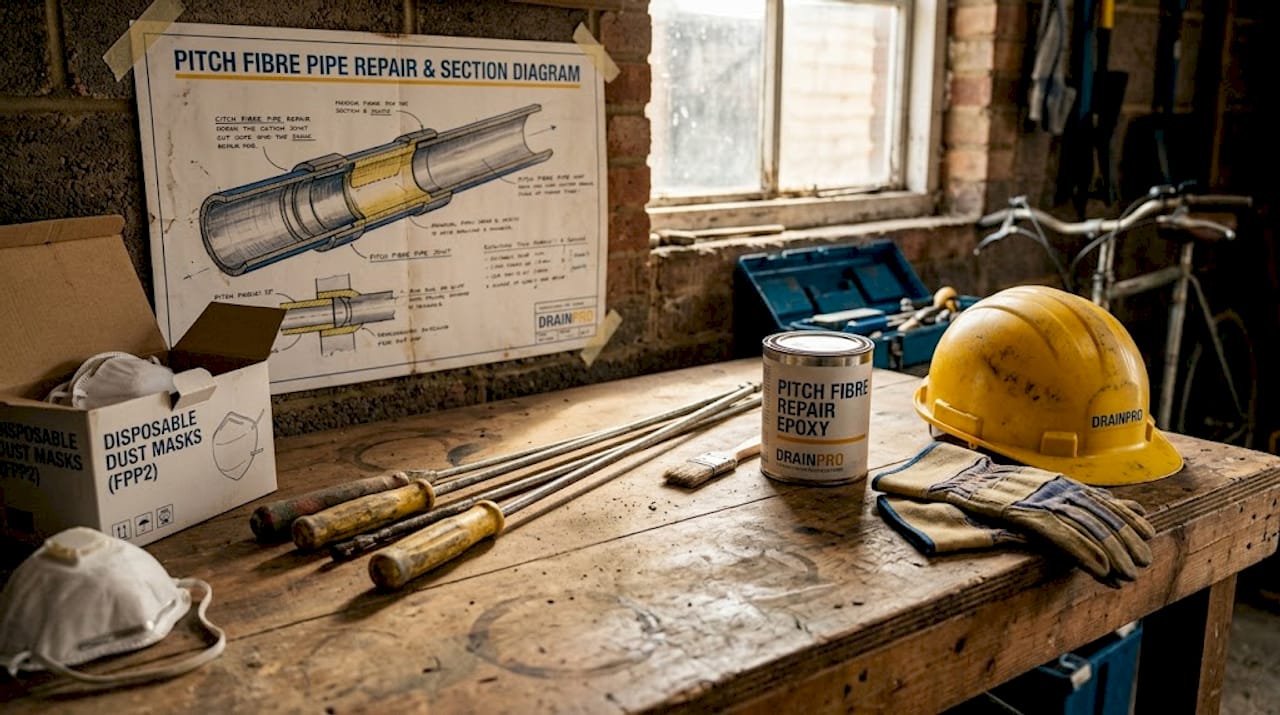
Professional repair of pitch fibre pipes requires specialised tools and safety gear that most households simply do not stock. That said, understanding what professionals use helps you ask the right questions and make informed decisions about which tasks you might safely attempt yourself.
Safety equipment required for any inspection or repair work:
- Heavy-duty nitrile gloves (sewage contact carries genuine health risks)
- Safety goggles with side shields
- P3-rated respiratory mask to guard against hydrogen sulphide gas
- Waterproof overalls or protective clothing
- Steel-capped boots if working in or near an excavation
Beyond safety gear, the tools for actual repair work depend on the method you are using. For basic blockage clearing, a high-pressure water jet (often called a jetter) is the most effective option. Rodding can shift surface blockages but tends to push debris further into deformed pipes rather than clearing it properly.
| Item | DIY availability | Professional grade | Typical cost |
|---|---|---|---|
| Drain rods | Widely available | No | £20 to £50 |
| Portable water jetter | Hire shops | Yes (trade units) | £80 to £150 per day hire |
| CCTV drain camera | Rarely available | Yes | Professional survey needed |
| Pipe relining kit | Not available | Yes | Requires specialist supply |
| Patch repair resin | Specialist suppliers | Yes | £100+ per repair |
Pro Tip: Never attempt to clear a pitch fibre blockage with a mechanical electric eel or drain snake without a prior CCTV survey. These tools can punch straight through the softened pipe wall, turning a repair job into an emergency excavation. Booking a drain survey before any physical work is the single most important preparation step you can take.
The distinction between DIY and professional materials here is stark. Relining kits, which involve inserting a resin-saturated liner into the existing pipe and inflating it to cure in place, are not available to the general public and require specialist training to install correctly. If your survey reveals that relining is the appropriate repair method, this is firmly in professional territory.
Step-by-step guide to repairing pitch fibre drains
Once you have your tools ready and your safety gear on, repair begins with a clear and methodical procedure. Skipping steps is how small problems become expensive emergencies.
The complete repair sequence:
-
Carry out safety checks first. Confirm there are no gas lines or electrical services running parallel to the drain route. Check for signs of active subsidence in the garden. If any are present, stop and call a professional immediately.
-
Clear surface access points. Locate your inspection chambers (the access hatches along the drain run) and lift them carefully. Assess the water level inside. Standing water above the normal invert level (the bottom of the chamber) confirms a blockage downstream.
-
Attempt a safe initial flush. Using a garden hose on full pressure, flush water into the chamber and watch the flow. If it barely moves, the blockage is significant. If it moves slowly, a jetter may be sufficient.
-
Jet-wash the blockage. A high-pressure water jetter inserted into the pipe will break up grease, root intrusion, and compacted debris in most cases. Work from downstream to upstream where possible to avoid pushing debris further into the system.
-
Conduct a CCTV inspection. This is non-negotiable before any structural repair decision. A camera pushed through the drain will show the exact condition of the pipe walls, the degree of deformation, and whether any sections have already collapsed. Peartree drain repairs reveal that many blocked drains in the area are already at the stage where clearing the blockage alone is insufficient.
-
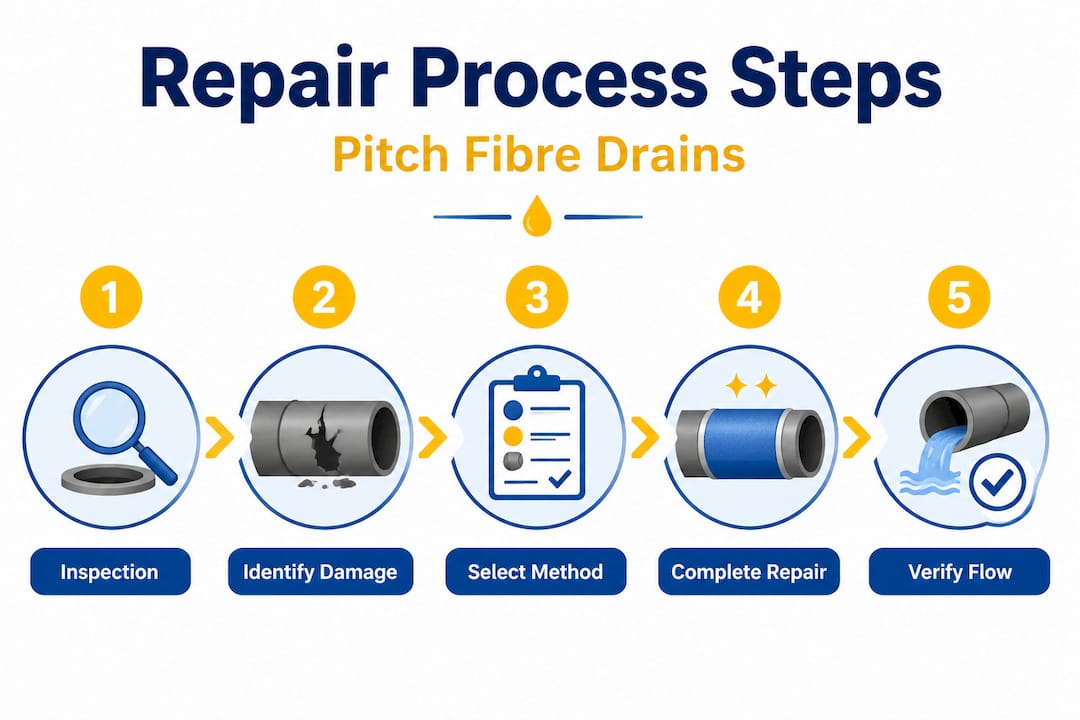
Assess your repair options. As repairs typically involve clearing blockages, assessing collapse, and selecting between patch repair, relining, or replacement, your CCTV results will dictate the right path.
-
Carry out the chosen repair. Each method has its own procedure, which is detailed in the table below.
-
Flush and test. After any repair, run water through the full system for at least ten minutes and observe all chambers for correct flow.
| Repair method | Best for | Approximate cost | Disruption level |
|---|---|---|---|
| Patch repair | Localised cracks or small holes | £300 to £600 | Minimal |
| Pipe relining | Deformed but intact pipe runs | £80 to £150 per metre | Low |
| Full replacement | Collapsed or severely degraded runs | £1,500 to £5,000+ | High |
Bassett drainage services experience shows that homeowners who opt for patch repairs on extensively deformed pipes almost always return within two to three years facing the same or worse issues.
Pro Tip: If your CCTV survey reveals deformation across more than 40% of a pipe run, full relining or replacement is nearly always the more economical long-term choice, even though it costs more upfront. A series of patch repairs on a failing system is rarely the money-saver it appears to be at first glance.
Verifying repair success and ongoing maintenance
After repairs, it is vital to confirm that everything is working correctly and to put simple routines in place to protect your drainage long into the future.
How to verify your repair has worked:
- Run water through every fixture in the property simultaneously and observe the flow rate at each inspection chamber
- Look for any evidence of leakage around newly repaired sections, including damp soil or slight subsidence
- Check for odours at ground level above the drain route, which can indicate a repair that has not sealed properly
- Ask your drainage engineer for a post-repair CCTV recording to compare directly against the pre-repair footage
Post-repair CCTV surveys can confirm flow and highlight remaining weak spots that may need attention before they develop into full failures. This is not a luxury step. It is the only way to be certain that a repair has done its job.
Signs that a repair has not worked as expected include drainage returning to pre-repair speeds within days, new damp patches appearing in areas adjacent to but not directly above the repair, and inspection chambers filling above their normal operating level during periods of moderate rainfall.
Routine maintenance steps to prevent future blockages:
- Fit mesh guards over all external gullies to prevent leaf and debris ingress
- Avoid pouring cooking fat or grease down any drain connected to pitch fibre pipes
- Do not use caustic chemical drain cleaners, which can further weaken already-fragile pitch fibre walls
- Keep tree and shrub roots managed if they are near known drain routes. Root intrusion in Sholing drain maintenance cases is a regular contributing factor in repeat blockages
- Run a hot water flush through kitchen drains weekly to prevent grease accumulation
Well-maintained drainage is invisible. You only notice it when it stops working. The small investment of an annual survey is far easier to budget for than an emergency excavation at short notice.
Pro Tip: Schedule an annual CCTV drain survey each autumn, before winter rainfall puts maximum load on your system. This timing gives you the opportunity to address any developing problems before they become urgent.
Why most DIY fixes fail and how Southampton homeowners can future-proof their drains
Here is something the drainage industry rarely says plainly: the majority of call-outs we attend for pitch fibre problems were preceded by a DIY attempt that made the situation worse. Not through incompetence on the homeowner’s part, but because pitch fibre failure is deceptive. The pipe looks passable from the access chamber. The blockage clears with a rod. Everything seems fine for a month. Then the same problem returns, slightly worse.
The reason is structural. When pitch fibre deforms, the oval shape creates a ledge inside the pipe. Every clearing job shifts debris past that ledge temporarily, but the ledge remains. Within weeks, it catches again. Without a camera inside the pipe, you cannot see this. Without the correct equipment, you cannot fix it. This is why the Harefield expert advice we give consistently emphasises survey-first, repair-second as the only reliable sequence.
Southampton adds its own complications. The city’s soil profiles vary significantly between districts. Clay-heavy areas retain water and exert higher lateral pressure on pipe walls. Areas closer to the waterfront have historically experienced more ground movement. Properties near the River Itchen and its tributaries can experience groundwater fluctuations that accelerate pitch fibre softening. These are not factors a standard DIY guide accounts for, because they are specific to this city.
Future-proofing your drainage means thinking beyond the current repair. If your pitch fibre system is showing significant deformation in one section, the rest of the run is the same age and has experienced the same conditions. A whole-system assessment, rather than a section-by-section response, gives you a realistic picture of what your drainage will need over the next five to ten years. That information lets you plan and budget rather than react in a crisis.
Professional pitch fibre repair services for Southampton properties
Sorting out pitch fibre drainage properly is not the kind of job where a good effort counts. Either the pipe flows correctly or it does not, and getting there reliably requires the right combination of diagnostic equipment, repair materials, and local expertise.

Our drain repair services cover the full spectrum of pitch fibre issues across Southampton, from initial CCTV surveys through to relining, patch repairs, and full replacement where necessary. Every job starts with an honest assessment of what your system actually needs, not the most profitable solution. If you are dealing with a sudden blockage that will not shift, our emergency drain clearing service is available around the clock. Southampton homeowners dealing with pitch fibre drains deserve durable, properly executed repairs, and that is exactly what we deliver.
Frequently asked questions
What are pitch fibre pipes and why do they cause drainage issues?
Pitch fibre pipes are lightweight drainage pipes used widely from the 1950s to the 1970s, made from paper and tar-based compounds. Over time, they absorb moisture and deform, with pipes degrading over decades until they collapse or block repeatedly.
How can I tell if my pitch fibre drain needs repair or replacement?
Recurring blockages, slow drainage across multiple fixtures, and visible pipe deformation in CCTV footage are strong indicators. In more serious cases, repairs involve assessing collapse to determine whether patching, relining, or full replacement is the right route.
Is DIY pitch fibre repair effective or should I hire professionals?
DIY attempts frequently fail because hidden deformation goes undetected without a camera survey. Professional pitch fibre repair requires specialist tools and expertise that are not accessible to most homeowners, making professional assessment the safest and most cost-effective option.
What maintenance do pitch fibre drains need after repairs?
Avoid chemical drain cleaners, manage nearby tree roots, and keep external gullies clear of debris. Most importantly, post-repair CCTV surveys confirm the repair has worked and identify any remaining weak points before they escalate.