Most homeowners assume a stubborn blocked drain is down to grease, wet wipes, or hair. In reality, plant and tree roots are one of the most common yet underestimated causes of serious drainage problems in Southampton properties. Roots cause major blockages in older homes, and once they take hold inside your pipes, no amount of plunging will shift them. This guide covers exactly how roots get into drains, what professional removal involves, which methods work best, and how to keep your drainage system clear for the long term.
Table of Contents
- Why roots invade drains and how to spot the signs
- What is drain root removal? Core methods explained
- Comparing root removal methods: efficiency and long-term value
- When should you call a professional for drain root removal?
- Preventing regrowth and ensuring long-term drainage health
- Southampton’s expert drain root removal services: your next step
- Frequently asked questions
Key Takeaways
| Point | Details |
|---|---|
| Roots are a major blockage cause | Tree roots are a leading reason for persistent and severe drain blockages in homes and properties. |
| Professional methods work best | Mechanical and hydro-jetting techniques remove up to 100 percent of roots when properly applied. |
| Lining offers long-term protection | Pipe lining adds a strong, root-resistant barrier that can last over 50 years and is cost-effective compared to replacements. |
| Prevention and inspection are key | Annual CCTV surveys and fast response keep drains root-free and avoid costly emergencies. |
Why roots invade drains and how to spot the signs
Roots don’t wander into pipes by accident. They’re actively searching for water and nutrients, and your drainage system is essentially a buffet. Even a hairline crack in an older clay or cast iron pipe releases enough moisture vapour to attract nearby roots. Once a root tip finds that crack, it pushes through and begins to grow rapidly inside the pipe, branching out and thickening over time.
Southampton’s housing stock includes a significant number of Victorian and Edwardian properties with ageing clay pipework. These older materials are far more susceptible to cracking under ground movement, frost, or simple wear. Combine that with the city’s mature street trees and garden planting, and you have ideal conditions for root ingress.
Knowing the warning signs early can save you from a far more expensive repair down the line. Watch out for:
- Slow-draining sinks, baths, or toilets that don’t respond to standard clearing
- Frequent or recurring blockages in the same location
- Gurgling sounds from drains or toilets after flushing
- Unpleasant odours rising from drains, particularly after rain
- Patches of unusually lush or fast-growing grass above drain runs in the garden
If you’re noticing more than one of these signs at the same time, roots are a serious possibility. Ignoring them won’t make them go away. Left untreated, root ingress can escalate from a partial blockage to a full pipe collapse, which is a far costlier problem to fix.
Familiarising yourself with the full range of drain blockage signs helps you act before minor issues become major ones.
What is drain root removal? Core methods explained
Drain root removal is the process of clearing tree or plant roots from inside your pipes using mechanical, chemical, or structural methods. It’s not a single technique but a toolkit of approaches, each suited to different levels of severity and pipe conditions.
Here’s how the main methods work:
- Mechanical cutting: A rotating blade or cutter is fed into the pipe and physically slices through root masses. It’s fast and effective for moderate to heavy infestations.
- Hydro-jetting: High-pressure water, delivered at up to 4,000 PSI, blasts roots free and flushes debris out of the system. The hydro-jetting process is particularly effective for clearing fine root networks and restoring full pipe bore.
- Chemical treatment: Root-killing foams or copper sulphate solutions are applied after mechanical clearing to inhibit regrowth. These are rarely effective as a standalone fix but work well as a follow-up.
- Pipe relining: A resin-impregnated sleeve is inserted into the damaged pipe and cured in place, creating a smooth, jointless inner surface. This eliminates the entry points roots exploited in the first place.
- Combined approaches: For severe or recurring cases, professionals often use mechanical removal followed by relining, addressing both the immediate blockage and the underlying structural weakness.
Hydro-jetting clears 95 to 100% of roots on the first treatment, and pipe relining provides a solution lasting over 50 years. That’s a significant difference from simply clearing the blockage and hoping for the best.
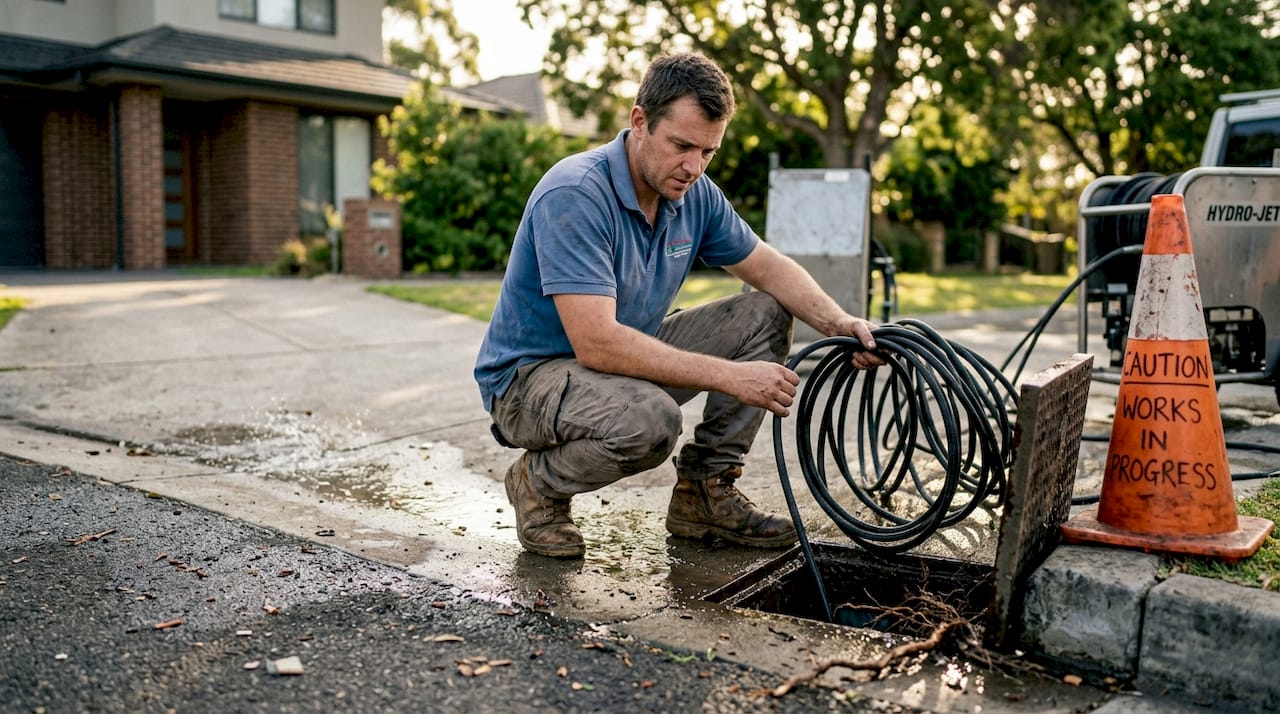
Pro Tip: Always ask for a CCTV survey before committing to any root removal method. Without seeing inside the pipe, there’s no way to know whether you need a simple jet clean or a full reline. Skipping this step often leads to repeat call-outs and unnecessary expense.
For ongoing guidance on keeping your system in good shape, the drain maintenance tips on our blog are a useful starting point.
Comparing root removal methods: efficiency and long-term value
Choosing the right method isn’t just about what clears the blockage today. It’s about what protects your drainage system for years to come. Here’s a clear comparison to help you weigh up your options.
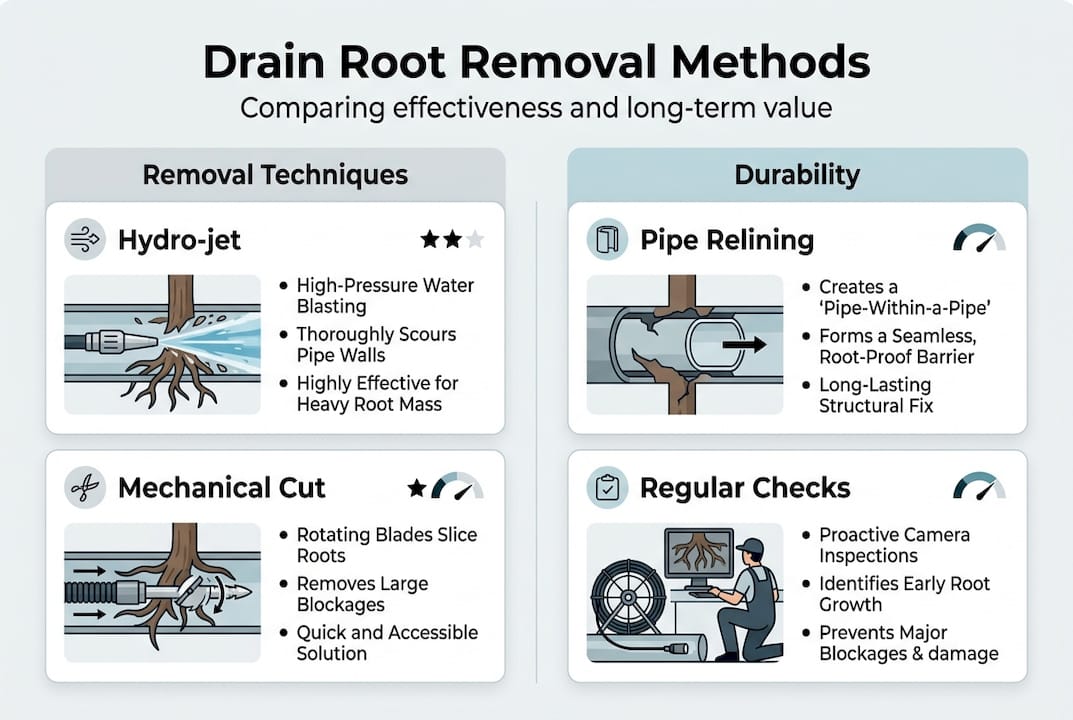
| Method | Initial success rate | Durability | Typical cost | Best for |
|---|---|---|---|---|
| Mechanical cutting | 90 to 95% | 6 to 18 months | Low to moderate | Moderate root masses |
| Hydro-jetting | 95 to 100% | 12 to 24 months | Moderate | Heavy blockages, fine roots |
| Chemical treatment | 40 to 60% alone | 6 to 12 months | Low | Minor regrowth prevention |
| Pipe relining | 95 to 99% | 50+ years | Moderate to high | Cracked or damaged pipes |
| Combined (jet + reline) | 97 to 100% | 50+ years | Higher upfront | Recurring or severe cases |
The numbers tell a clear story. Hydro-jetting clears 95 to 100% of roots on initial treatment, and pipe relining adds a lifespan of over 50 years while costing 30 to 50% less than full pipe replacement. For properties with older pipework, that’s a compelling case for investing in relining rather than repeated clearing.
Key pros and cons to keep in mind:
- Mechanical cutting is quick and affordable but doesn’t address the crack that let roots in
- Hydro-jetting is thorough and leaves pipes clean, but roots can return if the pipe isn’t repaired
- Chemical treatment alone is rarely sufficient for established root problems
- Relining is the most durable fix and avoids the disruption of excavation
- Combined approaches cost more upfront but deliver the best long-term value
For a full overview of what’s available, visit our professional drain services page. If you’re in the east of the city, our drain repairs Sholing team can assess your specific situation. A useful jetting efficiency case study also illustrates how high-pressure clearing performs in real-world conditions.
When should you call a professional for drain root removal?
It’s tempting to try a chemical drain cleaner from the supermarket and hope for the best. For very early-stage root problems, a proprietary root-killing solution might slow things down. But for anything beyond the most minor ingress, DIY approaches fall well short.
Here are three clear signs it’s time to call a professional:
- Repeated blockages in the same drain: If you’ve cleared a blockage twice in six months and it keeps coming back, roots are almost certainly the cause.
- Your property has older clay or cast iron pipes: These materials crack more easily and are far more vulnerable to root ingress than modern plastic pipework.
- A CCTV survey has confirmed root presence: Once roots are visible on camera, mechanical or chemical DIY methods won’t be sufficient to clear them safely.
Improper removal attempts can damage pipes or worsen blockages. Using the wrong tool or applying excessive force in an already-weakened pipe can turn a manageable problem into a structural failure.
A professional service starts with a CCTV survey to locate and assess the roots, then selects the most appropriate removal method based on pipe material, root density, and the condition of the surrounding structure. After clearing, you’ll receive aftercare advice and, where needed, a recommendation for relining or ongoing monitoring.
Pro Tip: Ask your drainage specialist whether your property falls under any local authority or water company responsibility. In some cases, shared or public sewers are maintained by Southern Water, not the homeowner, which could affect who pays for the repair.
For expert help across Southampton, our Peartree drain experts and Woolston drainage help teams cover a wide range of residential and commercial situations. You can also find practical drain unblocking tips for minor issues before calling in the professionals.
Preventing regrowth and ensuring long-term drainage health
Getting roots cleared is only half the job. Without the right preventive steps, you’re likely to face the same problem again within a year or two. The good news is that a few straightforward habits can dramatically reduce the risk of regrowth.
Here’s what works:
- Annual CCTV inspections: Catching early root ingress before it becomes a blockage is far cheaper than emergency clearing
- Root barriers: Physical barriers installed in the soil near drain runs can redirect root growth away from pipes
- Prompt action on slow drains: Don’t wait for a full blockage. A slow drain is your early warning system
- Mindful planting: Avoid planting trees or large shrubs directly above or near drain runs. Willows, poplars, and bamboo are particularly aggressive
- Regular flushing: Running hot water through drains periodically helps keep fine root debris moving
The data on long-term outcomes is worth understanding. Primary treatments succeed at 87 to 92% over 12 to 24 months, but retreatments drop to 73 to 83% success. That decline shows why prevention and relining matter so much after the first intervention.
| Intervention type | Success rate at 12 to 24 months |
|---|---|
| Primary treatment (jet or mechanical) | 87 to 92% |
| Retreatment (repeat clearing) | 73 to 83% |
| Relining after clearing | 95 to 99% |
The pattern is clear: each time you retreat without addressing the underlying pipe damage, results get worse. Relining after the initial clearance is the most reliable way to maintain high success rates long term.
Our local drain specialists in Bevois Valley and across Southampton offer scheduled inspection programmes to keep your drainage system in good health year-round.
Southampton’s expert drain root removal services: your next step
If you’ve recognised any of the warning signs in this guide, or if you’ve already had a blockage cleared and want to make sure it doesn’t come back, getting a professional assessment is the smartest move you can make.
Our team at Blocked Drains Southampton uses CCTV surveys, high-pressure jetting, mechanical cutting, and pipe relining to tackle root problems at every level of severity. We work across all Southampton postcodes, from Bassett to Sholing, and we understand the specific challenges that come with the city’s older housing stock and mature tree coverage. Whether you need a one-off clearance or a long-term maintenance plan, our Southampton drain root removal specialists are ready to help. Our Sholing drain specialists and drain experts Bassett teams offer fast response times and honest, upfront pricing. Get in touch today for a no-obligation survey and take the first step towards a permanently clear drainage system.
Frequently asked questions
Is drain root removal safe for all types of pipes?
Yes, when carried out by professionals, methods like hydro-jetting and mechanical cutting are safe for most residential drains. Modern removal methods are suitable for clay, cast iron, and modern plastic pipes.
How long does drain root removal last?
Primary treatments typically remain effective for 12 to 24 months, but relining can provide over 50 years of clear drainage. Pipe lining offers a 50-year solution compared to the shorter lifespan of jetting alone.
Can roots come back after removal?
Yes, if the crack or entry point in the pipe isn’t repaired, roots can and do regrow. Root regrowth is common without relining or preventive measures, which is why aftercare matters.
Does insurance cover drain root removal?
Cover varies significantly between policies. Many standard home insurance policies exclude root damage, but it’s worth checking for accidental damage clauses or specialist drainage add-ons before assuming you’ll need to pay out of pocket.
How can I prevent roots from attacking my drains again?
Annual CCTV inspections, careful planting choices, and professional root barriers are the most effective preventive steps. Regular checks reduce costly retreatments and keep your drainage system performing reliably between professional visits.